NeuroMuscular Taping (NMT) Course Schedule – Medical and Clinical Rehabilitation Training Programs
Choose Your NMT Training Pathway
Our professional education programs are organised into three training categories:
- Foundation Courses: Introductory programs providing the essential theoretical knowledge, clinical reasoning, and practical application skills required to integrate NMT into specific professional and rehabilitation settings.
- Advanced Professional Courses: Specialised training programs designed to deepen clinical knowledge and develop advanced treatment protocols. These courses generally require completion of the relevant foundation program.
- Specialised Thematic Courses: Focused training programs addressing specific clinical conditions, rehabilitation objectives, or professional applications. Unless otherwise indicated, no previous NMT certification is required.
NeuroMuscular Taping (NMT) – Professional Musculoskeletal Rehabilitation
NeuroMuscular Taping (NMT) – Professional Musculoskeletal Rehabilitation
Elastic Decompression Methodology for Upper and Lower Extremity Rehabilitation
International NMT Certification Program | 4 Days – 32 Hours
Course Overview
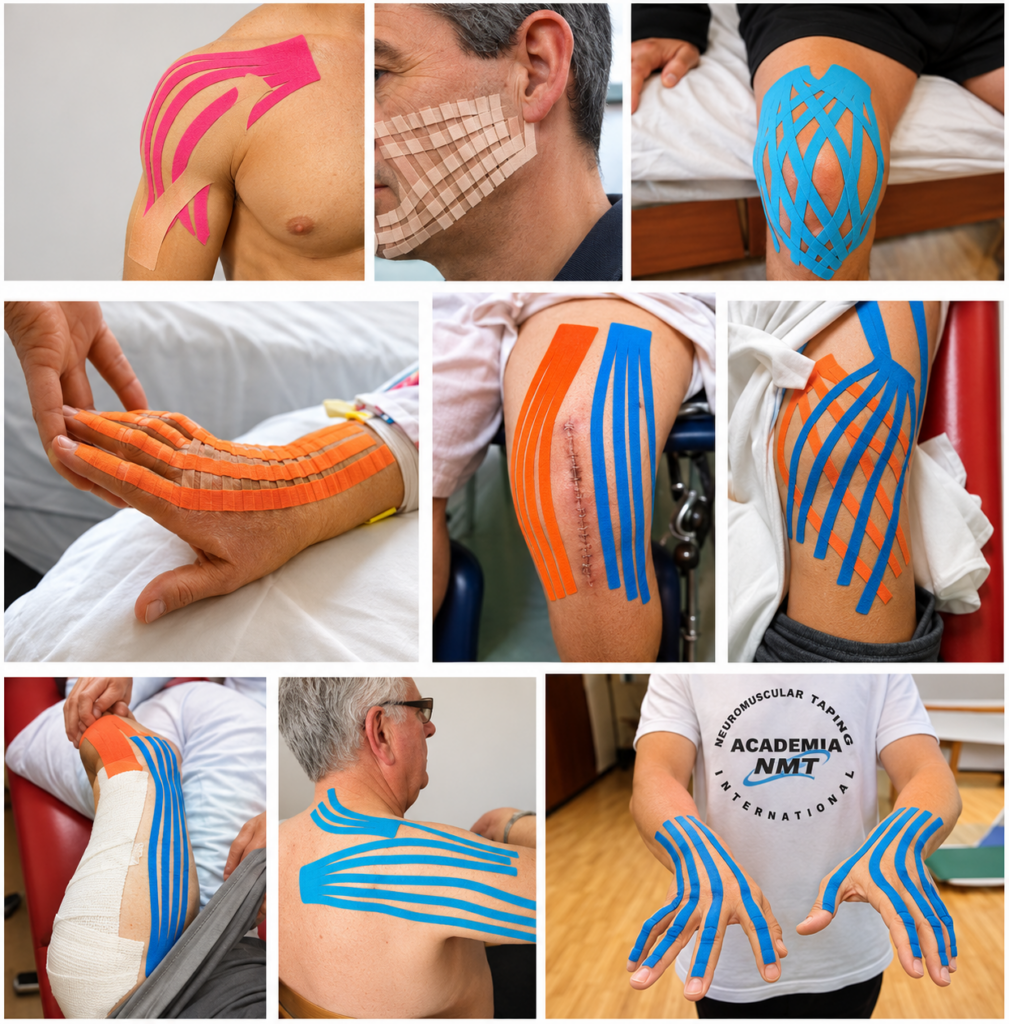
 The NeuroMuscular Taping (NMT) Professional Musculoskeletal Rehabilitation Course is an intensive four-day training program designed for healthcare professionals seeking to develop practical skills in elastic decompressive taping and its integration into rehabilitation. Developed by the NeuroMuscular Taping Institute in Italy, the course introduces a standardized clinical methodology based on tissue decompression, functional anatomy, biomechanical principles, and evidence-informed clinical reasoning.
Unlike conventional tension-based taping techniques, NMT decompressive applications use elastic tape applied with zero tension while the skin and underlying tissues are positioned in functional elongation. This produces characteristic skin convolutions when the body returns to its resting position, with the aim of supporting tissue mobility, sensory stimulation, lymphatic drainage, and functional recovery. The program places particular emphasis on rapid practical skill development, individualized treatment protocols, and the selection of appropriate NMT applications across acute, post-acute, and functional rehabilitation phases.
Who Should Attend?
This course is designed for healthcare professionals involved in musculoskeletal rehabilitation, movement therapy, and patient recovery, including:
- Medical doctors, rehabilitation specialists, and neurologists
- Physiotherapists and physical therapists
- Remedial massage therapists
- Rehabilitation and allied healthcare professionals
- Final-year students enrolled in relevant healthcare degree programs
No previous NeuroMuscular Taping certification is required. Participation and clinical application remain subject to the professional regulations of the country in which practitioners work.
Educational Objectives
The primary objective is to develop a comprehensive understanding of the NMT decompressive methodology and the practical skills necessary to integrate it into clinical rehabilitation. Participants learn to assess musculoskeletal conditions, understand the anatomical and physiological relationships involved in treatment, and select appropriate taping applications according to patient presentation and rehabilitation objectives. Through supervised practical training, participants develop the ability to apply NMT techniques to muscular, tendon, ligament, joint, lymphatic, circulatory, neurosensory, and postural conditions. Particular emphasis is placed on clinical reasoning, treatment sequencing, protocol development, and progressive rehabilitation, enabling practitioners to adapt applications as patients move through different stages of recovery.
Key Skills and Topics Covered
The course combines theoretical knowledge, functional anatomy, clinical reasoning, and intensive hands-on training.
- 32 hours over 4 days, combining theory, demonstrations, supervised practice, and clinical case discussions.
- NMT decompressive methodology, including zero-tension applications and the differences between decompressive and compressive techniques.
- Musculoskeletal anatomy and biomechanics, covering muscles, joints, tendons, ligaments, fascia, and functional movement.
- Lymphatic, vascular, neurological, and cutaneous anatomy, focusing on tissue mobility, circulation, and sensory stimulation.
- Musculoskeletal NMT applications for the neck, spine, shoulder, elbow, wrist, hand, hip, knee, ankle, and foot.
- Lymphatic drainage techniques, including double-fan, regional drainage, and joint-specific applications.
- Post-surgical and post-traumatic rehabilitation protocols, addressing oedema, haematomas, tissue mobility, and functional limitations.
- Practical application skills, including tape preparation, cutting, anatomical positioning, skin elongation, and application sequencing.
- Clinical reasoning and individualized treatment planning across acute, post-acute, and functional rehabilitation phases.
- Hands-on clinical practice, with instructor feedback, case studies, and evidence-informed applications.
- Final theoretical and practical assessment, evaluating clinical knowledge and application skills.
- Post-course mentoring, including a two-hour online feedback session within one to two months.
- Ongoing instructor support through a dedicated WhatsApp group for up to two years.
Course Structure and Practical Training
The training is organised into two complementary stages, each lasting two days.
Stage 1 – Upper Extremity and Cervical Rehabilitation
Days 1–2 | Upper Limb, Shoulder, Neck and Cervical Spine
This stage introduces the fundamental principles of NeuroMuscular Taping and develops practical applications for the upper extremities, shoulder girdle, cervical region, and associated lymphatic drainage pathways.
Day 1 – Muscular, Tendon, Ligament and Cervical Applications
Participants explore decompressive and compressive taping principles, functional anatomy, and clinical reasoning for upper-limb rehabilitation. Practical applications include the deltoid, upper, middle and lower trapezius, pectoralis, rhomboids, supraspinatus, biceps, triceps, hand flexors and extensors, sternocleidomastoid, and scalene muscles. Clinical applications address muscular dysfunction, cervical mobility, shoulder rehabilitation, neurosensory stimulation, and functional movement, including selected approaches to thumb arthritis.
Day 2 – Lymphatic, Joint and Functional Rehabilitation
The second day focuses on lymphatic drainage, post-surgical recovery, joint rehabilitation, and progressive functional applications. Participants practice anterior and lateral cervical drainage, upper-limb and elbow drainage, shoulder double-fan techniques, deltoid applications, and shoulder stability protocols. Additional clinical applications include wrist rehabilitation, trigger finger, cervical dysfunction, and selected neurological rehabilitation approaches.
Stage 2 – Lower Extremity, Lumbar and Postural Rehabilitation
Days 3–4 | Lower Limb, Hip, Knee, Ankle, Foot and Lumbar Spine
This stage expands the NMT methodology to the lower extremities and spinal region, integrating muscular, postural, lymphatic, and functional rehabilitation protocols.
Day 3 – Musculoskeletal and Lumbar Applications
Participants develop practical applications for the Achilles tendon, gastrocnemius, quadriceps, hamstrings, foot musculature, hip stabilizers, and lumbar region. Additional applications include the rectus abdominis, piriformis, adductors, tensor fasciae latae, and iliopsoas. Clinical reasoning focuses on muscular and tendon dysfunction, lumbar mobility, postural adaptations, neurosensory responses, and functional rehabilitation.
Day 4 – Lymphatic Drainage, Knee and Ankle Rehabilitation
The final practical day focuses on lower-limb lymphatic drainage, post-surgical knee rehabilitation, joint stability, and foot and ankle conditions. Participants learn regional drainage techniques for the lower extremities, posterior knee, and inguinal pathways, together with progressive postoperative knee applications. Additional practical sessions cover knee stability, plantar fasciitis, hallux valgus, Achilles tendon rehabilitation, and ankle sprain protocols.
Throughout both stages, clinical demonstrations are followed by supervised practice, individual corrections, case discussions, and instructor feedback.
Teaching Methodology
The NMT Institute adopts an interactive educational approach designed to accelerate practical skill acquisition and develop consistent clinical methodology.
- Training combines presentations, step-by-step application videos, anatomical explanations, supervised practical exercises, and clinical case discussions.
- Participants work in pairs, alternating between practitioner and model roles, allowing each student to practice applications and observe tissue responses.
- The instructor provides continuous feedback on anatomical positioning, tape preparation, application direction, skin elongation, and clinical objectives.
- Scientific research, evidence-based medicine, and clinical case presentations are integrated throughout the program.
- Full attendance and active participation are compulsory, ensuring that every participant completes the required practical learning activities.
- Final Examination and International Certification
- The course includes a structured theoretical and practical assessment designed to evaluate clinical understanding, technical precision, and practical competence.
The examination process includes:
- Theoretical assessment: 125 multiple-choice questions and written responses covering NMT methodology, anatomy, clinical reasoning, and treatment protocols.
- Practical assessment: Demonstration of 10 selected NMT applications, evaluated for anatomical accuracy, application technique, and clinical objectives.
- Individual feedback: Assessment results and instructor comments are provided to each participant.
- Certification standard: A minimum overall score of 90% is required, with final evaluations classified as Pass, Excellent, or Distinction.
Successful participants receive the NMT International Certification and Qualification Diploma in NeuroMuscular Taping for Upper and Lower Extremity Rehabilitation. Certificates and professional membership cards are made available digitally through the NMT Institute online platform. Certified practitioners are eligible for inclusion in the NMT International Practitioner Register, with the option to publish their professional details and clinical practice information.
Post-Course Mentoring and Professional Development
The NMT Institute recognizes that clinical competence develops through continued application, reflection, and professional feedback. Following course completion, participants receive a two-hour online feedback and mentoring session, scheduled approximately one to two months after training, to review practical applications, clinical questions, and treatment experiences. Participants also benefit from direct communication with their NMT instructor through a dedicated course WhatsApp group for up to two years.
Additional advanced NMT training opportunities include lymphatic rehabilitation, breast reconstruction rehabilitation, orthopaedics, neurology, paediatrics, sports medicine, spinal rehabilitation, postural rehabilitation, and scar management.
Course Information
- Course Code: NMT 4/I°
- Duration: 4 days – 32 hours, plus a two-hour online follow-up session
- Training Format: Classroom-based, intensive practical training
- Maximum Participants: 24
- Course Instructor: David Blow, Founder and Research Director, NeuroMuscular Taping Institute
- Entry Requirements: Healthcare professionals and eligible final-year healthcare students; no previous NMT certification required
- Assessment: Written and practical examination
- Certification: NMT International Certification – Upper and Lower Extremity Rehabilitation
- Learning Materials: NMT workbook, study materials, application resources, and practical training kit
- Continuing Education Credits: Subject to accreditation and approval in the country where the course is delivered
- Professional Support: Online mentoring and dedicated instructor communication for up to two years
- Join the International NMT Professional Community
Develop practical decompressive taping skills, strengthen your clinical reasoning, and learn to design individualized rehabilitation protocols through an internationally standardized training methodology. The NeuroMuscular Taping Institute connects professional education, clinical research, and continuing development to support healthcare professionals working across diverse rehabilitation settings. Advance your rehabilitation skills with NeuroMuscular Taping International Certification.
Program NeuroMuscular Taping Upper and lower extremities 2027
NeuroMuscular Taping (NMT) – Professional Lymphatic Rehabilitation
NeuroMuscular Taping (NMT) – Professional Lymphatic Rehabilitation
Integrating Elastic Decompression Methodology with Lymphatic Drainage, Vascular Rehabilitation and Post-Surgical Recovery
International NMT Certification Program | Stage 1 | 2 Days – 16 Hours
Course Overview
 The NeuroMuscular Taping (NMT) Professional Lymphatic Rehabilitation Course is an intensive two-day training program designed for healthcare professionals seeking to develop specialized skills in elastic decompressive taping for lymphatic and circulatory rehabilitation. Developed by the NeuroMuscular Taping Institute in Italy, the program introduces a standardized clinical methodology combining lymphatic anatomy, vascular physiology, functional assessment, tissue decompression, and evidence-informed clinical reasoning. Particular emphasis is placed on integrating NMT with established rehabilitation approaches, including manual lymphatic drainage, compression therapy, physiotherapy, remedial massage, myotherapy, and postoperative rehabilitation.
Unlike conventional tension-based taping, the NMT decompressive methodology uses elastic adhesive tape applied with zero tension while the skin and underlying tissues are positioned in functional elongation. When the body returns to its resting position, characteristic skin convolutions develop beneath the tape, producing a movement-responsive mechanical interaction intended to support superficial tissue mobility, sensory stimulation, and lymphatic function. The principal objective is to develop practical skills for integrating NMT into the management of lymphatic congestion, postoperative oedema, soft tissue swelling, and functional rehabilitation. Participants learn to select appropriate applications according to anatomical drainage pathways, clinical presentation, and the different stages of tissue recovery.
Who Should Attend?
This course is designed for professionals involved in lymphatic rehabilitation, musculoskeletal treatment, postoperative care, and patient recovery, including:
- Medical doctors and rehabilitation specialists
- Physiotherapists and physical therapists
- Occupational therapists
- Nurses involved in postoperative and lymphatic care
- Lymphoedema therapists and manual lymphatic drainage specialists
- Clinical myotherapists and remedial massage therapists
- Other appropriately qualified allied healthcare professionals
No previous NMT certification is required. Participants should have an appropriate foundation in anatomy and clinical assessment. Applications must remain within the practitioner’s professional scope and applicable national regulations.
Educational Objectives
The course develops the anatomical knowledge, clinical reasoning, and manual dexterity required to integrate decompressive NMT applications into lymphatic rehabilitation. Participants learn to understand superficial lymphatic drainage pathways, regional lymph node relationships, vascular and cutaneous anatomy, and the clinical implications of altered fluid movement following injury or surgery. Particular emphasis is placed on the relationship between skin elasticity, superficial fascia, lymphatic pathways, and movement-responsive decompressive applications.
Through supervised practical training, participants learn to assess lymphatic and soft tissue presentations, select appropriate application techniques, and develop individualized treatment protocols.
The program distinguishes between acute, post-acute, and functional rehabilitation phases, helping practitioners adapt NMT applications to changing tissue conditions and recovery objectives.
Key Skills and Topics Covered
The course combines lymphatic anatomy, clinical reasoning, and intensive hands-on NMT training.
- 16 hours over 2 days, combining theoretical instruction, demonstrations, supervised practice, and clinical case discussions.
- NMT decompressive methodology, including zero-tension applications and differences between decompressive and compressive techniques.
- Lymphatic and vascular anatomy, covering regional lymph nodes, superficial drainage pathways, cutaneous structures, and physiological fluid transport.
- Upper-extremity lymphatic applications, including the hand, forearm, elbow, shoulder, axillary region, and upper trunk.
- Lower-extremity lymphatic applications, including the foot, ankle, Achilles tendon, knee, thigh, hip, and inguinal region.
- Specialized drainage techniques, including double-fan, double-joint, regional drainage, and complete limb applications.
- Post-surgical and post-traumatic oedema management, including applications adapted to tissue healing and functional recovery.
- Trunk, abdominal, thoracic, and cervical drainage applications, addressing regional lymphatic relationships.
- Clinical reasoning and treatment sequencing across acute, post-acute, and functional rehabilitation phases.
- Integration with established lymphatic therapies, including manual lymphatic drainage, compression, and therapeutic exercise.
- Patient safety and contraindications, including infection, vascular complications, skin integrity, and appropriate medical referral.
- Supervised practical training, with instructor feedback, clinical case studies, and evidence-informed applications.
- Post-course mentoring, including a two-hour online feedback session within one to three months.
- Ongoing instructor support through a dedicated WhatsApp group for up to two years.
Integrating NMT with Lymphatic and Manual Rehabilitation
A Complementary Approach to Lymphatic Therapy
NeuroMuscular Taping provides healthcare professionals with an additional non-invasive application technique that may be incorporated into established lymphatic rehabilitation programs. While manual lymphatic drainage and compression therapy provide established approaches to managing selected lymphatic conditions, NMT introduces a prolonged, movement-responsive stimulus through elastic tape applied to the skin. The course explores how these different approaches may be combined within individualized rehabilitation protocols, while recognizing that the clinical effectiveness of NMT for specific lymphatic conditions continues to require rigorous investigation.
Manual Lymphatic Drainage and Decongestive Therapy
NMT can be integrated with manual lymphatic drainage and other components of comprehensive decongestive therapy. Participants learn to identify regional drainage pathways, assess proximal and distal anatomical relationships, and select appropriate applications according to the patient’s presentation. The course introduces decompressive taping as an adjunct rather than a replacement for established lymphoedema treatment, including compression where indicated.
Remedial Massage and Myotherapy
In remedial massage and myotherapy, NMT may complement soft tissue mobilization and appropriate manual techniques for selected presentations involving swelling, muscular discomfort, and restricted movement. Participants learn to integrate NMT with existing treatment approaches while considering tissue sensitivity, lymphatic anatomy, and the stage of recovery.
Post-Surgical and Post-Traumatic Rehabilitation
Surgical procedures and traumatic injuries may produce local swelling, tissue sensitivity, and temporary alterations in fluid movement. The course introduces NMT applications for selected postoperative and post-traumatic presentations, including shoulder, knee, ankle, and other musculoskeletal conditions. Applications are selected according to wound healing, clinical assessment, surgical precautions, and rehabilitation objectives.
Functional Movement and Rehabilitation
NMT applications can be incorporated into progressive rehabilitation programs involving movement, exercise, and restoration of daily function. Participants learn to select taping techniques that accommodate normal movement while complementing established rehabilitation strategies.
Course Structure and Practical Training
The program is organized into eight classroom learning sessions over two days, followed by practical assessment and an online mentoring session.
Day 1 – Upper Extremity, Axillary and Cervical Lymphatic Rehabilitation
Sessions 1–4 | NMT Principles, Upper-Limb Drainage and Post-Surgical Applications
The first day introduces the foundations of elastic decompressive taping and develops practical applications for the upper extremity, shoulder, axillary region, and cervical drainage pathways.
Session 1 – NMT Methodology and Lymphatic Clinical Reasoning
Participants review the development of NeuroMuscular Taping, the principles of decompressive and compressive applications, and the anatomical and physiological considerations relevant to lymphatic rehabilitation. The session addresses skin elasticity, lymphatic pathways, application techniques, clinical objectives, contraindications, and treatment planning.
Session 2 – Upper Extremity and Axillary Drainage
Practical training introduces NMT lymphatic applications for the hand and axillary region. Participants practice anterior and posterior axillary drainage techniques and learn to select applications according to regional anatomy and clinical presentation.
Session 3 – Advanced Upper-Limb and Double-Joint Drainage
Participants develop specialized applications for anterior and posterior double-joint drainage between the elbow and shoulder, together with wrist-to-elbow drainage techniques. Additional applications address the upper back, trunk, and complete upper-extremity drainage. Emphasis is placed on anatomical positioning, tape preparation, zero-tension application, and treatment sequencing.
Session 4 – Post-Surgical Shoulder and Cervical Drainage
This session introduces double-fan shoulder drainage and selected applications for postoperative upper-extremity swelling. Participants practice anterior, posterior, and lateral axillary applications, together with posterior and lateral cervical drainage. Clinical discussions address changes in lymphatic drainage following breast and axillary surgery, with emphasis on appropriate assessment and surgical precautions.
Day 2 – Lower Extremity, Trunk and Functional Lymphatic Rehabilitation
Sessions 5–8 | Ankle, Knee, Thigh, Hip and Regional Drainage
The second day develops practical NMT applications for the lower extremities and introduces regional drainage protocols for the abdomen, trunk, and cervical region.
Session 5 – Ankle and Regional Drainage Applications
Participants learn medial, lateral, and anterior ankle drainage techniques. Practical training includes the double-fan lateral ankle application and selection of appropriate techniques for local swelling and post-traumatic rehabilitation.
Session 6 – Foot, Lower-Limb and Abdominal Drainage
This session introduces decompressive applications for the foot, toes, Achilles tendon, and lower extremity. Participants practice double-joint lower-limb drainage, inguinal applications, and abdominal drainage techniques. Emphasis is placed on understanding anatomical drainage relationships and developing appropriate treatment sequences.
Session 7 – Knee, Popliteal and Trunk Drainage
Participants develop applications for the popliteal region and knee, including acute-phase drainage and double-joint techniques. Clinical examples include selected presentations involving knee bursitis and postoperative swelling. Additional practical applications address the thoracic region, trunk, and lateral neck.
Session 8 – Thigh, Hip and Advanced Regional Applications
The final classroom session focuses on medial and posterior thigh drainage, double-joint applications, and the lateral hip region. Clinical examples include selected presentations involving trochanteric bursitis and regional soft tissue swelling. The session concludes with a review of NMT procedures, current research, clinical case discussions, and theoretical assessment.
Developing Individualized Lymphatic Rehabilitation Protocols
An essential component of the course is the development of clinical reasoning specific to lymphatic drainage and decompressive taping. Participants learn to assess tissue condition, identify appropriate anatomical drainage pathways, and select applications according to clinical objectives.
Treatment planning considers three principal rehabilitation phases.
- Acute Phase: Applications prioritize tissue protection, patient comfort, and appropriate management of selected presentations involving swelling. NMT is introduced only when the clinical condition and skin integrity permit.
- Post-Acute Phase: Treatment focuses on progressive swelling management, tissue mobility, and integration with appropriate manual lymphatic drainage, compression therapy, and movement rehabilitation.
- Functional Phase: Applications are selected to complement progressive movement, exercise, restoration of functional mobility, and longer-term rehabilitation objectives.
- This structured approach helps practitioners develop consistent treatment protocols while adapting applications to individual patient needs.
Teaching Methodology
The NMT Institute adopts an intensive, practice-focused educational model consisting of approximately 90% practical training and 10% theoretical instruction. The program combines anatomical presentations, step-by-step application videos, instructor demonstrations, supervised practical exercises, and clinical case discussions. Participants work in pairs, alternating between practitioner and model roles, allowing each student to practice application techniques and receive individual feedback. The instructor provides continuous guidance on tape preparation, anatomical positioning, application direction, skin elongation, and clinical treatment objectives. Scientific research and evidence-based medicine are integrated throughout the program. Full attendance and active participation are compulsory. Appropriate privacy and consent procedures apply to clinical cases and practical demonstrations.
Final Examination and International Certification
The course includes a structured theoretical and practical assessment designed to evaluate clinical understanding, application accuracy, and treatment reasoning. The examination includes:
- Theoretical assessment: 75 multiple-choice questions and written responses covering NMT methodology, lymphatic anatomy, and clinical applications.
- Practical assessment: Demonstration of 10 selected NMT applications, evaluated for anatomical accuracy, technical execution, and clinical objectives.
- Individual feedback: Written and practical results are reviewed, with comments provided by the instructor.
- Assessment weighting: Attendance and classroom participation (45%), theoretical examination (20%), and practical application skills (35%).
- Certification standard: A minimum overall score of 90% is required, with final classifications of Pass, Excellent, or Distinction.
Successful participants receive the NMT International Certification and Qualification Diploma in Lymphatic Rehabilitation – Stage 1. Certificates and professional membership cards are available digitally through the NMT Institute online platform. Certified practitioners are eligible for inclusion in the NMT International Practitioner Register, with the option to publish their professional details and clinical practice information.
Post-Course Mentoring and Professional Development
The NMT Institute recognizes that clinical competence develops through continued application, case review, and professional feedback. Following the classroom program, participants receive a two-hour online mentoring and feedback session, scheduled approximately one to three months after course completion. This session provides an opportunity to review NMT applications, discuss clinical experiences, refine treatment protocols, and explore relevant research. A dedicated WhatsApp group provides direct communication with the NMT teaching team for up to two years. An optional research tutorial is also available for participants interested in scientific literature evaluation, clinical research, and preparation of professional case reports.
Additional NMT training opportunities include advanced lymphatic rehabilitation, breast surgery rehabilitation, orthopaedics, neurology, paediatrics, sports medicine, postural rehabilitation, and scar management.
Course Information
- Course Code: LinT 2/I°
- Course Duration: 2 days – 16 hours, with practical assessment and an additional two-hour online follow-up session
- Training Format: Intensive classroom-based practical training
- Course Structure: Eight classroom sessions, practical examination, and online follow-up
- Maximum Participants: 24
- Course Director: David Blow, Founder and Research Director, NeuroMuscular Taping Institute
- Teaching Team: Certified NMT instructors and tutors, including the Indonesian NMT Teaching Team where applicable
- Target Professionals: Medical doctors, physiotherapists, occupational therapists, nurses, lymphoedema therapists, and appropriately qualified allied healthcare professionals
- Prerequisites: Appropriate professional training in anatomy and rehabilitation; no previous NMT certification required
- Assessment: Written and practical examination
- Certification: NMT International Certification – Lymphatic Rehabilitation Stage 1
- Course Materials: NMT workbook, study resources, application demonstrations, and practical training kit
- Continuing Education Credits: Subject to accreditation and recognition by the relevant national or professional bodies
- Professional Support: Online mentoring and instructor communication for up to two years
- Advance Your Skills in Lymphatic Rehabilitation
Develop specialized NeuroMuscular Taping skills for lymphatic drainage, postoperative swelling management, and functional rehabilitation. Through intensive practical training, anatomical understanding, and structured clinical reasoning, this course provides healthcare professionals with the skills to integrate decompressive taping into individualized lymphatic rehabilitation programs. The NeuroMuscular Taping Institute promotes international professional education, clinical research, and evidence-informed rehabilitation, supporting the continued development of non-invasive therapeutic approaches.
Advance your professional expertise with NMT International Certification in Lymphatic Rehabilitation.
Download Program: NeuroMuscular Taping (NMT) – Professional Lymphatic Rehabilitation
NeuroMuscular Taping (NMT) – Professional Neurological Rehabilitation Specialization
NeuroMuscular Taping (NMT) – Professional Neurological Rehabilitation Specialization
Advanced Training in Central and Peripheral Nervous System Rehabilitation
Elastic Decompression Methodology for Stroke, Hemiplegia, Neuromuscular Disorders, Neurodegenerative Conditions, Spinal Dysfunction and Facial Rehabilitation
International NMT Certification Program | 4 Days – 32 Hours
Course Overview
Course Code: NMTC-NSP/I
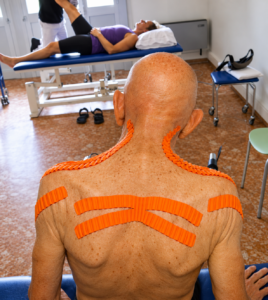 The NeuroMuscular Taping (NMT) Professional Neurological Rehabilitation Specialisation Program is an advanced four-day training course designed for healthcare professionals involved in the assessment, treatment and functional rehabilitation of patients with central and peripheral nervous system disorders.Developed by the NeuroMuscular Taping Institute in Italy, this specialised educational program builds upon the knowledge and practical skills acquired during the NMT Musculoskeletal Rehabilitation training pathway. It introduces advanced clinical applications of the elastic decompressive NMT methodology, integrating neurophysiology, functional anatomy, biomechanics, cutaneous sensory stimulation, lymphatic and vascular physiology, and evidence-informed rehabilitation principles.
The course focuses on neurological conditions involving impaired motor control, muscular weakness, spasticity, flaccidity, sensory alterations, neuropathic pain, movement disorders and functional limitations associated with neurological trauma and degenerative disease.Particular attention is given to stroke and hemiplegia rehabilitation, Parkinson’s disease, multiple sclerosis, amyotrophic lateral sclerosis (ALS), peripheral neuropathies, spinal nerve compression disorders, facial paralysis and chronic neurological pain.The NMT methodology uses elastic adhesive tape applied with zero tension (0%) while the skin and underlying body region are positioned in functional elongation. When the body returns to its neutral position, characteristic skin convolutions develop beneath the tape.
These decompressive applications are designed to provide specific cutaneous and mechanical stimuli and may complement established rehabilitation strategies addressing tissue mobility, oedema, pain, sensory awareness and functional movement. The program examines how NMT applications can be adapted to the acute, post-acute and functional phases of neurological rehabilitation, according to the patient’s neurological presentation, motor capacity, sensory function and rehabilitation objectives. Training combines approximately 20% theoretical instruction and 80% practical laboratory demonstrations and supervised applications, providing intensive opportunities for clinical reasoning and manual skill development.
Who Should Attend?
The program is designed for healthcare professionals involved in neurological and functional rehabilitation, including:
- Medical doctors, neurologists and rehabilitation specialists
- Physiotherapists and physical therapists
- Occupational therapists
- Eligible final-year students enrolled in relevant healthcare degree programs
The course is particularly relevant to professionals working in stroke units, neurological rehabilitation departments, spinal rehabilitation centres, outpatient rehabilitation services and multidisciplinary neurological care teams.
Mandatory Prerequisites
Participants must have successfully completed the previous NMT Musculoskeletal Rehabilitation training covering:
- Upper Extremity and Neck Rehabilitation
- Lower Extremity and Back Rehabilitation
These foundational modules provide the anatomical knowledge, technical skills and clinical reasoning required for advanced neurological applications. Clinical applications must remain within each participant’s professional scope of practice and applicable national healthcare regulations.
Educational Objectives
The primary objective is to develop advanced theoretical understanding, clinical reasoning and practical competence in the integration of NeuroMuscular Taping into neurological rehabilitation. By the end of the course, participants will be able to:
- Understand the development and specific principles of the NMT methodology for central and peripheral nervous system disorders.
- Review the neurophysiological, biomechanical and proprioceptive considerations associated with decompressive taping.
- Evaluate neurological impairment involving muscular weakness, spasticity, flaccidity, sensory dysfunction and altered motor control.
- Recognise the clinical differences between central and peripheral neurological lesions.
- Identify relevant muscular, fascial, cutaneous, lymphatic and vascular anatomical pathways.
- Develop individualised NMT application strategies for upper- and lower-limb neurological rehabilitation.
- Select applications for patients presenting with hemiplegia, paresis, altered muscle tone and movement limitations.
- Understand the potential integration of NMT into rehabilitation following cerebrovascular accidents and stroke.
- Develop clinical reasoning for NMT applications in Parkinson’s disease, multiple sclerosis, ALS and other neurodegenerative conditions.
- Evaluate postural dysfunction, spinal mobility restrictions and neuromuscular alterations associated with neurological disorders.
- Select appropriate applications for peripheral nerve compression, neuropathic pain and sensory alterations.
- Develop NMT strategies for selected headache, facial pain and facial paralysis presentations.
- Integrate lymphatic and vascular considerations into neurological rehabilitation protocols.
- Adapt application procedures according to acute, post-acute, chronic and functional rehabilitation objectives.
- Recognise contraindications, neurological precautions and limitations of the available scientific evidence.
- Integrate NMT into established physiotherapy, occupational therapy, neurological rehabilitation and multidisciplinary care programs.
The course emphasises individualised clinical assessment, anatomical precision, treatment sequencing and functional rehabilitation, rather than isolated tape application.
Clinical Applications and Rehabilitation Objectives
The program explores the potential integration of NeuroMuscular Taping into rehabilitation pathways for a broad range of neurological conditions.
Cerebrovascular Disorders and Stroke Rehabilitation
Participants examine the rehabilitation of patients presenting with hemiplegia, hemiparesis, muscular hypertonia, flaccidity, altered sensation and impaired functional movement. Particular attention is given to upper- and lower-limb recovery, shoulder dysfunction, hand mobility, foot drop, knee control and postural stability.
Neuromuscular and Movement Disorders
The program addresses selected rehabilitation objectives associated with Parkinson’s disease, multiple sclerosis, ALS and other neurological conditions involving movement limitations, muscular dysfunction and progressive disability.
Peripheral Neuropathies and Nerve Compression Disorders
Participants examine the relationships between peripheral nerve dysfunction, muscular pain, cramping, altered sensation and functional movement restrictions.
Neurological Pain and Sensory Dysfunction
The course introduces NMT application strategies for selected neuropathic pain presentations, headaches, facial pain and altered tactile sensitivity.
Spinal and Post-Surgical Neurological Rehabilitation
Participants review rehabilitation considerations following spinal surgery, nerve compression disorders and selected vertebral stabilisation procedures.
Palliative and Quality-of-Life Rehabilitation
The program introduces the importance of individualised treatment objectives in patients with progressive neurological disease, advanced disability or palliative care needs. Clinical priorities may include comfort, skin integrity, positioning, sensory awareness and maintenance of available function. NMT is presented as a complementary rehabilitation methodology. Its clinical effects vary according to the condition and available evidence, and it does not replace established neurological or medical treatment.
Course Structure and Practical Training
The program is organised into two complementary two-day modules, providing a total of 32 hours of specialised education and supervised practical training.
Module 1 – Stroke, Hemiplegia and Neurological Motor Rehabilitation
Day 1 – Neurophysiology, Stroke Rehabilitation and Upper-Extremity Applications
8 Hours – Clinical Foundations, Neurological Assessment and Practical Training
Session 1 – NMT Foundations in Neurological Rehabilitation
The opening session introduces the theoretical and practical principles of NeuroMuscular Taping in central and peripheral nervous system rehabilitation. Participants review the relationships between neurological impairment, cutaneous sensory stimulation, muscular function and biomechanical movement. Particular attention is given to elastic decompression, eccentric application principles, maximum lines of skin elasticity and the anatomical positioning required to produce zero-tension applications. The session examines muscular and neurosensory application strategies, lymphatic and vascular considerations, and the adaptation of NMT to acute, post-acute and functional neurological rehabilitation.
Practical laboratory: Anatomical assessment, tape preparation, skin elongation, application direction and supervised zero-tension decompressive techniques. Clinical indications, contraindications and neurological precautions are introduced.
Session 2 – Hemiplegic Syndrome and Stroke Rehabilitation
This session examines the clinical presentation and functional consequences of hemiplegia and hemiparesis following cerebrovascular injury. Participants review muscular hypertonia, spasticity, flaccid paralysis, altered sensation and impaired voluntary movement. The relationship between neurological damage, abnormal movement patterns and functional limitations is examined through clinical examples. Particular attention is given to hemiplegic shoulder dysfunction, elbow and wrist mobility, hand function and the difficulties associated with upper-limb recovery following stroke. Clinical reasoning focuses on selecting applications according to muscular tone, sensory function, rehabilitation phase and individual motor objectives.
Session 3 – Upper-Extremity Neurological Applications
The practical laboratory introduces NMT applications for the cervical region, shoulder girdle, scapular musculature, upper arm, forearm, wrist, hand and fingers. Participants examine relevant brachial plexus anatomical pathways and the relationships between muscular weakness, altered motor control and upper-limb movement restrictions.
Practical laboratory: NMT cervical, shoulder, scapular, elbow, forearm, wrist and hand applications, including selected axillary and upper-extremity lymphatic drainage techniques. Applications are integrated with functional reaching, upper-limb positioning, sensory awareness and appropriate rehabilitation exercises.
Session 4 – Clinical Integration and Stroke Case Studies
The final session focuses on integrating NMT into individualised stroke rehabilitation programs. Participants examine clinical presentations involving upper-limb spasticity, muscular weakness, shoulder dysfunction, oedema and reduced functional movement. Case discussions address neurological assessment, treatment sequencing, application selection and measurable rehabilitation objectives. The day concludes with supervised practical review and instructor feedback.
Day 2 – Lower-Extremity Hemiplegia, Gait Dysfunction and Postural Rehabilitation
8 Hours – Lower-Limb Applications, Neuromuscular Coordination and Functional Recovery
Session 5 – Lower-Extremity Neurological Rehabilitation
The second day examines lower-limb dysfunction following stroke and other central nervous system injuries. Participants review the relationships between muscular tone, joint mobility, postural control and functional movement. Clinical presentations include lower-limb spasticity, flaccidity, muscular weakness, altered movement patterns and reduced gait-related coordination. Particular attention is given to hip and knee mobility, ankle rigidity, foot positioning and the functional consequences of impaired lower-limb motor control.
Session 6 – Lower-Extremity NMT Applications
The practical laboratory introduces decompressive applications for the lumbar region, trunk, hip, pelvis, knee, ankle and foot. Participants examine the posterior muscular chain, trunk coordination and selected applications associated with knee hyperextension, ankle movement limitations and foot drop-related rehabilitation.
Practical laboratory: NMT lumbar, pelvic, hip, knee, ankle and foot applications, together with selected lower-extremity lymphatic drainage techniques. Applications are adapted to muscular tone, joint mobility, sensory function and individual rehabilitation objectives.
Session 7 – Functional Gait and Postural Rehabilitation
This session examines the integration of NMT into progressive neurological rehabilitation addressing standing, weight transfer, gait-related movement and postural coordination. Participants review the effects of hemiplegia, paresis, muscular hypertonia and impaired proprioception on functional mobility. Practical applications are combined with appropriate movement exercises, postural training and gait rehabilitation strategies. The emphasis is on supporting available movement and functional participation rather than presenting taping as a substitute for established neurological rehabilitation.
Session 8 – Clinical Case Demonstrations and Module Review
The final session of Module 1 integrates upper- and lower-extremity applications through neurological case discussions. Participants examine treatment planning for patients with hemiplegia, muscular weakness, altered tone, reduced mobility and movement-related limitations. The session concludes with practical review, clinical reasoning exercises and instructor feedback.
Module 2 – Neurodegenerative Disorders, Spinal Dysfunction and Facial Rehabilitation
Day 3 – Parkinson’s Disease, Multiple Sclerosis, ALS and Spinal Neurological Rehabilitation
8 Hours – Neuromuscular Disorders, Postural Applications and Clinical Reasoning
Session 9 – Neurodegenerative Disorders and Functional Rehabilitation
The third day examines the integration of NeuroMuscular Taping into rehabilitation programs for progressive neurological conditions. Participants review Parkinson’s disease, multiple sclerosis, amyotrophic lateral sclerosis and selected disorders associated with altered motor control, muscular dysfunction and progressive functional limitations. Clinical discussion includes muscular rigidity, hyperkinesia, hypokinesia, fatigue, postural adaptations, reduced movement coordination and the changing rehabilitation needs of patients with progressive neurological disease. Particular attention is given to individualised objectives, patient comfort, available functional capacity and multidisciplinary care.
Session 10 – Neuromuscular and Postural NMT Applications
This practical session examines applications involving the cervical musculature, shoulder girdle, thoracic and lumbar regions, pelvis and lower-extremity muscular chains. Participants review the relationships between trunk mobility, postural control, muscular coordination and functional movement.
Practical laboratory: NMT cervical, thoracic, lumbar, pelvic and selected upper- and lower-extremity applications, including regional lymphatic drainage where appropriate. Applications are adapted according to neurological presentation, muscular tone, movement limitations and rehabilitation objectives.
Session 11 – Spinal Neurological and Post-Surgical Rehabilitation
This session introduces selected NMT applications associated with spinal neurological dysfunction and postoperative rehabilitation. Participants review intervertebral disc herniation, nerve root compression, vertebral stabilisation procedures, spinal prostheses and postoperative tissue restrictions. Clinical reasoning focuses on muscular dysfunction, superficial tissue mobility, postoperative scar considerations and functional rehabilitation following spinal surgery.
Practical laboratory: Selected paravertebral, lumbar, thoracic and healed spinal scar applications. The session emphasises neurological assessment, surgical precautions and appropriate medical clearance.
Session 12 – Neurological Case Studies and Scientific Research
The final session examines clinical cases involving Parkinson’s disease, multiple sclerosis, ALS and spinal neurological dysfunction. Participants review the selection of applications according to clinical presentation, functional objectives and patient tolerance. Scientific literature and ongoing research are discussed, with particular attention to evidence limitations, measurable clinical outcomes and the responsible integration of NMT into neurological rehabilitation.
Day 4 – Facial Paralysis, Neuropathic Pain and Advanced Clinical Integration
8 Hours – Cranial Nerve Anatomy, Facial Applications, Neurological Pain and Final Assessment
Session 13 – Facial Paralysis and Cranial Nerve Rehabilitation
The final day introduces the clinical assessment and rehabilitation of facial movement disorders. Participants review the anatomy and functional relationships of the facial and trigeminal nerves, distinguishing central and peripheral facial paralysis. Clinical discussion includes facial asymmetry, altered muscular coordination, sensory dysfunction and post-traumatic or postoperative facial movement limitations. The session examines the relationships between facial expression, oral movement, muscular coordination and functional rehabilitation.
Session 14 – Upper and Lower Facial NMT Applications
The practical laboratory introduces precise decompressive applications for selected facial and orofacial muscular regions. Upper facial applications include the frontalis, epicranial musculature, corrugator supercilii, procerus, orbicularis oculi and selected periocular regions. Lower facial applications include the levator labii superioris alaeque nasi, levator labii superioris, levator anguli oris, zygomaticus major and minor, risorius, orbicularis oris, buccinator, depressor anguli oris, depressor labii inferioris and platysma.
Practical laboratory: NMT upper and lower facial applications adapted to anatomical positioning, skin elasticity, facial movement and individual rehabilitation objectives. Particular attention is given to skin sensitivity, application direction and safety near the eyes and mouth.
Session 15 – Neuropathic Pain and Sensory Rehabilitation
This session examines selected neurological pain presentations, including tension-type headaches, migraine, cluster headaches, cranial neuralgias, trigeminal-related facial pain and chronic neuropathic symptoms. Participants review altered tactile sensitivity, muscular discomfort and sensory dysfunction associated with neurological conditions. Clinical discussion also includes diabetic neuropathy, multiple sclerosis, Parkinson’s disease and Alzheimer’s disease, with emphasis on individualised rehabilitation objectives and patient safety.
Practical laboratory: Selected cervical, craniofacial and regional decompressive applications intended to complement established neurological care. The session distinguishes symptomatic rehabilitation support from treatment of the underlying neurological disorder.
Session 16 – Clinical Integration and Final Assessment
The final session integrates the principal NMT applications developed throughout the four-day program. Participants review clinical cases involving stroke, hemiplegia, neuromuscular disorders, spinal dysfunction, facial paralysis and neurological pain. Clinical reasoning focuses on anatomical precision, rehabilitation objectives, treatment sequencing, contraindications and measurable functional outcomes. The course concludes with practical review, scientific discussion and the final theoretical and practical examinations.
Teaching Methodology and Practical Skill Development
The NMT Institute adopts an interactive educational approach combining approximately 20% theoretical instruction and 80% supervised practical training. The program integrates functional anatomy, neurophysiology, clinical assessment, instructor demonstrations, practical laboratories and neurological case discussions. Participants work in pairs, alternating between practitioner and model roles. Each application is demonstrated by the instructor and repeated under supervision to develop anatomical accuracy, manual competence and clinical reasoning. Additional tutorials, laboratory sessions or supervised clinical experience may be organised according to educational requirements. Full attendance and active practical participation are mandatory.
Final Examination and International Certification
The program includes a comprehensive theoretical and practical examination designed to evaluate neurological knowledge, clinical reasoning, anatomical accuracy and technical competence.
- Theoretical examination: 125 multiple-choice questions covering NMT methodology, neurological rehabilitation principles, functional anatomy, clinical reasoning and application procedures.
- Practical examination: Supervised demonstration of selected NMT applications from the four-day training program.
Applications are evaluated according to anatomical accuracy, tape preparation, patient positioning, skin elongation, zero-tension methodology, application direction, neurological rehabilitation objectives and patient safety. The final assessment combines the theoretical examination, practical examination and instructor/tutor evaluation. A minimum score of 85% is required for successful completion. Results are classified as Pass, Excellent or Distinction. Successful participants receive the NMT International Certification – Neurological Rehabilitation Specialisation, together with an NMT qualification diploma. Certification confirms successful completion of the educational program and does not extend the participant’s legal scope of professional practice.
Continuing Professional Development
The NMT Institute encourages participants to continue developing practical competence through supervised clinical experience, case discussions and additional specialised training. Advanced tutorials may address stroke rehabilitation, central and peripheral nervous system disorders, neuromuscular movement dysfunction, patient handling and evidence-informed rehabilitation. Additional practical laboratories or supervised clinical internships may be organised where appropriate.
Educational Materials
Participants receive an NMT educational workbook and practical training kit containing a backpack, skin-marking pencil, scissors, multicoloured elastic adhesive tape, course workbook, certification documentation and professional membership card. Participants are expected to bring their practical training materials to all laboratory sessions. Recommended Reading
- NeuroMuscular Taping: From Theory to Practice – Edi Ermes, Milan, 2012.
- NeuroMuscular Taping: Treatment of Oedema, Haematoma and Scarring – Edi Ermes, Milan.
- Functional anatomy, clinical neurophysiology, lymphatic physiology, neurological rehabilitation and evidence-based medicine literature.
Course Information
- Course Title: NeuroMuscular Taping – Professional Neurological Rehabilitation Specialisation
- Course Code: NMTC-NSP/I
- Duration: 4 days – 32 hours.
- Module 1: Stroke, Hemiplegia and Neurological Motor Rehabilitation – 2 days, 16 hours.
- Module 2: Neurodegenerative Disorders, Spinal Dysfunction and Facial Rehabilitation – 2 days, 16 hours.
- Training Format: Classroom education, clinical demonstrations and supervised practical laboratories.
- Teaching Methodology: Approximately 20% theory and 80% practical training.
- Maximum Participants: 24.
- Course Director: David Blow, Founder and Research Director, NeuroMuscular Taping Institute.
- Target Professionals: Medical doctors, neurologists, physiotherapists, occupational therapists and eligible final-year healthcare students.
- Mandatory Prerequisites: Completion of NMT Musculoskeletal Rehabilitation training covering Upper Extremity and Neck, and Lower Extremity and Back.
- Assessment: 125-question theoretical examination and supervised practical examination.
- Passing Requirement: Minimum 85%.
- Certification: NMT International Certification – Neurological Rehabilitation Specialisation.
- Continuing Education Credits: Subject to accreditation and approval in the country where training is delivered.
Advancing Neurological Rehabilitation Through Decompressive Taping
The NMT Professional Neurological Rehabilitation Specialisation Program provides healthcare professionals with a structured educational pathway for integrating elastic decompressive taping into central and peripheral nervous system rehabilitation. Through neurophysiology, functional anatomy, clinical reasoning and intensive supervised practical training, participants develop specialised skills for adapting NMT to individual neurological rehabilitation objectives. The integration of stroke rehabilitation, neuromuscular disorders, spinal dysfunction, facial rehabilitation and sensory applications provides a multidisciplinary framework for supporting functional movement, patient comfort and rehabilitation participation. Neurological rehabilitation is a continuous process of adaptation, recovery and functional learning. NeuroMuscular Taping offers an additional therapeutic approach that can be integrated into this process through individualised clinical assessment and evidence-informed practice.
NeuroMuscular Taping (NMT) – Professional Pediatric Rehabilitation
NeuroMuscular Taping (NMT) – Professional Pediatric Rehabilitation
Integrating Elastic Decompression Methodology with Pediatric Neurological, Motor and Functional Rehabilitation
International NMT Certification Program | Stage 1 | 4 Days – 32 Hours
Course Overview
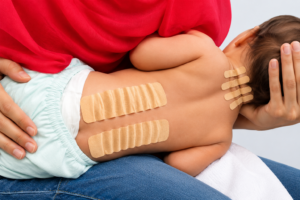 The NeuroMuscular Taping (NMT) Professional Pediatric Rehabilitation Course is an intensive four-day professional training program designed for healthcare practitioners seeking to develop specialized skills in elastic decompressive taping and its integration into pediatric neurological, musculoskeletal, and developmental rehabilitation. Developed by the NeuroMuscular Taping Institute in Italy, the program introduces a standardized clinical methodology combining pediatric functional anatomy, neuromuscular assessment, tissue decompression, developmental movement, and evidence-informed clinical reasoning. Particular emphasis is placed on integrating NMT with established pediatric rehabilitation approaches, including neurodevelopmental therapy, physiotherapy, occupational therapy, functional movement training, postural rehabilitation, and multidisciplinary developmental care.
Unlike conventional tension-based taping techniques, the NMT decompressive methodology uses elastic adhesive tape applied with zero tension while the skin and underlying tissues are positioned in functional elongation. When the body returns to its resting position, characteristic skin convolutions develop beneath the tape, creating a movement-responsive mechanical interaction intended to support superficial tissue mobility, sensory stimulation, and functional rehabilitation. The principal objective is to develop practical clinical skills for integrating NMT into individualized pediatric rehabilitation programs, addressing motor development, neuromuscular dysfunction, postural control, movement limitations, and selected neurological and musculoskeletal conditions. Participants learn to select appropriate applications according to the child’s diagnosis, developmental stage, anatomical structures involved, functional abilities, and clearly defined rehabilitation objectives.
Who Should Attend?
This course is designed for professionals involved in pediatric neurological, developmental, and musculoskeletal rehabilitation, including:
- Medical doctors, pediatricians, and rehabilitation specialists
- Pediatric physiotherapists and physical therapists
- Occupational therapists
- Pediatric neurological and developmental rehabilitation professionals
- Healthcare professionals working with children with motor disabilities
- Eligible final-year students in relevant healthcare degree programs
Previous NMT base course certification is required. Participants should have an appropriate foundation in anatomy, pediatric assessment, and rehabilitation. All applications must remain within the practitioner’s professional scope and applicable national regulations.
Educational Objectives
The course develops the anatomical knowledge, clinical reasoning, and practical application skills required to integrate decompressive NMT techniques into pediatric rehabilitation. Participants learn to understand the relationships between neurological development, muscular activity, postural control, joint stability, sensory feedback, and functional movement. Particular emphasis is placed on the integration of decompressive stimulation with developmental rehabilitation, movement facilitation, muscular coordination, and progressive functional recovery. Through supervised practical training, participants learn to assess pediatric presentations, identify appropriate anatomical regions, select NMT applications, and develop individualized treatment protocols. The program introduces treatment planning across acute, post-acute, and functional rehabilitation phases, while adapting applications to the child’s developmental stage, tolerance, and therapeutic objectives. The course also promotes multidisciplinary clinical reasoning, encouraging collaboration between medical specialists, physiotherapists, occupational therapists, and other pediatric rehabilitation professionals.
Key Skills and Topics Covered
The course combines pediatric functional anatomy, neurological assessment, clinical reasoning, and intensive practical NMT training.
- 32 hours over 4 days, combining theoretical instruction, demonstrations, supervised practice, and clinical case discussions.
- NMT elastic decompression methodology, including zero-tension applications and differences between decompressive and compressive techniques.
- Pediatric neurological and motor development, including movement milestones, postural control, muscle tone, and functional coordination.
- Upper-extremity rehabilitation, including shoulder, elbow, wrist, hand, and fine motor function.
- Lower-extremity rehabilitation, including hip, knee, ankle, foot, and functional movement patterns.
- Neurological rehabilitation, including cerebral palsy, hemiplegic presentations, hypotonia, hypertonia, and selected developmental motor disorders.
- Musculoskeletal and postural rehabilitation, including joint instability, muscular retractions, ligamentous laxity, and altered alignment.
- Sensory and neuromuscular applications, exploring the relationship between cutaneous stimulation, movement awareness, and functional rehabilitation.
- Lymphatic and circulatory applications, including selected presentations involving immobility-related swelling and postoperative oedema.
- Scar and postoperative rehabilitation, addressing tissue mobility, scar sensitivity, and selected surgical recovery conditions.
- Clinical reasoning and treatment sequencing, adapted to pediatric developmental needs and rehabilitation phases.
- Integration with established pediatric therapies, including physiotherapy, occupational therapy, neurodevelopmental rehabilitation, and functional exercises.
- Patient safety and contraindications, including skin integrity, medical complexity, neurological conditions, and appropriate clinical referral.
- Supervised practical training, with instructor feedback, case studies, and evidence-informed applications.
- Post-course mentoring, including a two-hour online feedback session approximately two months after training.
- Ongoing instructor support through a dedicated WhatsApp group for up to two years.
Integrating NMT with Pediatric Rehabilitation
A Complementary Approach to Pediatric Neurorehabilitation
NeuroMuscular Taping provides pediatric rehabilitation professionals with an additional non-invasive technique that may be incorporated into established treatment programs. While conventional pediatric rehabilitation employs movement training, postural facilitation, therapeutic exercise, sensory integration, and functional task practice, NMT introduces a prolonged, movement-responsive stimulus through elastic tape applied to selected anatomical regions. The course explores how these approaches may be combined within individualized rehabilitation protocols, recognizing that evidence supporting NMT for specific pediatric neurological and developmental conditions remains developing.
Neurological and Motor Development Rehabilitation
Children with neurological conditions may experience altered muscle tone, reduced motor coordination, postural instability, and limitations in functional movement. Participants learn to identify relevant anatomical and functional relationships and consider appropriate NMT applications as adjuncts to established neurological rehabilitation. Clinical examples include cerebral palsy, hemiplegic motor patterns, hypotonia, hypertonia, and developmental movement difficulties.
Upper-Limb and Fine Motor Rehabilitation
Upper-extremity function is essential for reaching, grasping, manipulation, and participation in daily activities. The course introduces NMT applications for the shoulder girdle, elbow, wrist, hand, and thumb, with particular attention to proximal stability and distal motor control. Participants explore integration with occupational therapy, hand rehabilitation, and task-oriented motor training.
Lower-Limb and Functional Mobility Rehabilitation
Lower-extremity rehabilitation addresses the anatomical and functional relationships involved in standing, walking, balance, and postural control. Participants learn NMT applications for the hip, thigh, knee, ankle, and foot, including selected approaches to muscular retractions, altered joint alignment, and functional movement limitations. Applications are integrated with appropriate physiotherapy, orthotic management, and progressive movement training.
Postural Control and Trunk Rehabilitation
Trunk stability and postural control are important components of pediatric motor development. The course introduces decompressive applications for the cervical, thoracic, lumbar, abdominal, and pelvic regions. Clinical reasoning focuses on the relationship between proximal stability, postural alignment, and functional movement.
Lymphatic and Post-Surgical Rehabilitation
Children undergoing surgery or experiencing prolonged immobility may develop swelling, tissue sensitivity, and restrictions in movement. The course introduces selected NMT applications for lymphatic drainage, postoperative tissue mobility, and scar rehabilitation. Applications are selected according to wound healing, medical precautions, skin condition, and rehabilitation objectives.
Scar and Sensory Rehabilitation
Surgical scars and tissue restrictions may influence movement, comfort, and sensory responses. Participants learn to assess scar location, tissue mobility, hypersensitivity, and hyposensitivity. Following appropriate healing and medical clearance, NMT applications may complement established scar mobilization and sensory rehabilitation techniques.
Course Structure and Practical Training
The program is organized into four full days of interactive training, combining theoretical presentations, practical demonstrations, supervised application exercises, and pediatric clinical case discussions.
Day 1 – Foundations of NMT and Upper-Extremity Pediatric Rehabilitation
NMT Principles, Functional Anatomy, Upper-Limb Applications and Clinical Reasoning. The first day introduces the NeuroMuscular Taping methodology and its application to pediatric rehabilitation, with emphasis on functional anatomy, clinical assessment, and foundational upper-extremity techniques.
NMT Methodology and Pediatric Clinical Reasoning: Participants review the development of NeuroMuscular Taping, decompressive and compressive principles, skin elasticity, and the anatomical relationships relevant to pediatric rehabilitation. Clinical discussions address neurological development, muscular function, movement limitations, treatment objectives, contraindications, and application selection.
Upper-Extremity and Cervical Applications: Practical training introduces NMT applications for the deltoid, upper and middle trapezius, cervical musculature, biceps brachii, wrist and hand flexors, hand extensors, and long extensor of the thumb. Additional applications address the lumbar paravertebral musculature.
Clinical Integration and Practical Development: Participants explore selected applications for hemiplegic hand presentations, upper-limb dysfunction, and movement limitations. Instructor demonstrations are followed by supervised practice, individual corrections, and clinical case discussions.
Day 2 – Pediatric Neurological Rehabilitation and Upper-Limb Motor Control
Cerebral Palsy, Hemiplegia, Shoulder Function and Fine Motor Rehabilitation. The second day develops specialized NMT applications for pediatric neurological conditions affecting the upper extremities.
Neurological Assessment and Treatment Planning: Participants review cerebral palsy, hemiplegic presentations, and neurological movement disorders. Clinical reasoning addresses muscular tone, motor control, joint stability, movement patterns, and rehabilitation objectives. Treatment planning considers acute, post-acute, and functional rehabilitation phases.
Shoulder and Brachial Plexus Rehabilitation: Practical applications address shoulder dysfunction, proximal hypotonia, scapulo-humeral control, and selected presentations involving obstetric brachial plexus injury. Participants explore the relationship between proximal stability and upper-limb functional development.
Elbow, Wrist and Hand Rehabilitation: Clinical applications focus on neurological presentations involving the elbow, wrist, and hand. Participants learn to select NMT techniques for altered muscular activity, reduced motor control, and functional movement limitations.
Muscular Retractions and Lymphatic Applications: The course introduces selected applications for muscle-tendon retractions and immobility-related lymphatic congestion. The day concludes with practical analysis, treatment planning, clinical case discussions, and instructor feedback.
Day 3 – Lower-Extremity, Lumbar and Postural Rehabilitation
Hip, Knee, Ankle, Foot and Functional Movement Applications. The third day expands the NMT methodology to lower-extremity and trunk rehabilitation.
Lower-Extremity Functional Anatomy and Clinical Reasoning: Participants review the anatomical and biomechanical relationships involved in pediatric lower-limb movement. Clinical discussions address muscular coordination, joint alignment, postural control, and developmental movement patterns.
Muscular and Tendon Applications: Practical training includes NMT applications for the gastrocnemius and soleus complex, hamstrings, Achilles tendon, quadriceps, hip adductors, iliopsoas, tensor fasciae latae, piriformis, and selected foot muscles. Additional applications address the rectus abdominis and lumbar region.
Knee and Lower-Limb Alignment: Participants explore selected applications for genu varum, genu valgum, patellar positioning, and altered femoral-tibial alignment. Clinical reasoning emphasizes functional assessment and integration with established rehabilitation strategies.
Muscular Retractions and Functional Recovery: The course introduces applications for muscle-tendon restrictions, movement limitations, and immobility-related lymphatic congestion. Practical sessions focus on combining applications according to anatomical relationships and rehabilitation objectives. The day concludes with clinical case discussions and instructor feedback.
Day 4 – Advanced Pediatric Neurological, Functional and Post-Surgical Rehabilitation
Lower-Limb Neurological Conditions, Joint Stability, Scar Rehabilitation and Clinical Integration. The fourth day develops advanced clinical reasoning for pediatric neurological and musculoskeletal conditions, with particular emphasis on functional rehabilitation and individualized treatment protocols.
Neurological Lower-Limb Rehabilitation: Participants review cerebral palsy and hemiplegic presentations affecting the lower extremities. Clinical assessment addresses hypertonia, hypotonia, altered movement patterns, pelvic instability, and hip dysfunction.
Joint Stability and Musculoskeletal Conditions: Practical applications address knee hyperextension, ligamentous laxity, varus and valgus alignment, and selected foot deformities, including clubfoot. Participants learn to integrate NMT with established physiotherapy, orthotic management, and functional movement rehabilitation.
Lymphatic and Post-Surgical Applications: The course introduces lymphatic drainage principles and selected applications for immobility-related swelling and postoperative rehabilitation. Participants explore treatment sequencing and anatomical considerations relevant to pediatric care.
Scar and Sensory Rehabilitation: Practical training includes scar assessment and selected applications for abdominal, thoracic, lumbar, cervical, and upper-limb surgical scars. Clinical reasoning addresses tissue adhesions, scar mobility, hypersensitivity, and hyposensitivity.
Complex Pediatric Clinical Presentations: The final day includes an overview of selected neurological and developmental conditions, including spinal muscular atrophy, cerebral palsy, motor developmental delay, plagiocephaly, and associated functional limitations. Clinical discussions also consider children with complex medical needs, including those with gastrostomy feeding devices, and the importance of multidisciplinary assessment and appropriate treatment precautions.
Clinical Protocol Development and Final Assessment: Participants review treatment sequencing, anatomical priorities, application combinations, and individualized rehabilitation objectives. The day concludes with clinical case discussions, theoretical assessment, and preparation for the practical examination.
Developing Individualized Pediatric Rehabilitation Protocols
A central component of the course is the development of NMT-specific clinical reasoning and treatment sequencing according to the child’s diagnosis, developmental stage, neurological presentation, tissue condition, and functional objectives. Participants learn to determine which anatomical regions should be prioritized, how applications may be combined, and when decompressive taping can complement established pediatric rehabilitation interventions.
Treatment planning considers three principal rehabilitation phases.
- Acute Phase: Rehabilitation priorities include patient safety, tissue protection, appropriate sensory stimulation, and management of selected presentations involving swelling or movement sensitivity. NMT is introduced only when clinically appropriate and when skin integrity and medical precautions permit.
- Post-Acute Phase: Treatment focuses on progressive tissue mobility, neuromuscular coordination, joint movement, and integration with appropriate physiotherapy, occupational therapy, and functional exercises.
- Functional Phase: Applications are selected to complement motor development, postural control, balance, upper- and lower-limb function, and participation in daily activities.
In pediatric rehabilitation, these phases are adapted to the child’s developmental needs rather than interpreted solely as stages following an acute injury. This structured approach encourages consistent clinical reasoning while allowing individualized applications based on the child’s abilities, treatment tolerance, and rehabilitation objectives.
Teaching Methodology
The course is delivered through live, instructor-led training, designed to maximize practical participation and interaction despite the distance-learning format. The program combines anatomical presentations, step-by-step application videos, live demonstrations, supervised practical exercises, and pediatric clinical case discussions. Participants practice NMT applications using course participant, an appropriate consenting model, such as a colleague or family member, under live instructor supervision. The teaching team provides individual corrections and feedback on anatomical positioning, tape preparation, application direction, skin elongation, and technical execution. Clinical cases may be presented by instructors or participants, with discussion of diagnosis, treatment objectives, application selection, treatment sequencing, and anticipated functional outcomes. Scientific research and evidence-based medicine are integrated throughout the program. Full attendance and active participation are compulsory. Appropriate privacy and consent procedures apply to models, pediatric clinical cases, and practical demonstrations. For pediatric patients, parent or legal guardian consent and appropriate clinical supervision are essential.
Final Examination and International Certification
The course includes a structured theoretical and practical assessment designed to evaluate clinical understanding, anatomical knowledge, application accuracy, and treatment reasoning.
The examination includes:
- Theoretical assessment: 125 multiple-choice questions and written responses covering NMT methodology, pediatric anatomy, neurological rehabilitation, and clinical applications.
- Practical assessment: Demonstration of 10 selected NMT applications using an appropriate consenting model, evaluated through live video by an NMT instructor.
- Small-group assessment: Practical examinations are organized in groups of approximately 10 participants to maximize individual instructor feedback.
- Individual feedback: Written and practical results are reviewed, with comments provided by the teaching team.
- Certification standard: A minimum overall score of 90% is required, with final classifications of Pass, Excellent, or Distinction.
Successful participants receive the NMT International Certification and Qualification Diploma in Professional Pediatric Rehabilitation – Stage 1. Certificates and professional membership cards are available digitally through the NMT Institute online platform. Certified practitioners are eligible for inclusion in the NMT International Practitioner Register, with the option to publish their professional details and clinical practice information.
Post-Course Mentoring and Professional Development
The NMT Institute recognizes that clinical competence develops through continued application, practical experience, and professional feedback. Following the training program, participants receive a two-hour online mentoring and feedback session, scheduled approximately two months after course completion. This session provides an opportunity to review NMT applications, discuss pediatric clinical experiences, refine treatment protocols, and explore relevant scientific research. A dedicated WhatsApp group provides direct communication with the NMT teaching team for up to two years. Participants may continue their professional development through additional specialized NMT programs in pediatric rehabilitation, neurology, lymphatic rehabilitation, orthopaedics, postural rehabilitation, and speech therapy.
Course Information
- Course Title: NMT Professional Pediatric Rehabilitation – Stage 1
- Course Code: NMT TNP/4°
- Course Duration: 4 days – 32 hours, including theoretical and practical assessment, plus a two-hour online follow-up session
- Training Format: Live, interactive, instructor-led practical training
- Maximum Participants: 24–30
- Course Director and Instructor: David Blow, Founder and Research Director, NeuroMuscular Taping Institute
- Target Professionals: Medical doctors, pediatric rehabilitation specialists, physiotherapists, occupational therapists, and eligible healthcare students
- Prerequisites: Appropriate professional training in anatomy and rehabilitation; no previous NMT certification required
- Assessment: Written examination and live practical assessment of 10 applications
- Certification: NMT International Certification – Professional Pediatric Rehabilitation, Stage 1
- Course Materials: NMT workbook, study resources, step-by-step application videos, and practical training kit where delivery is available
- Practical Requirements: An appropriate consenting model, suitable camera-equipped device, reliable internet connection, and NMT application materials
- Continuing Education Credits: Subject to accreditation and recognition by the relevant national or professional bodies
- Professional Support: Two-hour online mentoring session and instructor communication for up to two years
Advance Your Skills in Pediatric Neurological and Motor Rehabilitation
Develop specialized NeuroMuscular Taping skills for pediatric neurological rehabilitation, motor development, postural control, and functional movement recovery. Through intensive practical training, developmental anatomical understanding, and structured clinical reasoning, this course provides healthcare professionals with additional skills to integrate decompressive taping into individualized pediatric rehabilitation programs. The NeuroMuscular Taping Institute promotes international professional education, clinical research, and evidence-informed practice, supporting the continued development of non-invasive rehabilitation methodologies for children with neurological, developmental, and musculoskeletal conditions.
Advance your professional expertise with NMT International Certification in Pediatric Rehabilitation – Stage 1.
Download Program: NeuroMuscular Taping (NMT) – Professional Pediatric Rehabilitation
NeuroMuscular Taping (NMT) – Orthopaedic and Post-Surgical Rehabilitation
NeuroMuscular Taping (NMT)
Professional Orthopaedic and Post-Surgical Rehabilitation
Stage 1 – Upper Extremity Rehabilitation
Stage 2 – Lower Extremity, Spinal and Post-Surgical Rehabilitation
Elastic Decompression Methodology for Orthopaedic Trauma, Musculoskeletal Surgery, Oedema, Scar Management and Functional Recovery
International NMT Certification Program | 4 Days – 32 Hours + 2-Hour Online Follow-Up
Course Overview
Course Code: NMT OS 4/I°
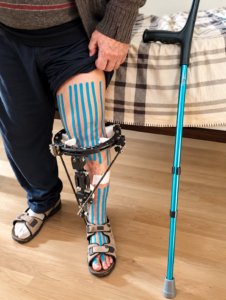 The NeuroMuscular Taping (NMT) Professional Orthopaedic and Post-Surgical Rehabilitation Course is an intensive four-day training program designed for healthcare professionals involved in musculoskeletal rehabilitation, orthopaedic trauma, postoperative recovery and functional rehabilitation. Developed by the NeuroMuscular Taping Institute in Italy, the program introduces a structured clinical methodology based on elastic decompressive taping applied with zero tension (0%). It integrates functional anatomy, biomechanics, cutaneous elasticity, lymphatic and vascular physiology, neurosensory stimulation and clinical reasoning.
Orthopaedic trauma and surgery frequently produce oedema, haematomas, pain, muscular inhibition, restricted joint mobility, scar-related tissue limitations and reduced functional movement. NMT provides an additional non-invasive intervention that may complement established medical and physiotherapeutic rehabilitation strategies. Unlike conventional tension-based taping, NMT decompressive applications are performed with elastic adhesive tape applied without tension while the skin and underlying body region are positioned in functional elongation. When the patient returns to a neutral position, characteristic skin convolutions become visible beneath the tape.
The course examines the integration of this methodology during the acute, post-acute and functional phases of rehabilitation, adapting applications to tissue healing, surgical precautions, clinical presentation and individual rehabilitation objectives. The program is organised into two complementary stages. Stage 1 concentrates on upper-extremity trauma, surgery and rehabilitation. Stage 2 addresses lower-extremity rehabilitation, joint replacement, selected spinal procedures, lymphatic recovery and scar management. Intensive supervised practical training enables participants to develop technical precision, clinical reasoning and the ability to integrate NMT into multidisciplinary rehabilitation.
Who Should Attend?
The course is intended for medical doctors, orthopaedic specialists, rehabilitation physicians, neurologists, physiotherapists, physical therapists, remedial massage therapists and other eligible allied healthcare professionals. It is particularly relevant to practitioners working in hospitals, orthopaedic departments, postoperative rehabilitation units, physiotherapy clinics and multidisciplinary rehabilitation services. Eligible final-year healthcare students may also participate.
Previous NMT certification is required. All applications must remain within the participant’s professional scope of practice and applicable healthcare regulations.
Educational Objectives
The program develops the theoretical knowledge and practical competence necessary to integrate NeuroMuscular Taping into orthopaedic and post-surgical rehabilitation. Participants learn to differentiate decompressive zero-tension applications from tension-based taping, assess the functional anatomy and biomechanics of the extremities, and understand the relationship between skin elasticity, muscular structures, fascia, lymphatic pathways and sensory stimulation. Training includes the selection of appropriate applications for fractures, joint injuries, tendon and ligament lesions, joint replacement, postoperative oedema, haematomas, muscular dysfunction and healed surgical scars. Participants develop treatment strategies according to the patient’s rehabilitation phase, clinical assessment and functional objectives while recognising contraindications, postoperative precautions and the importance of multidisciplinary care. The methodology introduces six principal application categories: muscular, tendon and ligament, neurosensory, postural, lymphatic and circulatory applications.
COURSE PROGRAM
STAGE 1
Upper Extremity Orthopaedic and Post-Surgical Rehabilitation
2 Days – 16 Hours
Stage 1 focuses on the rehabilitation of the hand, wrist, elbow, shoulder and associated anatomical structures following trauma, immobilisation, joint dysfunction and surgery.
DAY 1 – NMT Methodology, Upper-Limb Trauma and Hand–Wrist Rehabilitation
8 Hours – Theory, Clinical Reasoning and Supervised Practice
Session 1 – Introduction to NMT in Orthopaedic Rehabilitation
The course begins with the history, development and fundamental principles of NeuroMuscular Taping, examining the distinction between decompressive and tension-based applications. Participants study ELASTO muscular decompression principles, the Maximum Elasticity Lines (MEL) of the skinand their relevance to upper-extremity applications. Practical instruction introduces tape preparation, cutting techniques, anatomical positioning, functional skin elongation and zero-tension application procedures. The session also examines muscular, lymphatic, circulatory and neurosensory applications, together with indications, contraindications and the three rehabilitation phases.
Session 2 – Upper-Limb Trauma and Fracture Rehabilitation
This session examines selected fractures and traumatic injuries involving the hand, wrist, forearm, elbow and upper arm. Clinical applications include scaphoid fractures, distal radius and Colles’ fractures, finger fractures, humeral fractures, radius and ulna fractures, elbow fractures and selected tendon or muscle repairs. Participants explore the consequences of immobilisation, postoperative swelling, muscular dysfunction and restricted mobility. Practical training focuses on appropriate NMT applications during medically permitted stages of fracture healing and functional rehabilitation.
Session 3 – Hand, Wrist and Peripheral Nerve-Related Rehabilitation
The hand and wrist require coordinated muscular activity, tendon movement, joint mobility and sensory feedback. Participants examine selected applications for De Quervain’s tenosynovitis, thumb carpometacarpal osteoarthritis (rhizarthrosis), carpal tunnel syndrome and postoperative tissue restrictions. The program also introduces the rehabilitation considerations associated with Complex Regional Pain Syndrome (CRPS), historically known as Sudeck’s disease. Clinical reasoning focuses on sensory assessment, oedema management, skin integrity and integration with established hand therapy.
Session 4 – Clinical Integration and Practical Review
Participants review upper-extremity applications through supervised exercises and clinical case discussions. Particular attention is given to application accuracy, anatomical positioning, treatment sequencing and adaptation to individual rehabilitation objectives.
DAY 2 – Shoulder Rehabilitation, Upper-Limb Surgery and Lymphatic Recovery
8 Hours – Practical Applications and Clinical Rehabilitation Protocols
Session 5 – Shoulder Trauma and Post-Surgical Rehabilitation
The shoulder requires coordinated interaction between the glenohumeral joint, scapula, clavicle and surrounding muscular structures. This session examines applications for rotator cuff injuries, adhesive capsulitis, shoulder instability, glenohumeral osteoarthritis, clavicle fractures, humeral fractures, scapular fractures and shoulder arthroplasty. Participants develop decompressive applications according to surgical precautions, tissue healing and functional rehabilitation objectives.
Session 6 – Traumatic and Functional Shoulder Conditions
Practical applications address shoulder sprains, subdeltoid bursitis, frozen shoulder, scapulohumeral dysfunction, subacromial pain syndromes and impingement-related conditions. Additional clinical examples include chondrocostal injuries, sternoclavicular dislocation-related rehabilitation and multidirectional shoulder instability. Participants examine the relationship between muscular coordination, scapular mobility, thoracic posture and progressive movement rehabilitation.
Session 7 – Upper-Extremity Lymphatic and Postoperative Rehabilitation
Postoperative swelling and traumatic oedema may influence tissue comfort, joint mobility and muscular function. Participants study regional lymphatic pathways and develop decompressive applications for selected postoperative and post-traumatic swelling. The practical laboratory differentiates acute, post-acute and functional rehabilitation, emphasising skin integrity, surgical precautions and appropriate clinical assessment.
Session 8 – Clinical Case Review and Stage 1 Integration
The final session consolidates the upper-extremity program through supervised applications and clinical case discussions. Participants review treatment strategies involving trauma, surgery, muscular dysfunction, joint limitations and postoperative oedema.
STAGE 2
Lower Extremity, Spinal and Post-Surgical Rehabilitation
2 Days – 16 Hours
Stage 2 extends the NMT methodology to the hip, knee, leg, ankle and foot, together with selected spinal procedures, postoperative tissue rehabilitation and scar management.
DAY 3 – Hip and Knee Surgery, Arthroplasty and Lower-Limb Rehabilitation
8 Hours – Clinical Assessment and Supervised Practical Training
Session 9 – Lower-Extremity Biomechanics and Post-Surgical Rehabilitation
The third day begins with functional anatomy, lower-extremity biomechanics and the relationships between the hip, knee, ankle and foot. Participants examine the Maximum Elasticity Lines (MEL) of the lower-extremity skin and their relevance to decompressive applications. Practical instruction includes anatomical positioning, muscular and tendinous rehabilitation, lymphatic pathways and application sequencing during acute, post-acute and functional recovery.
Session 10 – Knee Surgery and Arthroplasty Rehabilitation
Knee replacement and other surgical procedures may produce oedema, haematomas, muscular inhibition, tissue restrictions and reduced joint mobility. Participants develop selected NMT applications following total and partial knee arthroplasty, ACL reconstruction, tibial fracture, patella fracture, focusing on postoperative swelling, muscular dysfunction and progressive functional rehabilitation. The session emphasises appropriate application timing, surgical precautions and integration with joint mobilisation, muscular activation and walking rehabilitation.
Session 11 – Hip Surgery and Arthroplasty Rehabilitation
This session examines NMT applications following hip surgery, femoral fracture, hip fracture and joint replacement. Participants review hip and pelvic anatomy, postoperative tissue healing, muscular and fascial restrictions, regional lymphatic pathways and functional mobility. Practical applications are developed for selected postoperative swelling and movement-related rehabilitation objectives while respecting surgical precautions and progressive rehabilitation protocols.
Session 12 – Soft-Tissue, Tendon and Spinal Rehabilitation
The program introduces applications for muscular injuries, tendon lesions, soft-tissue trauma and post-traumatic movement restrictions. Selected spinal surgical rehabilitation considerations are also examined, focusing on superficial tissue mobility, healed scar restrictions and functional recovery. Clinical discussion emphasises tissue healing, medical clearance and the appropriate integration of NMT into established rehabilitation pathways.
DAY 4 – Lower-Limb Trauma, Knee Dysfunction, Lymphatic Rehabilitation and Scar Management
8 Hours – Practical Applications, Clinical Integration and Final Assessment
Session 13 – Knee Dysfunction and Musculoskeletal Rehabilitation
The fourth day examines common knee conditions involving muscular overload, tendon dysfunction, ligament injury and degenerative joint changes. Clinical applications include knee bursitis, ligament injuries, knee osteoarthritis (gonarthrosis), patellofemoral disorders, patellar tendinopathy and patellar instability. Additional conditions include medial collateral ligament injuries, iliotibial band syndrome, synovial plica syndrome, Osgood–Schlatter disease, chondromalacia patellae, patellar subluxation, pes anserinus tendinopathy and quadriceps strains. Running- and cycling-related knee conditions are discussed in relation to biomechanics, muscular coordination and progressive functional rehabilitation.
Session 14 – Lower-Limb Trauma and Fracture Rehabilitation
Participants examine selected rehabilitation applications following femoral fractures, tibial plateau fractures, tibial and fibular fractures, toe fractures and orthopaedic reconstruction. Retrocalcaneal bursitis and selected post-traumatic movement restrictions are also addressed. Practical training focuses on oedema, muscular dysfunction, immobilisation-related limitations and progressive rehabilitation. The recognition of serious complications, including acute compartment syndrome, is emphasised. Such conditions require urgent medical assessment rather than taping treatment.
Session 15 – Lymphatic Rehabilitation, Skin Grafts and Scar Management
Participants study lower-extremity lymphatic pathways and develop decompressive applications for selected postoperative oedema, post-acute swelling and lymphatic congestion. The program introduces clinical considerations for skin graft donor and recipient sites, including tissue integrity, sensitivity, superficial mobility and rehabilitation following complete wound closure. NMT may be used as a method of preventing graft rejection. Applications near grafted tissues require appropriate healing and medical clearance. The practical laboratory also examines healed surgical scars involving the abdominal, thoracic, lumbar and cervical regions and the upper and lower extremities. Participants explore applications for superficial tissue restrictions, scar sensitivity and movement limitations.
Session 16 – Clinical Integration and Final Assessment
The final session consolidates the complete four-day program. Participants review clinical cases involving orthopaedic trauma, joint replacement, postoperative oedema, muscular dysfunction and scar management. Treatment planning focuses on clinical assessment, application selection, rehabilitation phase, patient safety and integration into multidisciplinary care. The course concludes with the required theoretical and practical examination.
Teaching Methodology
The NMT Institute adopts an interactive educational approach combining anatomical presentations, clinical demonstrations, step-by-step videos, supervised practical laboratories and case discussions. Participants work in pairs, alternating between practitioner and model roles. Each application is demonstrated by the instructor and repeated under direct supervision. Individual feedback addresses anatomical positioning, tape preparation, skin elongation, zero-tension technique, application direction and clinical reasoning. Clinical cases may be presented by instructors or participants, subject to appropriate patient consent and privacy requirements. Full attendance and active participation are compulsory.
Final Examination and International Certification
The course includes theoretical and practical assessments designed to evaluate anatomical knowledge, clinical reasoning, technical accuracy and rehabilitation planning.
- Theoretical Examination. Participants complete an online assessment consisting of 125 multiple-choice questions, together with written clinical responses and course evaluation questionnaires.
- Practical Examination. Participants demonstrate 10 selected NMT applications under the supervision of a certified instructor.
Assessment considers anatomical accuracy, tape preparation, patient positioning, skin elongation, zero-tension application, clinical reasoning and patient safety. Approximately four hours within the course schedule are allocated to the examination process.
Assessment Criteria
A minimum overall score of 90% is required for certification. Final evaluations are classified as Pass, Excellent or Distinction. International Certification Successful participants receive: NMT International Certification – Orthopaedic and Post-Surgical Rehabilitation. Participants also receive an NMT Qualification Diploma in Upper and Lower Extremity Rehabilitation, digital certification and professional membership documentation. Eligible practitioners may apply for inclusion in the NMT International Practitioner Register. Certification confirms completion of the training program and does not extend the practitioner’s legal scope of practice. Continuing education credits are subject to national accreditation and approval.
Post-Course Mentoring and Professional Development
The program includes a two-hour online feedback and mentoring session, scheduled approximately one to two months after course completion. Participants review clinical applications, discuss rehabilitation cases, refine technical skills and receive feedback on individual treatment strategies. A dedicated WhatsApp professional support group provides access to instructor communication for up to two years, encouraging continuing professional development and responsible clinical integration.
Educational Materials and Training Kit
Participants receive the official NMT educational workbook in digital format approximately seven days before the course. The training kit includes a backpack, skin-marking pencil, scissors and coloured elastic adhesive tapes. Supporting educational resources include anatomical references, clinical application materials and recommended NMT publications:
- NeuroMuscular Taping: From Theory to Practice – Edi Ermes, Milan, 2012.
- NeuroMuscular Taping: Treatment of Oedema, Haematoma and Scarring – Edi Ermes, Milan.
Additional resources may be available through the NMT online platform.
Course Information
- Course Title: NeuroMuscular Taping – Professional Orthopaedic and Post-Surgical Rehabilitation
- Course Code: NMT OS 4/I°
- Duration: 4 days – 32 hours, including the final examination
- Stage 1: Upper Extremity Rehabilitation – 2 days, 16 hours
- Stage 2: Lower Extremity, Spinal and Post-Surgical Rehabilitation – 2 days, 16 hours
- Additional Training: 2-hour online feedback session
- Training Format: Classroom instruction, clinical demonstrations and supervised practical applications
- Maximum Participants: 24
- Course Director: David Blow, Founder and Research Director, NeuroMuscular Taping Institute
- Teaching Team: David Blow and the NMT teaching team
- Entry Requirements: Healthcare professionals and eligible final-year healthcare students
- Previous NMT Certification: Not required
- Assessment: 125 multiple-choice questions, written responses and 10 practical applications
- Passing Requirement: Minimum 90% overall score
- Certification: NMT International Certification – Orthopaedic and Post-Surgical Rehabilitation
- Continuing Education Credits: Subject to national accreditation
- Professional Support: Online mentoring and instructor communication for up to two years
Advancing Orthopaedic Rehabilitation Through Decompressive Taping
Effective orthopaedic rehabilitation requires an integrated understanding of tissue healing, muscular coordination, sensory function, oedema management and progressive movement recovery. The NeuroMuscular Taping Professional Orthopaedic and Post-Surgical Rehabilitation Course provides healthcare professionals with the theoretical foundations and practical skills to incorporate elastic decompressive taping into individualised rehabilitation programs. Through supervised clinical applications, structured education and continuing professional support, the NMT Institute promotes the responsible integration of decompressive taping alongside established medical, physiotherapeutic and multidisciplinary rehabilitation.
Advance your professional skills and join the international NeuroMuscular Taping community.
NeuroMuscular Taping (NMT) – Sports Medicine and Trauma Rehabilitation Stage 1
NeuroMuscular Taping (NMT) – Professional Sports Medicine and Trauma Rehabilitation – Stage 1
Upper Extremity, Cervical and Thoracic Rehabilitation
Elastic Decompression Methodology for Sports Trauma, Shoulder and Upper-Limb Injuries, Cervical and Thoracic Dysfunction, Proprioceptive Rehabilitation and Functional Athletic Recovery
International NMT Professional Training | 2 Days – 16 Hours
Course Overview
Course Code: NMTC-SMC/I – Stage 1
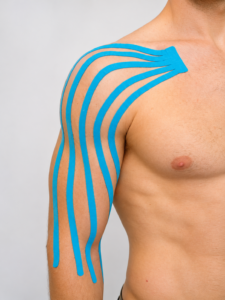 The NeuroMuscular Taping (NMT) Professional Sports Medicine and Trauma Rehabilitation Program – Stage 1 is an intensive two-day educational course designed for healthcare professionals involved in sports medicine, musculoskeletal rehabilitation, athletic injury management and functional movement recovery. Developed by the NeuroMuscular Taping Institute in Italy, the program introduces a structured clinical methodology based on elastic decompressive taping applied with zero tension (0%), integrating functional anatomy, biomechanics, cutaneous elasticity, neurosensory stimulation, lymphatic and vascular considerations, and evidence-informed rehabilitation principles.
Sports-related upper-extremity and upper-back injuries frequently result from acute trauma, repetitive mechanical loading, muscular fatigue, tendon and ligament dysfunction, joint instability or altered movement patterns. These conditions are common in contact sports, racket sports, swimming, gymnastics, throwing activities, cycling, weightlifting and other forms of recreational and competitive physical activity. The course examines common traumatic and overuse conditions affecting the shoulder girdle, cervical region, thoracic spine, upper arm, elbow, forearm, wrist and hand. Particular attention is given to rotator cuff injuries, shoulder instability and dislocations, acromioclavicular joint sprains, clavicle fractures, biceps and triceps injuries, lateral and medial elbow tendinopathy, wrist sprains, scaphoid fractures, finger ligament injuries and selected peripheral nerve compression disorders.
The program also examines cervical strains, upper trapezius and rhomboid injuries, scapulothoracic dysfunction, thoracic muscular overload and selected rib-related injuries associated with sports trauma. The NMT methodology involves applying elastic adhesive tape without tension while the skin and underlying body region are positioned in functional elongation. When the body returns to its neutral position, characteristic skin convolutions develop beneath the tape. These decompressive applications provide cutaneous mechanical stimulation and may complement established rehabilitation strategies addressing superficial tissue mobility, sensory awareness, movement-related discomfort and functional limitations. The program examines the integration of NMT into the acute, post-acute and functional phases of sports rehabilitation, adapting applications according to injury severity, tissue healing, joint stability, movement capacity and progressive athletic recovery. Particular emphasis is placed on combining NMT with established physiotherapy, therapeutic exercise, progressive strengthening, proprioceptive rehabilitation, neuromuscular re-education and return-to-sport programs. Training combines approximately 20% theoretical instruction and 80% supervised practical applications, allowing participants to develop anatomical precision, manual competence and individualised clinical reasoning. NMT is presented as a complementary rehabilitation methodology and does not replace medical assessment, fracture management, surgical care, progressive loading or evidence-based sports injury rehabilitation.
Target Professionals and Prerequisites
The program is intended for medical doctors, sports medicine specialists, physiotherapists, physical therapists, rehabilitation specialists and other appropriately qualified healthcare professionals involved in sports and musculoskeletal rehabilitation. Eligible final-year students enrolled in relevant healthcare degree programs may also participate.
The course is particularly relevant to professionals working with athletes, physically active individuals and patients recovering from shoulder trauma, upper-extremity injuries, cervical dysfunction and upper-back musculoskeletal conditions. Prerequisites: Previous NeuroMuscular Taping base rehabilitation certification is required. All clinical applications must remain within the participant’s professional scope of practice and applicable national healthcare regulations.
Educational Objectives
The principal objective is to develop the theoretical understanding, clinical reasoning and practical competence necessary to integrate NeuroMuscular Taping into upper-extremity sports trauma and functional rehabilitation. Participants examine the anatomical and biomechanical relationships between the cervical spine, thoracic region, shoulder girdle, elbow, wrist and hand. The program develops an understanding of common sports injuries involving muscular strains, tendon dysfunction, ligament sprains, joint instability, peripheral nerve irritation and selected fractures. Participants learn to differentiate rehabilitation priorities associated with acute traumatic injuries, post-acute recovery and progressive functional rehabilitation. Particular attention is given to rotator cuff injuries, shoulder instability, acromioclavicular joint trauma, biceps and triceps injuries, elbow tendinopathy, wrist sprains and hand injuries. The course also examines cervical strains, scapulothoracic dysfunction, thoracic muscular overload and upper-back injuries associated with repetitive athletic activity.
Participants develop practical competence in selecting decompressive applications for muscular fatigue, superficial tissue restrictions, post-traumatic oedema and movement-related discomfort. The program introduces clinical reasoning for peripheral nerve compression disorders, including cubital tunnel syndrome, carpal tunnel syndrome and cervical radicular symptoms. Additional emphasis is placed on the integration of NMT with progressive strengthening, proprioceptive exercises, functional movement training and sport-specific rehabilitation. Throughout the course, participants learn to recognise contraindications, suspected fractures, neurological symptoms, vascular precautions and injuries requiring medical assessment. The educational approach emphasises sports trauma assessment, anatomical precision, progressive rehabilitation and safe return to athletic activity.
Clinical Applications and Common Upper-Extremity Sports Trauma
Shoulder and Scapular Injuries
The program examines common sports injuries affecting the glenohumeral joint, rotator cuff, acromioclavicular joint and surrounding musculature. Clinical presentations include rotator cuff strains and tendinopathy, shoulder dislocations and instability, acromioclavicular ligament sprains, clavicle fractures, proximal humeral injuries and selected labral lesions. Participants review the relationships between shoulder trauma, scapular coordination, muscular inhibition, joint mobility and progressive functional recovery. NMT applications are developed according to anatomical findings, tissue healing, movement limitations and rehabilitation objectives.
Upper Arm and Elbow Injuries
The course addresses biceps and triceps muscular injuries, distal biceps tendon dysfunction, lateral elbow tendinopathy, medial elbow tendinopathy and selected elbow ligament sprains. Particular attention is given to repetitive throwing, racket sports, weightlifting and other activities involving repeated upper-extremity loading. Participants examine how muscular fatigue, tendon-related pain and joint dysfunction may influence grip strength, elbow mobility and athletic performance.
Wrist, Hand and Finger Injuries
The program introduces common wrist and hand trauma, including wrist sprains, scaphoid fractures, selected metacarpal fractures, finger collateral ligament injuries and thumb ulnar collateral ligament injuries. Participants also review repetitive strain conditions and peripheral nerve compression presentations involving the wrist and hand. Applications are integrated with established rehabilitation following appropriate medical management, immobilisation or surgery.
Cervical and Upper-Back Sports Trauma
The course examines cervical muscular strains, whiplash-associated symptoms, upper trapezius overload, rhomboid muscular injuries, scapulothoracic dysfunction and thoracic movement restrictions. Selected rib and chest-wall injuries are discussed in relation to sports trauma, respiratory movement and upper-body function. Particular attention is given to differentiating muscular dysfunction from potentially serious cervical, neurological or thoracic injuries requiring medical assessment.
Post-Traumatic Oedema and Functional Recovery
The program introduces regional lymphatic and vascular considerations associated with upper-extremity trauma, immobilisation and postoperative recovery. NMT applications are developed as complementary techniques within established rehabilitation programs, with attention to tissue healing, skin integrity, vascular safety and patient tolerance.
Course Structure and Practical Training
Day 1 – Shoulder and Upper-Back Sports Trauma, Cervical Rehabilitation and NMT Applications
8 Hours – Clinical Assessment, Functional Anatomy and Supervised Practical Training
Session 1 – NMT Methodology and Upper-Extremity Sports Trauma
The opening session introduces the fundamental principles of NeuroMuscular Taping and their application to sports-related musculoskeletal injuries. Participants review the history and development of NMT, distinguishing elastic decompressive applications from tension-based therapeutic taping techniques. The session examines eccentric application principles, cutaneous elasticity, anatomical positioning and the mechanical differences between decompression and compression. Particular attention is given to common upper-extremity sports trauma, including muscular strains, tendon injuries, ligament sprains, joint instability, fractures and selected peripheral nerve conditions. Participants review the differences between acute, post-acute and functional rehabilitation and examine how injury severity, tissue healing and clinical precautions influence application selection.
Practical laboratory: Skin assessment, tape preparation, anatomical positioning, maximum lines of skin elasticity and supervised zero-tension decompressive applications.
Session 2 – Rotator Cuff Injuries, Shoulder Instability and Muscular Rehabilitation
The second session examines common sports injuries affecting the shoulder girdle and upper-extremity musculature. Participants review rotator cuff injuries involving the supraspinatus and other rotator cuff structures, shoulder instability, glenohumeral dislocations and selected proximal humeral injuries. The session also examines deltoid dysfunction, upper trapezius overload and altered scapular coordination associated with repetitive throwing, swimming, racket sports and weightlifting. Clinical reasoning focuses on muscular fatigue, movement restrictions, shoulder stability and progressive rehabilitation following trauma.
Practical laboratory: NMT deltoid, upper trapezius, middle trapezius and lower trapezius applications, together with selected hand flexor and extensor applications. Participants develop application strategies according to anatomical assessment, tissue sensitivity, joint stability and functional rehabilitation objectives. Applications are integrated with established shoulder mobility exercises, progressive strengthening and neuromuscular rehabilitation.
Session 3 – Acromioclavicular Injuries, Scapular Dysfunction and Thoracic Muscular Trauma
This session examines sports-related trauma involving the acromioclavicular joint, clavicle, scapular region and upper thoracic musculature. Participants review acromioclavicular ligament sprains, clavicle fractures, scapulothoracic dysfunction and selected shoulder tendon injuries. The session also examines muscular strains and repetitive overload involving the pectoralis musculature, rhomboids, supraspinatus, triceps brachii, teres major, teres minor and latissimus dorsi. Particular attention is given to the relationships between scapular movement, thoracic mobility and shoulder function.
Practical laboratory: NMT pectoral, rhomboid, supraspinatus, triceps, teres major, teres minor and latissimus dorsi applications. Participants examine how decompressive taping may be integrated with established rehabilitation following muscular injury, acromioclavicular trauma and selected shoulder surgical procedures. Applications following fractures or surgery must respect medical clearance, immobilisation requirements and tissue-healing precautions.
Session 4 – Cervical Strains, Upper-Back Trauma and Cervicothoracic Rehabilitation
The final session of Day 1 examines cervical and upper-back musculoskeletal dysfunction associated with sports participation. Participants review cervical muscular strains, whiplash-associated symptoms, upper trapezius overload, rhomboid injuries and selected thoracic movement restrictions. The session examines the relationships between cervical positioning, scapular coordination, upper-back muscular activity and functional shoulder movement. Clinical discussion also includes selected rib and chest-wall injuries, with particular attention to appropriate medical assessment before rehabilitation.
Practical laboratory: NMT sternocleidomastoid, cervical paraspinal, anterior scalene-region and selected upper-back applications. Participants develop applications according to anatomical assessment, muscular function, tissue sensitivity and rehabilitation objectives. The session emphasises recognition of cervical instability, significant neurological symptoms and other conditions requiring medical evaluation. The day concludes with clinical case discussions, supervised practical review and instructor feedback.
Day 2 – Elbow, Wrist and Hand Sports Trauma, Peripheral Nerve Dysfunction and Functional Rehabilitation
8 Hours – Practical Applications, Clinical Integration and Final Assessment
Session 5 – Upper-Extremity Muscular Fatigue, Biceps and Triceps Injuries
The second day begins with the assessment of muscular fatigue and repetitive upper-extremity loading associated with sports participation. Participants review the relationships between muscular workload, tendon stress, movement restrictions and functional recovery. Particular attention is given to biceps and triceps muscular injuries, shoulder muscular fatigue, pectoral overload and forearm flexor and extensor dysfunction. Clinical discussion includes repetitive throwing injuries, weightlifting-related muscular trauma and upper-extremity overuse conditions.
Practical laboratory: NMT deltoid, biceps brachii, pectoralis musculature, forearm extensor and forearm flexor applications. Participants examine the integration of decompressive taping with appropriate recovery exercises, progressive strengthening and load management.
Session 6 – Tennis Elbow, Golfer’s Elbow, Elbow Sprains and Peripheral Nerve Compression
This session examines common sports injuries and overuse conditions affecting the elbow and forearm. Participants review lateral elbow tendinopathy, commonly known as tennis elbow, and medial elbow tendinopathy, commonly known as golfer’s elbow. The session also introduces selected elbow ligament sprains, muscular dysfunction and peripheral nerve irritation associated with repetitive upper-extremity activity. Particular attention is given to cubital tunnel syndrome and the anatomical relationships involving the ulnar nerve, elbow joint and surrounding muscular structures.
Practical laboratory: NMT anterior, posterior and selected medial and lateral elbow applications, together with decompressive strategies adapted to forearm muscular dysfunction. Participants develop application strategies according to tendon-related symptoms, joint movement, muscular function and clinical rehabilitation objectives. The session emphasises appropriate neurological assessment and referral when symptoms suggest significant nerve impairment.
Session 7 – Wrist Sprains, Hand Trauma, Scaphoid Injuries and Nerve-Related Applications
The seventh session examines common sports trauma affecting the wrist, hand and fingers. Participants review wrist ligament sprains, scaphoid fractures, selected metacarpal fractures, finger collateral ligament injuries and thumb ulnar collateral ligament injuries. The session also examines repetitive strain conditions, carpal tunnel syndrome and selected peripheral nerve entrapment presentations. Particular attention is given to the relationships between wrist mobility, grip function, finger coordination and functional athletic performance.
Practical laboratory: NMT anterior and posterior wrist applications, selected hand applications, shoulder double-fan technique and cervical nerve-related applications. Participants examine application selection according to tissue healing, anatomical assessment, movement limitations and functional objectives. Suspected scaphoid fractures, unstable ligament injuries and progressive neurological symptoms require appropriate medical assessment before rehabilitation applications.
Session 8 – Functional Joint Rehabilitation, Proprioception and Return to Sport
The final session integrates NMT into progressive upper-extremity sports rehabilitation. Participants examine joint mobility, muscular coordination, proprioceptive awareness and functional movement following shoulder, elbow, wrist and hand injuries. Particular attention is given to rehabilitation following shoulder instability, rotator cuff injuries, acromioclavicular sprains, elbow tendinopathy and wrist trauma. The session reviews progressive rehabilitation strategies involving shoulder stabilisation, scapular control, grip strengthening, upper-extremity loading and sport-specific movement. Clinical reasoning focuses on individualised treatment planning according to injury severity, movement capacity, tissue healing and return-to-sport objectives.
Practical laboratory: NMT elbow functional applications involving anterior, medial and lateral regions, wrist functional applications and selected shoulder and upper-extremity techniques integrated with proprioceptive exercises. Participants review clinical cases involving common upper-extremity sports trauma and develop application strategies according to rehabilitation phase and functional objectives. The session concludes with practical application review, clinical case discussions and the final theoretical and practical examinations.
Teaching Methodology and Practical Skill Development
The NMT Institute adopts an interactive educational approach combining approximately 20% theoretical instruction and 80% supervised practical laboratory training. Teaching integrates functional anatomy, biomechanics, sports trauma assessment, clinical demonstrations, practical applications and rehabilitation case discussions. Participants work in pairs, alternating between practitioner and model roles. Each application is demonstrated by the instructor and repeated under direct supervision. Individual feedback is provided on anatomical positioning, tape preparation, skin elongation, application direction, technical accuracy and clinical reasoning. Clinical case discussions include shoulder instability, rotator cuff injuries, acromioclavicular trauma, muscular strains, elbow tendinopathy, wrist sprains, selected fractures and cervical or thoracic dysfunction. Particular attention is given to integrating NMT with established sports rehabilitation, therapeutic exercise, proprioceptive training and progressive functional recovery. Full attendance and active practical participation are mandatory.
Final Examination and International Certification
The program includes a theoretical and practical assessment designed to evaluate anatomical knowledge, sports trauma assessment, clinical reasoning and technical competence.
- Theoretical examination: A written multiple-choice examination covering NMT methodology, upper-extremity functional anatomy, common sports injuries, cervical and thoracic rehabilitation, clinical indications and application procedures.
- Practical examination: Supervised demonstration of selected NMT applications developed during the two-day training program.
Applications are evaluated according to anatomical accuracy, patient positioning, tape preparation, skin elongation, zero-tension methodology, application direction, clinical reasoning and patient safety. The final evaluation combines the theoretical examination, practical assessment and instructor/tutor evaluation. A minimum overall score of 85% is required for successful completion. Results are classified as Pass, Excellent or Distinction. Successful participants receive the NMT Professional Sports Medicine – Stage 1: Upper Extremity, Cervical and Thoracic Rehabilitation Certificate. Completion contributes toward the full NMT International Sports Medicine and Proprioceptive Musculoskeletal Rehabilitation Certification pathway. Certification confirms successful completion of the educational program and does not extend the participant’s legal scope of professional practice.
Course Information
- Course Title: NeuroMuscular Taping – Professional Sports Medicine and Trauma Rehabilitation – Stage 1.
- Specialisation: Upper Extremity, Cervical and Thoracic Rehabilitation, Sports Trauma and Functional Athletic Recovery.
- Course Code: NMTC-SMC/I – Stage 1.
- Duration: 2 days – 16 hours.
- Day 1: Shoulder and Upper-Back Sports Trauma, Cervical Rehabilitation and NMT Applications – 8 hours.
- Day 2: Elbow, Wrist and Hand Sports Trauma, Peripheral Nerve Dysfunction and Functional Rehabilitation – 8 hours.
- Training Format: Classroom education, clinical demonstrations and supervised practical laboratories.
- Teaching Methodology: Approximately 20% theory and 80% practical training.
- Maximum Participants: 24.
- Target Professionals: Medical doctors, sports medicine specialists, physiotherapists, rehabilitation specialists and appropriately qualified healthcare professionals.
- Prerequisites: No previous NMT certification required.
- Assessment: Written multiple-choice examination and supervised practical skills assessment.
- Passing Requirement: Minimum 85%.
- Certification: NMT Professional Sports Medicine and Trauma Rehabilitation – Stage 1 Certificate, contributing toward full international certification following successful completion of both stages.
- Continuing Education Credits: Subject to national accreditation and approval.
Advancing Upper-Extremity Sports Trauma Rehabilitation Through Decompressive Taping
The NMT Professional Sports Medicine and Trauma Rehabilitation Program – Stage 1 provides healthcare professionals with a structured educational pathway for integrating elastic decompressive taping into upper-extremity sports trauma management, cervical and thoracic rehabilitation, and functional athletic recovery. Through functional anatomy, biomechanics, sports injury assessment, neurosensory considerations and intensive supervised practical training, participants develop specialised skills for adapting NMT to individual rehabilitation objectives. The integration of shoulder injuries, cervical and thoracic trauma, elbow tendinopathy, wrist and hand injuries, selected fractures and peripheral nerve dysfunction provides a multidisciplinary framework for supporting movement awareness, functional mobility and progressive athletic rehabilitation.
Effective upper-extremity sports rehabilitation requires more than managing pain or muscular fatigue. It involves appropriate tissue healing, restoration of joint mobility, muscular strength, neuromuscular coordination and the functional abilities necessary for a safe return to athletic activity.
NeuroMuscular Taping (NMT) – Sports Medicine and Trauma Rehabilitation Stage 2
NeuroMuscular Taping (NMT) – Professional Sports Medicine and Trauma Rehabilitation – Stage 2
Lower Extremity, Lumbar and Abdominal Rehabilitation
Elastic Decompression Methodology for Sports Trauma, Muscular and Tendon Injuries, Ligament Dysfunction, Joint Rehabilitation, Proprioception and Functional Athletic Recovery
International NMT Professional Training | 2 Days – 16 Hours
Course Overview
Course Code: NMTC-SMC/I – Stage 2
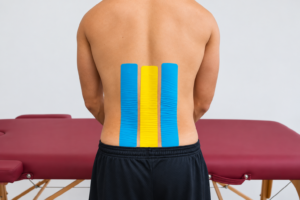 The NeuroMuscular Taping (NMT) Professional Sports Medicine and Trauma Rehabilitation Program – Stage 2 is an intensive two-day specialisation course designed for healthcare professionals involved in sports medicine, musculoskeletal rehabilitation, athletic injury management and functional movement recovery. Developed by the NeuroMuscular Taping Institute in Italy, the program introduces specialised applications of elastic decompressive taping applied with zero tension (0%), integrating functional anatomy, biomechanics, cutaneous elasticity, neurosensory stimulation, lymphatic and vascular considerations, and evidence-informed rehabilitation principles.
Lower-extremity sports trauma represents a significant proportion of injuries occurring during recreational and competitive physical activity. These injuries may involve muscles, tendons, ligaments, joints, peripheral nerves and bone, frequently affecting walking, running, jumping, landing, directional changes and athletic performance. The course examines common traumatic and overuse conditions affecting the hip, pelvis, thigh, knee, lower leg, ankle and foot. Particular attention is given to hamstring and quadriceps strains, adductor and groin injuries, anterior cruciate ligament (ACL) injuries, meniscal lesions, patellofemoral dysfunction, Achilles tendon disorders, calf strains, lateral ankle sprains and plantar fascia-related pain.
The program also introduces selected fractures and postoperative conditions, including ankle fractures, tibial and fibular injuries, metatarsal fractures and rehabilitation following ligament or tendon reconstruction. The NMT methodology involves applying elastic adhesive tape without tension while the skin and underlying body region are positioned in functional elongation. When the body returns to its neutral position, characteristic skin convolutions develop beneath the tape. These applications provide cutaneous mechanical stimulation and may complement established rehabilitation strategies addressing superficial tissue mobility, sensory awareness, movement-related discomfort and functional limitations.
Particular attention is given to integrating NMT into the acute, post-acute and functional phases of sports rehabilitation, adapting applications according to injury severity, tissue healing, joint stability, movement capacity and progressive return-to-activity objectives. The course examines the relationships between lower-extremity injuries, lumbar and pelvic function, core stability, proprioceptive control and compensatory movement patterns. Participants develop individualised application strategies combining NMT with therapeutic exercise, progressive strengthening, balance training, neuromuscular re-education and sport-specific rehabilitation. Training combines approximately 20% theoretical instruction and 80% supervised practical applications. NMT is presented as a complementary rehabilitation methodology and does not replace established medical assessment, fracture management, surgical care, progressive loading or evidence-based sports injury rehabilitation.
Target Professionals and Prerequisites
The program is intended for medical doctors, sports medicine specialists, physiotherapists, physical therapists, rehabilitation specialists and other appropriately qualified healthcare professionals working in sports and musculoskeletal rehabilitation. Eligible final-year students enrolled in relevant healthcare degree programs may also participate. The course is particularly relevant to professionals working with athletes, physically active individuals and patients recovering from lower-extremity sports trauma, repetitive strain injuries, postoperative conditions and lumbar musculoskeletal dysfunction. Prerequisites: Previous NeuroMuscular Taping Base Rehabilitation certification is required. Completion of Stage 1 is recommended for progressive professional development but is not mandatory. All clinical applications must remain within the participant’s professional scope of practice and applicable national healthcare regulations.
Educational Objectives
The principal objective is to develop the clinical reasoning and practical competence necessary to integrate NeuroMuscular Taping into lower-extremity sports trauma and functional rehabilitation. Participants review the anatomical and biomechanical relationships between the hip, pelvis, knee, ankle, foot, lumbar spine and abdominal musculature. The program develops an understanding of common sports injuries involving muscular strains, tendon dysfunction, ligament sprains, joint trauma, peripheral nerve irritation and selected fractures. Participants learn to differentiate rehabilitation priorities associated with acute traumatic injuries, post-acute recovery and progressive functional rehabilitation. Particular attention is given to the assessment of hamstring and quadriceps strains, adductor injuries, ACL reconstruction, meniscal dysfunction, ankle ligament injuries, Achilles tendon disorders and plantar fascia-related pain.
The course introduces NMT applications for muscular fatigue, post-traumatic oedema, superficial tissue restrictions and movement-related discomfort. Participants examine the integration of decompressive taping with established rehabilitation strategies addressing joint mobility, proprioceptive control, muscular coordination and progressive athletic conditioning. Additional emphasis is placed on lumbar and pelvic function, core stability, lower-extremity biomechanics and the relationships between spinal movement and athletic performance. Participants develop practical competence in anatomical positioning, tape preparation, skin elongation, zero-tension application and the selection of appropriate decompressive configurations. Throughout the program, participants learn to recognise contraindications, neurological symptoms, vascular precautions, suspected fractures and injuries requiring medical assessment. The educational approach emphasises sports injury assessment, anatomical precision, progressive rehabilitation and safe return to physical activity.
Clinical Applications and Common Lower-Extremity Sports Trauma
Hip, Pelvic and Groin Injuries
The program examines muscular and tendon-related injuries affecting the hip and pelvic region, including adductor strains, groin pain, hip flexor injuries, iliopsoas dysfunction and selected gluteal and piriformis-related conditions. Participants review how these injuries may influence running mechanics, directional changes, pelvic control and lower-extremity coordination. NMT applications are developed according to muscular involvement, movement restrictions, tissue sensitivity and rehabilitation phase.
Thigh and Knee Injuries
The course addresses common thigh and knee injuries, including hamstring strains, quadriceps strains, patellofemoral pain, collateral ligament sprains, ACL injuries and meniscal lesions. Particular attention is given to postoperative rehabilitation following ACL reconstruction and selected meniscal procedures, respecting surgical protocols, tissue healing and weight-bearing restrictions. NMT applications are integrated with established rehabilitation exercises addressing swelling, muscular function, joint mobility and progressive movement control.
Lower-Leg, Ankle and Foot Injuries
Participants examine calf muscle strains, Achilles tendon disorders, lateral ankle ligament sprains, ankle instability and plantar fascia-related pain. The program also introduces rehabilitation considerations following selected tibial, fibular, ankle and metatarsal fractures once appropriate medical management and mobilisation have been established. Applications are selected according to tissue condition, functional limitations, clinical precautions and rehabilitation objectives.
Lumbar and Abdominal Dysfunction
The course examines lumbar movement restrictions, abdominal muscular function, pelvic coordination and the relationships between trunk stability and lower-extremity movement. Participants review selected lumbar nerve-related presentations, disc-related dysfunction and compensatory movement patterns associated with sports participation.
Post-Traumatic Oedema and Functional Recovery
The program introduces regional lymphatic and vascular considerations associated with sports trauma, immobilisation and postoperative recovery. NMT applications are developed as complementary techniques within established rehabilitation programs, with particular attention to skin integrity, tissue healing, vascular safety and patient tolerance.
Course Structure and Practical Training
Day 1 – Lower-Extremity Sports Trauma, Muscular Rehabilitation, Lumbar Spine and Core Applications
8 Hours – Clinical Assessment, Functional Anatomy and Supervised Practical Training
Session 1 – NMT Methodology and Lower-Extremity Sports Trauma
The opening session reviews the fundamental principles of NeuroMuscular Taping and their application to sports-related musculoskeletal injuries. Participants examine the differences between decompressive and compressive taping methodologies, including eccentric application principles, functional skin elongation and zero-tension techniques. The session introduces lower-extremity functional anatomy, biomechanics, muscular coordination and the relationships between tissue injury and movement dysfunction. Particular attention is given to the clinical assessment of common sports trauma, including muscular strains, tendon injuries, ligament sprains, joint dysfunction and selected fractures. Participants review the differences between acute, post-acute and functional rehabilitation, examining how tissue healing, injury severity and clinical precautions influence application selection.
Practical laboratory: Skin assessment, anatomical positioning, tape preparation, maximum lines of skin elasticity and supervised zero-tension decompressive applications.
Session 2 – Hamstring, Quadriceps, Calf and Achilles Tendon Injuries
The second session examines common muscular and tendon injuries affecting the thigh and lower leg. Participants review hamstring strains associated with sprinting, acceleration and rapid directional changes, together with quadriceps strains occurring during kicking, jumping and high-load athletic activities. The session also examines gastrocnemius and soleus injuries, Achilles tendon disorders and the relationships between muscular fatigue, tendon loading and lower-extremity movement. Clinical reasoning focuses on differentiating acute muscular trauma from repetitive overuse conditions and selecting appropriate rehabilitation objectives.
Practical laboratory: NMT Achilles tendon, gastrocnemius, soleus and quadriceps applications, together with two distinct hamstring application configurations. Participants develop decompressive applications according to tissue sensitivity, muscular function, movement limitations and rehabilitation phase. Applications are integrated with established mobility exercises, progressive strengthening and appropriate tendon-loading programs.
Session 3 – Lumbar Spine, Core Stability and Sports-Related Spinal Dysfunction
This session examines lumbar musculoskeletal dysfunction associated with sports participation and the relationships between trunk stability, pelvic positioning and lower-extremity biomechanics. Participants review lumbar muscular overload, movement restrictions, selected disc-related conditions and nerve-related symptoms. Particular attention is given to the quadratus lumborum, rectus abdominis and their functional relationships with the pelvis and lower extremities. The session also examines compensatory lumbar movement patterns that may develop following lower-extremity injury or prolonged altered loading.
Practical laboratory: NMT lumbar nerve-related Type 1, disc-related Type 2 and lateral shift Type 3 applications, together with quadratus lumborum and rectus abdominis applications. Participants examine the integration of decompressive taping with core stability exercises, lumbar mobility and functional rehabilitation. Progressive neurological deficits, severe neurological symptoms and suspected serious spinal pathology require appropriate medical assessment and referral.
Session 4 – Hip, Pelvic and Groin Sports Injuries
The final session of Day 1 examines common sports injuries involving the hip, pelvis and groin. Participants review adductor strains, hip flexor injuries, iliopsoas dysfunction and selected piriformis-related presentations. The session examines the relationships between hip mobility, pelvic stability, muscular coordination and lower-extremity movement during running, jumping and directional changes. Additional attention is given to the tibialis anterior, tensor fasciae latae and selected foot musculature involved in functional lower-extremity coordination.
Practical laboratory: Two adductor application configurations, together with NMT piriformis, tensor fasciae latae, tibialis anterior, iliopsoas, psoas major, extensor hallucis longus and flexor hallucis brevis applications. Participants develop application strategies according to anatomical findings, muscular function, tissue sensitivity and rehabilitation objectives. The day concludes with clinical case discussions, supervised practical review and instructor feedback.
Day 2 – Knee and Ankle Trauma, Lymphatic Rehabilitation, Proprioception and Return to Sport
8 Hours – Practical Applications, Clinical Integration and Final Assessment
Session 5 – Lower-Extremity Muscular Fatigue, Tendon Dysfunction and Recovery
The second day begins with the assessment of muscular fatigue and repetitive lower-extremity loading associated with athletic activity. Participants review the relationships between muscular workload, tendon stress, movement restrictions and functional recovery. Particular attention is given to the Achilles tendon, gastrocnemius, tibialis anterior, quadriceps and plantar flexor muscle groups. Clinical discussion includes calf strains, Achilles tendinopathy, repetitive running injuries and muscular fatigue associated with prolonged physical activity.
Practical laboratory: NMT Achilles tendon, gastrocnemius, tibialis anterior, quadriceps and plantar flexor applications. Participants examine how decompressive taping may be integrated with recovery exercises, progressive loading and established sports rehabilitation.
Session 6 – Sports Trauma, Post-Traumatic Oedema and Lymphatic Rehabilitation
This session examines lymphatic and vascular considerations associated with lower-extremity sports trauma. Participants review the development of swelling following ligament sprains, muscular injuries, joint trauma, selected fractures and surgical procedures. Particular attention is given to lower-extremity lymphatic anatomy, regional drainage pathways, tissue congestion and the relationships between oedema and functional movement limitations. Clinical examples include ankle sprains, knee injuries, postoperative swelling following ACL reconstruction and oedema associated with immobilisation.
Practical laboratory: Selected NMT lower-extremity lymphatic drainage applications, regional drainage sequencing and decompressive configurations adapted to individual injury presentations. The session emphasises the importance of excluding suspected deep vein thrombosis, vascular compromise, infection and other contraindications before treatment. NMT is introduced as a complementary intervention and does not replace established medical or vascular management.
Session 7 – Knee Ligament Injuries, Meniscal Dysfunction, Ankle Sprains and Foot Trauma
The seventh session focuses on common traumatic and overuse conditions affecting the knee, ankle and foot. Participants examine ACL injuries, collateral ligament sprains, meniscal lesions and patellofemoral pain, reviewing the relationships between joint stability, muscular coordination and functional movement. The session also addresses lateral ankle sprains, chronic ankle instability, Achilles tendon-related dysfunction and plantar fascia-related pain. Selected postoperative and post-fracture rehabilitation considerations are introduced, including ankle fractures, tibial and fibular injuries and metatarsal fractures. Particular attention is given to the appropriate integration of NMT following ACL reconstruction and other surgical procedures, respecting tissue healing, weight-bearing restrictions and established rehabilitation protocols.
Practical laboratory: NMT hip double-fan, knee double-fan, patellofemoral pain-related and ankle double-fan applications. Participants develop applications according to joint assessment, movement limitations, tissue sensitivity and rehabilitation objectives. Applications are integrated with established knee and ankle rehabilitation, progressive strengthening and proprioceptive exercises.
Session 8 – Proprioceptive Rehabilitation, Functional Movement and Return to Sport
The final session integrates NMT into progressive athletic rehabilitation following lower-extremity trauma. Participants examine neuromuscular control, balance, joint stability, postural coordination and functional movement following ligament, tendon and muscular injuries. Particular attention is given to rehabilitation following ankle sprains, ACL reconstruction, hamstring strains and Achilles tendon disorders. The session reviews progressive exercise strategies involving single-leg balance, controlled loading, functional squatting, stepping, landing mechanics and sport-specific movement. Clinical reasoning focuses on developing individualised rehabilitation strategies according to injury severity, movement capacity, functional performance and return-to-sport criteria.
Practical laboratory: Selected NMT lower-extremity applications integrated with balance training, proprioceptive exercises, functional movement sequences and progressive athletic rehabilitation. Participants review clinical cases involving common sports trauma and develop individualised application strategies according to rehabilitation phase and functional objectives. The session concludes with practical application review, clinical case discussions and the final theoretical and practical examinations.
Teaching Methodology and Practical Skill Development
The NMT Institute adopts an interactive educational approach combining approximately 20% theoretical instruction and 80% supervised practical laboratory training. Teaching integrates functional anatomy, biomechanics, sports trauma assessment, clinical demonstrations, practical applications and rehabilitation case discussions. Participants work in pairs, alternating between practitioner and model roles. Each application is demonstrated by the instructor and repeated under direct supervision. Individual feedback is provided on anatomical positioning, tape preparation, skin elongation, application direction, technical accuracy and clinical reasoning. Clinical case discussions include muscular strains, tendon injuries, ligament sprains, joint dysfunction, selected fractures and postoperative rehabilitation. Particular attention is given to integrating NMT with established sports rehabilitation, therapeutic exercise, proprioceptive training and progressive functional recovery. Full attendance and active practical participation are mandatory.
Final Examination and International Certification
The program includes a theoretical and practical assessment designed to evaluate anatomical knowledge, sports trauma assessment, clinical reasoning and technical competence.
- Theoretical examination: A written multiple-choice examination covering NMT methodology, lower-extremity functional anatomy, common sports injuries, lumbar rehabilitation, clinical indications and application procedures.
- Practical examination: Supervised demonstration of selected NMT applications developed during the two-day training program.
Applications are evaluated according to anatomical accuracy, patient positioning, tape preparation, skin elongation, zero-tension methodology, application direction, clinical reasoning and patient safety. The final evaluation combines the theoretical examination, practical assessment and instructor/tutor evaluation. A minimum overall score of 85% is required for successful completion. Results are classified as Pass, Excellent or Distinction. Successful participants receive the NMT Professional Sports Medicine – Stage 2: Lower Extremity, Lumbar and Abdominal Rehabilitation Certificate. Participants who successfully complete both stages and the required final assessment become eligible for the NMT International Certification – Sports Medicine and Proprioceptive Musculoskeletal Rehabilitation. Certification confirms successful completion of the educational program and does not extend the participant’s legal scope of professional practice.
Course Information
- Course Title: NeuroMuscular Taping – Professional Sports Medicine and Trauma Rehabilitation – Stage 2.
- Specialisation: Lower Extremity, Lumbar and Abdominal Rehabilitation, Sports Trauma and Functional Athletic Recovery.
- Course Code: NMTC-SMC/I – Stage 2.
- Duration: 2 days – 16 hours.
- Day 1: Lower-Extremity Sports Trauma, Muscular Rehabilitation, Lumbar Spine and Core Applications – 8 hours.
- Day 2: Knee and Ankle Trauma, Lymphatic Rehabilitation, Proprioception and Return to Sport – 8 hours.
- Training Format: Classroom education, clinical demonstrations and supervised practical laboratories.
- Teaching Methodology: Approximately 20% theory and 80% practical training.
- Maximum Participants: 24.
- Target Professionals: Medical doctors, sports medicine specialists, physiotherapists, rehabilitation specialists and appropriately qualified healthcare professionals.
- Prerequisites: No previous NMT certification required. Stage 1 completion is recommended but not mandatory.
- Assessment: Written multiple-choice examination and supervised practical skills assessment.
- Passing Requirement: Minimum 85%.
- Certification: NMT Professional Sports Medicine and Trauma Rehabilitation – Stage 2 Certificate, with eligibility for full international certification following successful completion of both stages.
- Continuing Education Credits: Subject to national accreditation and approval.
Advancing Sports Trauma Rehabilitation Through Decompressive Taping
The NMT Professional Sports Medicine and Trauma Rehabilitation Program – Stage 2 provides healthcare professionals with a structured educational pathway for integrating elastic decompressive taping into lower-extremity sports trauma management, lumbar rehabilitation and functional athletic recovery. Through functional anatomy, biomechanics, sports injury assessment, neurosensory considerations, lymphatic rehabilitation and intensive supervised practical training, participants develop specialised skills for adapting NMT to individual rehabilitation objectives. The integration of muscular strains, tendon injuries, ligament sprains, knee and ankle trauma, selected fractures and postoperative rehabilitation provides a multidisciplinary framework for supporting movement awareness, functional mobility and progressive athletic recovery.
Effective sports trauma rehabilitation involves more than reducing pain or swelling. It requires appropriate tissue healing, progressive restoration of muscular capacity, joint stability, neuromuscular coordination and the functional abilities necessary for a safe return to sport.