NeuroMuscular Taping (NMT) Course Schedule – Physical Education, Sports Performance Mobility
Choose Your NMT Training Pathway
Our professional education programs are organised into three training categories:
- Foundation Courses: Introductory programs providing the essential theoretical knowledge, clinical reasoning, and practical application skills required to integrate NMT into specific professional and rehabilitation settings.
- Advanced Professional Courses: Specialised training programs designed to deepen clinical knowledge and develop advanced treatment protocols. These courses generally require completion of the relevant foundation program.
- Specialised Thematic Courses: Focused training programs addressing specific clinical conditions, rehabilitation objectives, or professional applications. Unless otherwise indicated, no previous NMT certification is required.
NeuroMuscular Taping (NMT) – Physical Education, Proprioception and Sports Performance
NeuroMuscular Taping (NMT) – Professional Physical Education, Proprioception and Sports Performance Training
Elastic Decompressive Taping for Neuromuscular Coordination, Functional Movement, Athletic Training and Return to Sport
International NMT Professional Training and Certification | 4 Days – 32 Hours
Course Overview
Course Code: NMTC-P.SPR 4/II°
 The NeuroMuscular Taping (NMT) Professional Physical Education, Proprioception and Sports Performance Training Program is an intensive four-day educational course designed for physical education professionals, sports trainers and qualified practitioners involved in athletic preparation, movement education and functional recovery. Developed by the NeuroMuscular Taping Institute in Italy, the program introduces a structured methodology based on elastic decompressive taping applied with zero tension (0%), integrating functional anatomy, neuromuscular coordination, cutaneous sensory stimulation, proprioception, biomechanics and athletic movement.
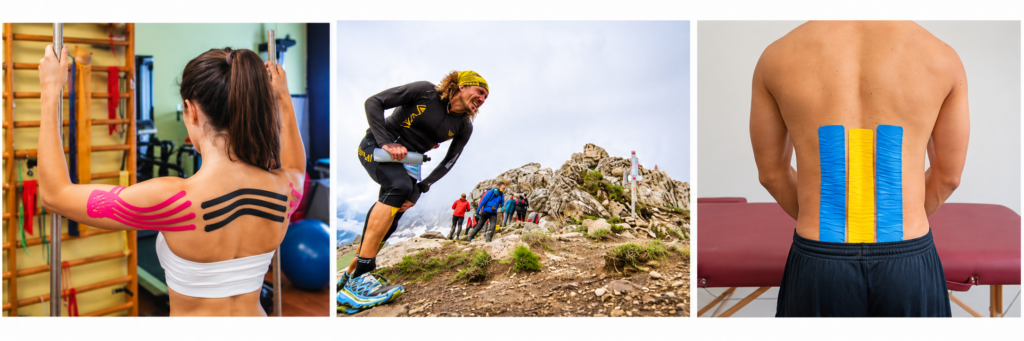
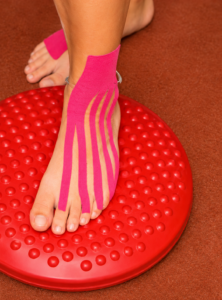
Physical education and sports training require the continuous interaction of muscular strength, flexibility, joint mobility, postural control and sensory feedback. Repetitive loading, fatigue, previous injuries and movement restrictions may influence training quality, coordination and the progression toward sporting activity. The NMT methodology involves applying elastic adhesive tape without tension while the skin and underlying body region are positioned in functional elongation. When the body returns to its neutral position, characteristic skin convolutions develop beneath the tape. These applications are intended to provide cutaneous and mechanical stimuli that may complement established exercise and movement-training strategies. The course examines the potential integration of NMT before, during and after athletic training, including applications for muscular fatigue, movement awareness, joint function and progressive return to sport following rehabilitation.
Particular attention is given to lower-extremity biomechanics, lumbar and pelvic mobility, shoulder function, upper-extremity coordination, cervical posture and functional movement patterns. The program also examines the transition from rehabilitation to athletic training following selected knee, ankle and shoulder injuries or surgical procedures, emphasising the importance of medical clearance, progressive loading and established return-to-sport criteria. Training is divided into two complementary modules. The first addresses the lower extremities, lumbar spine and pelvis, while the second focuses on the upper extremities, shoulder girdle and cervical region. The educational approach combines 10% theoretical instruction and 90% supervised practical training, providing intensive hands-on experience, movement-based laboratories, clinical case discussions and individual instructor guidance. NMT is presented as a complementary methodology. Its effects on athletic performance, fatigue and injury prevention require further scientific investigation and should not be assumed to replace established training or rehabilitation methods.
Who Should Attend?
The program is intended for physical education professionals, sports trainers, strength and conditioning specialists, movement educators and other qualified practitioners involved in athletic preparation and functional movement training. Healthcare professionals working in sports rehabilitation may also benefit from the program when the content falls within their professional scope of practice. No previous NMT certification is required. Applications involving injury rehabilitation or postoperative recovery must remain within the participant’s professional competence and applicable regulations.
Educational Objectives
The principal objective is to develop the theoretical understanding, clinical reasoning and practical skills necessary to integrate NeuroMuscular Taping into physical education, proprioceptive training and sports performance programs. Participants will learn to:
- Understand NMT decompressive methodology, zero-tension applications and maximum lines of skin elasticity (MEL).
- Review functional anatomy, biomechanics and cutaneous sensory mechanisms relevant to athletic movement.
- Differentiate applications used before, during and after training.
- Develop NMT applications involving the lower extremities, lumbar spine, pelvis, upper extremities and cervical region.
- Examine muscular fatigue, movement coordination, proprioception and postural control.
- Integrate NMT with progressive strengthening, mobility exercises, balance training and functional movement.
- Understand application strategies during the transition from rehabilitation to athletic training.
- Recognise contraindications, training-related precautions and the limitations of current scientific evidence.
The program emphasises anatomical precision, movement assessment, application sequencing and responsible integration with physical training.
Course Structure and Practical Training
Module 1 – Lower-Extremity, Lumbar and Pelvic Training
Day 1 – Lower-Extremity Muscular Function, Lumbar Mobility and Postural Control
8 Hours – NMT Foundations, Muscle Applications, Pelvic Stability and Functional Movement
Session 1 – NMT Foundations and Athletic Movement
The opening session introduces the history and development of NeuroMuscular Taping, its distinguishing decompressive methodology and the anatomical and physiological principles relevant to physical education and athletic training. Participants review the differences between decompressive and compressive taping, eccentric application principles, skin elasticity and the relationships between cutaneous stimulation, muscular coordination and movement. The course examines application selection before, during and after training, with attention to individual movement objectives and training demands.
Session 2 – Lower-Extremity Muscular Applications
This session introduces NMT applications involving the major muscle groups of the lower extremity. Participants review the functional relationships between the gastrocnemius, soleus, Achilles tendon, quadriceps and hamstrings during walking, running, jumping and athletic movement.
Practical laboratory: NMT Achilles tendon decompression, gastrocnemius and soleus applications, quadriceps femoris protocols and two hamstring configurations. The session also demonstrates selected tension-based taping techniques for comparison, distinguishing their mechanical objectives from zero-tension decompressive NMT. Clinical reasoning addresses muscular fatigue, tissue sensitivity, training load and movement-related discomfort.
Session 3 – Lumbar Mobility and Postural Rehabilitation
The third session examines the relationships between lumbar mobility, trunk control, pelvic positioning and athletic movement. Participants review lumbar muscular anatomy, spinal biomechanics and the role of the trunk in transferring forces between the upper and lower extremities.
Practical laboratory: Three NMT lumbar decompression configurations, including applications adapted to postural training, muscular fatigue and selected lumbar movement restrictions. The session emphasises appropriate assessment and recognition of symptoms requiring medical evaluation.
Session 4 – Pelvic Musculature, Hip Mobility and Functional Coordination
The final session of Day 1 introduces applications involving the abdominal and pelvic musculature. Participants examine the functional relationships between the rectus abdominis, piriformis, hip adductors, tensor fasciae latae and iliopsoas during athletic movement.
Practical laboratory: NMT rectus abdominis, piriformis, adductor muscle, tensor fasciae latae and iliopsoas applications. Applications are integrated with mobility exercises, pelvic control, postural awareness and progressive functional movement. The day concludes with case discussions, supervised practice and instructor feedback.
Day 2 – Lower-Extremity Fatigue, Proprioception and Return to Sport
8 Hours – Muscular Recovery, Knee and Ankle Rehabilitation, Joint Control and Functional Training
Session 5 – Muscular Fatigue and Lower-Extremity Recovery
The second day introduces selected NMT applications for muscular fatigue and post-training recovery. Participants review the relationships between repetitive loading, muscular function, superficial circulation, lymphatic physiology and movement-related discomfort.
Practical laboratory: NMT gastrocnemius fatigue applications, Achilles tendon configurations and anterior tibialis decompression. The session examines the potential integration of NMT with established recovery strategies, while distinguishing proposed mechanisms from clinically demonstrated effects.
Session 6 – Knee Rehabilitation and Return to Training
This session examines the transition from rehabilitation to physical training following selected knee injuries and surgical procedures. Participants review functional considerations following anterior cruciate ligament reconstruction and meniscectomy, including muscular coordination, joint mobility, balance and progressive loading.
Practical laboratory: NMT knee applications following ACL reconstruction, selected post-meniscectomy configurations and functional knee decompression. Applications are integrated with supervised exercise and established return-to-sport criteria.
Session 7 – Knee Stability, Plantar Flexors and Functional Movement
The third session focuses on lower-extremity coordination, joint control and movement awareness. Participants examine knee function during weight-bearing, dynamic balance, running and sport-specific movement.
Practical laboratory: NMT functional knee applications, plantar flexor decompression and selected foot and forefoot configurations, including applications for hallux valgus-related movement restrictions. The distinction between decompressive sensory applications and tension-based mechanical support is reinforced.
Session 8 – Ankle Rehabilitation and Return to Athletic Activity
The final session of Module 1 introduces NMT applications for ankle mobility, proprioceptive training and progressive return to sport following ankle sprain rehabilitation.
Practical laboratory: NMT post-rehabilitation ankle applications and functional configurations for progressive training. Applications are reviewed during standing balance, walking, directional changes and selected sport-specific movements. The day concludes with case discussions, scientific literature review and supervised practical feedback.
Module 2 – Upper-Extremity, Shoulder and Cervical Training
Day 3 – Upper-Extremity Muscular Function, Shoulder Mobility and Cervical Posture
8 Hours – Shoulder Girdle Applications, Muscular Coordination, Cervical Mobility and Functional Movement
Session 9 – NMT Foundations for Upper-Extremity Training
The third day revisits the fundamental principles of decompressive NMT and their application to upper-extremity movement. Participants examine the anatomical relationships between the shoulder girdle, cervical spine, upper thoracic region and arm. Particular attention is given to cutaneous elasticity, muscular coordination, postural control and the selection of applications according to training objectives.
Session 10 – Shoulder Girdle and Scapular Musculature
This session introduces NMT applications involving the deltoid, upper, middle and lower trapezius, pectoral musculature and rhomboids. Participants review scapular mobility, shoulder coordination and the relationships between muscular fatigue, repetitive loading and upper-extremity movement.
Practical laboratory: NMT deltoid, trapezius, pectoral and rhomboid decompression applications. The session also reviews selected tension-based taping configurations as distinct mechanical approaches.
Session 11 – Shoulder, Arm and Upper-Extremity Coordination
The third session examines the functional relationships between the supraspinatus, biceps, triceps, teres major, teres minor and latissimus dorsi.
Practical laboratory: NMT supraspinatus, biceps, triceps and selected shoulder muscular applications. Participants also practise forearm flexor and extensor configurations, with attention to upper-extremity movement, muscular coordination and training-related fatigue. Applications are integrated with progressive shoulder mobility and functional exercise.
Session 12 – Cervical Mobility and Hand Rehabilitation
The final session of Day 3 focuses on cervical muscular function, postural adaptation and selected hand rehabilitation applications. Participants review the sternocleidomastoid, scalene muscles, lateral cervical fascia and their relationships with shoulder girdle function.
Practical laboratory: NMT cervical decompression, sternocleidomastoid and scalene applications, and selected thumb and finger configurations for functional movement following injury rehabilitation. The day concludes with clinical case discussions, practical review and instructor feedback.
Day 4 – Upper-Extremity Fatigue, Shoulder Stability and Functional Performance
8 Hours – Upper-Limb Recovery, Post-Rehabilitation Training, Joint Stability and Final Certification Assessment
Session 13 – Upper-Extremity Fatigue and Regional Drainage
The fourth day introduces selected NMT applications for upper-extremity fatigue and regional lymphatic drainage. Participants examine the relationships between muscular loading, tissue sensitivity, superficial circulation and upper-extremity movement.
Practical laboratory: NMT biceps fatigue applications, forearm flexor decompression, anterior and posterior elbow drainage and selected applications for epicondylitis-related functional limitations. The session emphasises appropriate assessment and integration with established recovery and exercise strategies.
Session 14 – Shoulder Rehabilitation and Return to Training
This session examines progressive training following shoulder injury or surgery. Participants review the relationships between shoulder mobility, muscular coordination, scapular control and functional stability.
Practical laboratory: Three progressive NMT shoulder configurations involving early post-rehabilitation movement, muscular fatigue management and functional deltoid and shoulder stability applications. All postoperative applications are considered only after appropriate medical clearance and in accordance with rehabilitation restrictions.
Session 15 – Shoulder, Elbow and Wrist Functional Stability
The third session introduces NMT applications for upper-extremity joint control and functional movement. Participants examine shoulder and elbow stability, wrist mobility and the relationships between muscular coordination, proprioception and repetitive loading.
Practical laboratory: NMT anterior, posterior and regional shoulder decompression, elbow applications and selected wrist stability configurations. Tension-based applications are demonstrated separately where relevant, without classifying them as zero-tension decompressive NMT.
Session 16 – Hand Function, Cervical Posture and Final Assessment
The final practical session examines selected NMT applications for repetitive hand use, trigger finger-related movement restrictions and cervical muscular tension.
Practical laboratory: NMT wrist and hand applications, functional finger configurations and cervical decompression techniques. Participants integrate the techniques developed throughout the course with movement assessment, proprioceptive training, progressive exercise and individual training objectives. The program concludes with a review of current scientific evidence, clinical case discussions, supervised practical assessment and the final written examination.
Teaching Methodology and Practical Skill Development
The NMT Institute provides an interactive educational environment combining 10% theoretical instruction and 90% supervised practical laboratory training. Participants work in pairs, alternating between practitioner and model roles. Each application is demonstrated by a certified NMT instructor and repeated under direct supervision, allowing individual correction and progressive development of manual competence. The educational process integrates functional anatomy, movement biomechanics, proprioception, muscular coordination, athletic training and evidence-informed application planning. Particular attention is given to skin elongation, tape preparation, anatomical positioning, application direction and the distinction between zero-tension decompressive NMT and tension-based taping techniques. Full attendance and active participation in all practical sessions are required.
Final Examination and International Certification
The program includes a theoretical and practical examination designed to evaluate knowledge, anatomical precision and technical competence.
- Theoretical examination: A 125-question multiple-choice test covering NMT methodology, functional anatomy, biomechanics, proprioception, muscular coordination, upper- and lower-extremity applications, training-related precautions and application techniques.
- Practical examination: Supervised demonstration of selected NMT applications, evaluated according to anatomical accuracy, tape preparation, body positioning, skin elongation, zero-tension methodology and application reasoning.
The final assessment combines the written examination, practical examination and instructor and tutor evaluation. A minimum overall score of 85% is required for successful completion. Results are classified as Pass, Excellent or Distinction. Successful participants receive the NMT International Certification – Professional Physical Education, Proprioception and Sports Performance, together with an NMT qualification diploma and certification membership card. Certification confirms successful completion of the educational program and does not extend the participant’s legal scope of professional practice.
Educational Materials
Participants receive a complete NMT practical training kit containing a backpack, skin-marking dermo-pencil, scissors, multicoloured elastic adhesive tape, course workbook, qualification certificate and certification membership card. The original educational kit has an indicated value of approximately €105. Recommended Reading
- NeuroMuscular Taping: From Theory to Practice – Edi Ermes, Milan, 2012.
- NeuroMuscular Taping: Treatment of Oedema, Haematoma and Scarring – Edi Ermes, Milan.
- Functional anatomy, exercise physiology, biomechanics, proprioception, motor learning, sports training and return-to-sport rehabilitation literature.
Additional scientific publications and educational resources may be provided through the NMT Institute.
Course Information
- Course Title: NeuroMuscular Taping Professional Physical Education, Proprioception and Sports Performance
- Course Code: NMTC-P.SPR 4/II°
- Duration: 4 days – 32 hours, divided into two modules of 16 hours each.
- Day 1: Lower-Extremity Muscular Function, Lumbar Mobility and Postural Control – 8 hours.
- Day 2: Lower-Extremity Fatigue, Proprioception and Return to Sport – 8 hours.
- Day 3: Upper-Extremity Muscular Function, Shoulder Mobility and Cervical Posture – 8 hours.
- Day 4: Upper-Extremity Fatigue, Shoulder Stability and Functional Performance – 8 hours.
- Target Participants: Sports trainers, physical education professionals, strength and conditioning specialists and qualified movement-training practitioners.
- Maximum Participants: 24.
- Training Format: Classroom education, instructor demonstrations, movement-based practical laboratories and case discussions.
- Teaching Approach: 10% theory and 90% practical training.
- Prerequisites: No previous NMT certification required.
- Assessment: 125 multiple-choice questions and a supervised practical examination.
- Passing Requirement: Minimum 85%.
- Certification: NMT International Certification – Professional Physical Education, Proprioception and Sports Performance.
- Continuing Education Credits: ECM/CME credits where accreditation has been approved by the relevant national authority and the participant’s profession is eligible.
- Educational Materials: NMT workbook, practical training kit, certificate and certification membership card.
Advance Your Skills in Physical Education, Proprioception and Athletic Training
The NMT Professional Physical Education, Proprioception and Sports Performance Training Program provides sports and movement professionals with a structured educational pathway for integrating elastic decompressive taping into physical education, athletic preparation and functional movement training. Through functional anatomy, neuromuscular coordination, proprioception, biomechanics and intensive supervised practice, participants develop specialised skills for evaluating and incorporating NMT into individualised training programs. The combination of lower- and upper-extremity applications, lumbar and cervical mobility, muscular fatigue management and progressive return-to-sport strategies provides a comprehensive educational framework for physical education and athletic training.
Develop specialised decompressive taping skills for proprioception, movement coordination, functional mobility and athletic training through internationally structured NMT education and intensive hands-on practice.
ResearchGate: https://www.researchgate.net/profile/David-Blow?ev=prf_overview
NeuroMuscular Taping (NMT) – Paramedical Therapy, Physical Education and Functional Recovery
NeuroMuscular Taping (NMT) – Professional Paramedical Therapy, Physical Education and Functional Recovery Training
Decompressive Taping for Post-Rehabilitation Exercise, Adapted Physical Activity, Sports Reintegration and Functional Movement
International NMT Professional Training and Certification | 4 Days – 32 Hours
Course Overview
Course Code: NMTC-P.SR 4/II°
 The NeuroMuscular Taping (NMT) Professional Paramedical Therapy, Physical Education and Functional Recovery Training Program is a four-day educational course designed for sports training and physical education professionals involved in adapted exercise, functional recovery and the progressive reintegration of individuals into daily movement and sporting activities. Developed by the NeuroMuscular Taping Institute in Italy, the program introduces a structured methodology based on elastic decompressive taping applied with zero tension (0%), integrating functional anatomy, cutaneous sensory stimulation, neuromuscular coordination, postural control and progressive physical training.
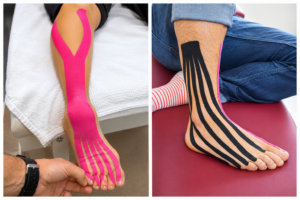
The transition from clinical rehabilitation to independent physical activity represents an important stage of functional recovery. Following orthopaedic surgery, neurological illness, prolonged inactivity or musculoskeletal injury, individuals may experience muscular weakness, restricted mobility, reduced coordination, altered balance and diminished confidence in movement. This program examines how NMT applications may be integrated into structured exercise and movement education to complement established rehabilitation and training strategies. The NMT methodology involves applying elastic adhesive tape without tension while the skin and underlying body region are positioned in functional elongation. When the body returns to its neutral position, characteristic skin convolutions develop beneath the tape. These applications are intended to provide cutaneous and mechanical stimuli that may complement functional movement, muscular coordination and rehabilitation exercises.
The course focuses on the preparatory, performance and recovery phases of physical activity, together with the progressive transition from postoperative or neurological rehabilitation to supervised exercise. Participants examine applications involving the lower and upper extremities, lumbar and cervical regions, thoracic mobility and respiratory mechanics. Particular attention is given to rehabilitation following ligament reconstruction, joint replacement, fractures, spinal surgery and selected neurological conditions. The program also introduces adapted physical education for children, adults and older individuals, including the integration of NMT into corrective exercise, postural training and functional movement programs.
Training is organised into two complementary modules. The first addresses physical education, sports preparation and lower-extremity and lumbar functional recovery. The second focuses on upper-extremity and cervical recovery, respiratory applications and adapted physical activity. The educational approach combines 10% theoretical instruction and 90% supervised practical training, providing participants with intensive hands-on experience, movement-based laboratories and instructor-guided case discussions. NMT is presented as a complementary methodology. The course does not authorise non-clinical professionals to diagnose or treat medical conditions, and applications following surgery or neurological illness must be integrated with appropriate medical clearance and professional supervision.
Who Should Attend?
The program is intended for physical education professionals, sports trainers, strength and conditioning specialists, adapted exercise instructors and qualified movement professionals involved in functional recovery and return-to-activity programs. Physiotherapists, rehabilitation professionals and other eligible healthcare practitioners may also benefit from the program where the curriculum is relevant to their professional activities. Previous NMT certification is required for entry to Stage 2. Advanced specialisation pathways may require successful completion of the introductory training.
Educational Objectives
The principal objective is to develop the theoretical understanding, clinical reasoning and practical skills necessary to integrate NeuroMuscular Taping into physical education, adapted exercise and post-rehabilitation functional recovery. Participants will learn to:
- Understand NMT decompressive methodology, zero-tension applications and maximum lines of skin elasticity (MEL).
- Review functional anatomy, biomechanics, cutaneous sensory stimulation and neuromuscular coordination.
- Differentiate applications used during preparation, physical performance, recovery and progressive return to activity.
- Develop NMT applications for selected lower- and upper-extremity functional movement objectives.
- Understand rehabilitation precautions following orthopaedic surgery, fractures and spinal procedures.
- Examine selected applications for individuals returning to exercise following neurological rehabilitation.
- Integrate NMT with postural education, respiratory movement, balance training and adapted physical activity.
- Recognise contraindications, medical referral requirements and the limitations of current scientific evidence.
The program emphasises anatomical precision, functional assessment, progressive exercise and multidisciplinary collaboration.
Course Structure and Practical Training
Module 1 – Physical Education, Sports Preparation and Lower-Extremity Functional Recovery
Day 1 – NMT in Physical Education, Fitness and Athletic Movement
8 Hours – Decompressive Methodology, Functional Movement, Training Preparation and Recovery
Session 1 – NMT Foundations and Physical Education
The opening session introduces the history and development of NeuroMuscular Taping, its distinguishing decompressive methodology and the anatomical and physiological principles relevant to physical education and functional training. Participants review the differences between compressive and decompressive taping, eccentric application principles, skin elasticity and the relationships between cutaneous stimulation, muscular coordination and movement. The course examines application selection according to individual training objectives, including preparation for physical activity, movement execution and post-training recovery.
Session 2 – Functional Movement and Athletic Technique
This session examines the integration of NMT with functional movement, muscular coordination and sport-specific exercise. Participants review biomechanical relationships involving the lower extremities, pelvis, trunk and upper extremities during athletic gestures and repetitive training activities.
Practical laboratory: Selected NMT applications for muscular coordination, postural control and movement awareness during functional exercises. The session introduces movement analysis and application selection for activities involving high physical demands, with particular attention to training load and appropriate technique.
Session 3 – NMT Applications in Fitness and Strength Training
The third session introduces NMT applications in fitness programs, resistance training and general physical conditioning. Participants examine muscular fatigue, movement restrictions, repetitive loading and the integration of decompressive taping with strength and mobility exercises.
Practical laboratory: Selected NMT applications involving major muscle groups during resistance training, weightlifting preparation and functional fitness exercises. The course also discusses applications used in body-composition and weight-management exercise programs, while clarifying that NMT has not been established as an independent method for reducing body fat or improving weight loss.
Session 4 – Training Recovery and Injury-Prevention Strategies
The final session of Day 1 focuses on the integration of NMT into post-training recovery and movement education. Participants review the relationships between muscular fatigue, training intensity, tissue sensitivity and progressive recovery.
Practical laboratory: Selected decompressive applications for post-training muscular discomfort, mobility exercises and functional movement recovery. The session also examines the role of appropriate training progression, exercise technique and load management in reducing injury risk. The day concludes with case discussions, supervised practice and instructor feedback.
Day 2 – Orthopaedic Surgery and Lower-Extremity Functional Reintegration
8 Hours – Post-Rehabilitation Exercise Following Knee, Hip, Ankle, Fracture and Lumbar Surgery
Session 5 – Transition from Rehabilitation to Physical Activity
The second day introduces the principles of progressive functional recovery following orthopaedic surgery and prolonged immobilisation. Participants review muscular weakness, reduced joint mobility, altered proprioception, postural adaptation and the importance of structured exercise following completion of the initial clinical rehabilitation phases. The course examines the distinction between medical rehabilitation and supervised physical training, including the need for appropriate professional clearance and individualised activity progression.
Session 6 – Knee and Ankle Post-Surgical Functional Recovery
This session examines the transition to physical activity following anterior cruciate ligament reconstruction, meniscectomy and ankle surgery. Participants review knee and ankle biomechanics, muscular coordination, balance and progressive loading.
Practical laboratory: Selected NMT knee and ankle decompression applications integrated with supervised mobility, proprioceptive and functional movement exercises. Clinical discussion addresses the importance of respecting surgical restrictions and established return-to-activity criteria.
Session 7 – Hip Arthroplasty and Lower-Extremity Functional Movement
The third session introduces movement considerations following hip and knee arthroplasty. Participants review muscular function, joint mobility, balance, gait and progressive exercise in individuals returning to daily physical activity.
Practical laboratory: Selected NMT hip, thigh and knee applications integrated with functional movement, walking and balance exercises. The session emphasises individual rehabilitation progression, medical clearance and the avoidance of activities that conflict with postoperative precautions.
Session 8 – Fracture Recovery and Lumbar Functional Rehabilitation
The final session of Module 1 examines the return to physical activity following humeral, forearm and elbow fractures, together with selected lumbar surgical procedures. Participants review functional recovery following lumbar disc surgery and vertebral stabilisation, including trunk mobility, postural control and muscular coordination.
Practical laboratory: Selected NMT upper-extremity and lumbar decompression applications adapted to post-rehabilitation movement objectives. The day concludes with clinical case discussions, practical review and instructor feedback.
Module 2 – Upper-Extremity Recovery, Respiratory Function and Adapted Physical Education
Day 3 – Upper-Extremity, Shoulder and Cervical Functional Recovery
8 Hours – Post-Surgical Movement, Shoulder Rehabilitation, Wrist Function and Cervical Mobility
Session 9 – Upper-Extremity Functional Rehabilitation Principles
The third day introduces the anatomical and functional considerations involved in returning to physical activity following upper-extremity surgery or injury. Participants review shoulder, elbow and wrist biomechanics, muscular coordination, cutaneous sensitivity and the effects of immobilisation on functional movement. The session emphasises appropriate assessment, movement progression and collaboration with the treating rehabilitation team.
Session 10 – Shoulder Surgery and Functional Movement
This session examines functional recovery following shoulder joint and capsular surgery, shoulder arthroplasty and selected tendon reconstruction procedures. Participants review the supraspinatus, long head of the biceps brachii, rotator cuff and scapular musculature.
Practical laboratory: Selected NMT shoulder and upper-arm decompression applications integrated with supervised mobility and functional exercise. Applications are adapted according to the stage of recovery and must respect postoperative restrictions.
Session 11 – Elbow and Wrist Post-Surgical Rehabilitation
The third session introduces NMT applications involving the elbow, forearm and wrist following injury or surgery. Participants review joint mobility, muscular coordination, sensory awareness and functional hand use.
Practical laboratory: NMT elbow, forearm and wrist applications, including selected configurations for functional movement following stabilisation procedures. The session focuses on progressive exercise, movement quality and the appropriate transition from clinical rehabilitation to daily activities.
Session 12 – Cervical and Thoracic Functional Recovery
The final session of Day 3 examines cervical and upper thoracic mobility following selected spinal conditions and surgical procedures. Participants review cervical muscular function, scapular coordination, postural control and the relationships between the cervical spine and upper-extremity movement.
Practical laboratory: Selected NMT cervical, upper trapezius and thoracic decompression applications. Clinical discussion includes cervical disc surgery, vertebral stabilisation and the importance of medical clearance before introducing functional movement programs. The day concludes with case discussions, supervised practice and instructor feedback.
Day 4 – Respiratory Applications, Adapted Exercise and Functional Reintegration
8 Hours – Thoracic Mobility, Breathing Mechanics, Corrective Exercise and Final Certification Assessment
Session 13 – NMT and Respiratory Movement
The fourth day introduces selected NMT applications involving the respiratory musculature, thoracic mobility and breathing mechanics. Participants review the diaphragm, intercostal musculature, accessory respiratory muscles and the relationships between posture, rib cage movement and breathing.
Practical laboratory: NMT anterior and posterior diaphragmatic-region applications, thoracic and rib cage decompression, and selected cervical respiratory muscle configurations. The session examines how these applications may be integrated with breathing exercises and established respiratory rehabilitation programs.
Session 14 – Cervical, Mandibular and Orofacial Applications
This session introduces selected NMT applications involving the cervical, mandibular, buccal and nasal regions. Participants review superficial anatomy, muscular function and the relationships between cervical posture, jaw movement and breathing mechanics.
Practical laboratory: Selected NMT cervical and mandibular-region applications, with demonstrations of specialised orofacial configurations. Applications involving swallowing, airway function, neurological deficits or postoperative head and neck conditions are reserved for appropriately qualified healthcare professionals.
Session 15 – Adapted Physical Education and Corrective Exercise
The third session examines the integration of NMT into adapted physical education, postural training and functional movement programs. Participants review the different movement requirements of children, adults and older individuals, including balance, muscular coordination, mobility and postural control.
Practical laboratory: Selected NMT applications integrated with corrective exercise, balance activities, mobility training and functional movement. Particular attention is given to age-appropriate application selection, skin sensitivity and the adaptation of exercise intensity to individual capacity. The session also introduces considerations for individuals returning to exercise following neurological rehabilitation, including Parkinson’s disease and multiple sclerosis, where activities are coordinated with the treating clinical team.
Session 16 – Functional Integration and Final Assessment
The final session consolidates the knowledge and practical skills developed throughout the four-day program. Participants examine the integration of NMT into physical education, post-rehabilitation exercise, functional movement, adapted physical activity and progressive return to sport. Case discussions address individuals recovering from orthopaedic surgery, prolonged inactivity, musculoskeletal injury and selected neurological conditions. The course concludes with a review of current scientific evidence, supervised practical assessment and the final written examination.
Teaching Methodology and Practical Skill Development
The NMT Institute provides an interactive educational environment combining 10% theoretical instruction and 90% supervised practical laboratory training. Participants work in pairs, alternating between practitioner and model roles. Each application is demonstrated by a certified NMT instructor and repeated under direct supervision, allowing individual correction and progressive development of manual competence. The educational process integrates functional anatomy, biomechanics, physical education, post-rehabilitation exercise, proprioception and evidence-informed application planning. Particular attention is given to anatomical positioning, skin elongation, application direction, zero-tension decompressive methodology and the integration of NMT with progressive movement. Full attendance and active participation in all practical sessions are required.
Final Examination and International Certification
The program includes a theoretical and practical examination designed to evaluate knowledge, anatomical precision and technical competence.
- Theoretical examination: A 125-question multiple-choice test covering NMT methodology, functional anatomy, biomechanics, physical education, postoperative rehabilitation precautions, adapted exercise, respiratory applications and contraindications.
- Practical examination: Supervised demonstration of selected NMT applications, evaluated according to anatomical accuracy, tape preparation, body positioning, skin elongation, zero-tension methodology and application reasoning.
The final assessment combines the written examination, practical examination and instructor and tutor evaluation. A minimum overall score of 85% is required for successful completion. Results are classified as Pass, Excellent or Distinction. Successful participants receive the NMT International Certification – Professional Paramedical Therapy, Physical Education and Functional Recovery, together with an NMT qualification diploma and certification membership card. Certification confirms successful completion of the educational program and does not authorise medical diagnosis, treatment or rehabilitation procedures outside the participant’s professional scope of practice.
Educational Materials
Participants receive a complete NMT practical training kit containing a backpack, skin-marking dermo-pencil, scissors, multicoloured elastic adhesive tape, course workbook, qualification certificate and certification membership card. The original educational kit has an indicated value of approximately €105. Recommended Reading
- NeuroMuscular Taping: From Theory to Practice – Edi Ermes, Milan, 2012.
- NeuroMuscular Taping: Treatment of Oedema, Haematoma and Scarring – Edi Ermes, Milan.
- Functional anatomy, exercise physiology, biomechanics, adapted physical activity, neurological rehabilitation, respiratory mechanics and postoperative functional recovery literature.
Additional scientific publications and educational resources may be provided through the NMT Institute.
Course Information
- Course Title: NeuroMuscular Taping Professional Paramedical Therapy, Physical Education and Functional Recovery
- Course Code: NMTC-P.SR 4/II°
- Duration: 4 days – 32 hours, divided into two modules of 16 hours each.
- Day 1: NMT in Physical Education, Fitness and Athletic Movement – 8 hours.
- Day 2: Orthopaedic Surgery and Lower-Extremity Functional Reintegration – 8 hours.
- Day 3: Upper-Extremity, Shoulder and Cervical Functional Recovery – 8 hours.
- Day 4: Respiratory Applications, Adapted Exercise and Functional Reintegration – 8 hours.
- Target Participants: Sports trainers, physical education professionals, adapted exercise specialists and qualified movement-training practitioners.
- Maximum Participants: 24.
- Training Format: Classroom education, instructor demonstrations, movement-based practical laboratories and case discussions.
- Teaching Approach: 10% theory and 90% practical training.
- Prerequisites: No previous NMT certification required for Stage 1.
- Assessment: 125 multiple-choice questions and a supervised practical examination.
- Passing Requirement: Minimum 85%.
- Certification: NMT International Certification – Professional Paramedical Therapy, Physical Education and Functional Recovery.
- Continuing Education Credits: ECM/CME credits where accreditation has been approved by the relevant national authority and the participant’s profession is eligible.
- Educational Materials: NMT workbook, practical training kit, certificate and certification membership card.
From Rehabilitation to Functional Independence and Physical Activity
The NMT Professional Paramedical Therapy, Physical Education and Functional Recovery Training Programprovides physical education and movement professionals with a structured educational pathway for integrating elastic decompressive taping into adapted exercise, post-rehabilitation movement and progressive return to physical activity. Through functional anatomy, biomechanics, neuromuscular coordination, respiratory movement and intensive supervised practice, participants develop specialised skills for evaluating and incorporating NMT into individualised movement-training programs. The combination of physical education, post-surgical functional recovery, adapted exercise and progressive reintegration into daily activity provides a multidisciplinary framework connecting clinical rehabilitation with independent movement and physical participation.
Develop specialised decompressive taping skills for functional recovery, adapted physical education and progressive return to activity through internationally structured NMT education and intensive hands-on training.
NeuroMuscular Taping (NMT) – Sport Posture and Dynamic Postural Rehabilitation
NeuroMuscular Taping (NMT) – Professional Sport Posture and Dynamic Postural Rehabilitation
Specialisation in Athletic Posture, Neuromuscular Coordination, Proprioception and Functional Movement
International NMT Professional Specialisation and Certification | 2 Days – 16 Hours
Course Overview
Course Code: NMTC-SP 2/I°
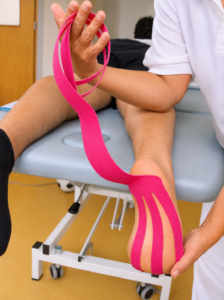 The NeuroMuscular Taping (NMT) Sport Posture and Dynamic Postural Rehabilitation Specialisation is an intensive two-day training program designed for physiotherapists, sports medicine professionals, physical education specialists, athletic trainers, posturologists and qualified movement professionals involved in postural assessment, sports rehabilitation and athletic preparation. The program examines the relationship between posture, proprioception, neuromuscular coordination, myofascial continuity and athletic movement, introducing a structured approach to integrating NeuroMuscular Taping into sport-specific postural rehabilitation and functional training.
Athletic posture is not simply the maintenance of an ideal static alignment. It represents a continuous process of postural adaptation involving sensory information, muscular coordination, joint mobility and the capacity to control movement under changing physical demands. During running, jumping, lifting, throwing and directional changes, the neuromuscular system continuously adjusts trunk stability, pelvic positioning, lower-extremity alignment and upper-extremity coordination. Restrictions in mobility, muscular fatigue, previous injuries and altered sensory feedback may influence these movement strategies. The NeuroMuscular Taping methodology uses elastic adhesive tape applied with zero tension (0%) while the skin and underlying body region are positioned in functional elongation. When the body returns to its neutral position, characteristic skin convolutions develop beneath the tape. These applications provide cutaneous mechanical stimulation and may be integrated with exercises intended to improve movement awareness and functional coordination.
The course explores NMT applications for cervical and thoracic posture, scapular control, lumbar mobility, pelvic stability, hip function, knee alignment and foot and ankle proprioception. Particular attention is given to the integration of NMT with postural re-education, dynamic balance, functional movement assessment and progressive sports training. The program follows a practical educational model consisting of 10% theory and 90% supervised laboratory training, allowing participants to develop the manual competence and clinical reasoning required to select and apply NMT techniques according to individual movement objectives. NMT is presented as a complementary methodology rather than a substitute for strength training, motor learning, therapeutic exercise or established sports rehabilitation. Its specific effects on posture, proprioception and athletic performance require further scientific investigation.
Target Professionals
The course is intended for physiotherapists, sports medicine physicians, posturologists, physical education professionals, athletic trainers, strength and conditioning specialists, osteopaths and other qualified movement and rehabilitation practitioners. Final-year students in relevant healthcare or movement science degree programs may also participate where permitted by local regulations. The program is suitable for professionals working in sports rehabilitation clinics, athletic training centres, postural rehabilitation services, fitness facilities and multidisciplinary sports medicine teams. Prerequisites: Previous NMT training is recommended but not mandatory. Clinical applications must remain within the participant’s professional scope of practice.
Educational Objectives
The principal objective is to develop specialised skills in integrating NeuroMuscular Taping into dynamic postural assessment, proprioceptive training and sport-specific functional movement. Participants will learn to:
- Understand the relationship between static posture, dynamic postural control and athletic movement.
- Review the role of cutaneous sensory input, proprioception and neuromuscular coordination in postural adaptation.
- Apply NMT zero-tension decompressive methodology according to maximum lines of skin elasticity (MEL).
- Assess cervical, thoracic, lumbar, pelvic and lower-extremity postural relationships.
- Develop NMT applications for scapular coordination, trunk mobility, pelvic control and lower-extremity alignment.
- Integrate NMT with balance exercises, movement retraining, functional strengthening and sports-specific activity.
- Evaluate movement before and after applications using reproducible functional tests.
- Recognise contraindications, clinical limitations and situations requiring medical assessment.
The program emphasises dynamic movement assessment, anatomical accuracy, individualised application selection and functional integration.
Course Structure and Practical Training
Day 1 – Spinal Posture, Scapular Control and Pelvic Stability
8 Hours – Dynamic Postural Assessment, Cervical and Thoracic Mobility, Lumbar Function and Pelvic Coordination
Session 1 – NMT Foundations and Dynamic Postural Assessment
The opening session introduces the relationship between postural control, sensory feedback, muscular coordination and athletic movement. Participants review the principles of NeuroMuscular Taping, including decompressive and compressive application differences, eccentric positioning, maximum lines of skin elasticity and the correct use of zero-tension methodology. The course examines the distinction between static alignment and dynamic postural strategies, emphasising the importance of observing movement rather than relying exclusively on anatomical symmetry.
Practical laboratory: Functional postural assessment in standing, walking, squatting and selected sport-specific movements. Participants establish baseline observations of spinal mobility, shoulder position, pelvic control and lower-extremity alignment.
Session 2 – Cervical and Thoracic Postural Control
This session examines the functional relationships between the cervical spine, thoracic region, scapular musculature and head position during athletic movement. Participants review the sternocleidomastoid, scalene muscles, upper and middle trapezius, rhomboids and thoracic paravertebral musculature.
Practical laboratory: NMT occipital and cervical decompression, upper trapezius, rhomboid and thoracic applications. Applications are integrated with cervical mobility, thoracic extension, breathing awareness and postural coordination exercises. Particular attention is given to overhead sports, resistance training and activities involving repetitive cervical or shoulder loading.
Session 3 – Scapular Stability and Upper-Extremity Posture
The third session examines scapular positioning, shoulder mobility and upper-extremity coordination during athletic activity. Participants review the relationships between the trapezius, serratus anterior, pectoral musculature, rotator cuff and thoracic spine.
Practical laboratory: NMT scapular decompression, anterior shoulder and pectoral applications, upper thoracic configurations and selected shoulder mobility protocols. Functional assessment includes arm elevation, overhead reaching, resisted upper-extremity movement and scapular coordination. The session emphasises the integration of NMT with progressive strengthening and movement retraining rather than passive correction of shoulder position.
Session 4 – Lumbar Posture, Pelvic Control and Core Coordination
The final session of Day 1 focuses on lumbar mobility, pelvic stability and trunk coordination during functional movement. Participants examine the relationships between the lumbar paravertebral muscles, thoracolumbar fascia, rectus abdominis, abdominal obliques, gluteal musculature and iliopsoas.
Practical laboratory: NMT lumbar decompression, thoracolumbar applications, abdominal configurations, gluteal and iliopsoas-related applications. Functional exercises include squatting, hip hinging, single-leg stance, trunk rotation and selected lifting movements. The session concludes with movement reassessment, clinical case discussions and instructor feedback.
Day 2 – Lower-Extremity Alignment, Proprioception and Sport-Specific Postural Integration
8 Hours – Hip and Knee Control, Foot and Ankle Function, Dynamic Balance and Final Assessment
Session 5 – Hip Function and Lower-Extremity Postural Chains
The second day introduces the relationships between pelvic positioning, hip mobility, lower-extremity muscular coordination and dynamic postural control.Participants review the gluteus maximus, gluteus medius, tensor fasciae latae, hip adductors, quadriceps and hamstrings.The course examines functional movement patterns involving running, jumping, squatting and directional changes.
Practical laboratory: NMT gluteal, tensor fasciae latae, adductor, quadriceps and hamstring applications. Applications are integrated with hip stability exercises, single-leg control, lateral movement and progressive functional strengthening.
Session 6 – Knee Alignment and Dynamic Movement Control
This session examines knee function during weight-bearing and athletic movement, with particular attention to the coordination between hip, knee and ankle. Participants review patellofemoral mechanics, quadriceps function, hamstring coordination and dynamic knee alignment.
Practical laboratory: NMT anterior knee decompression, quadriceps and hamstring applications, and selected functional knee configurations. Movement assessment includes single-leg squat, step-down, controlled landing and directional-change exercises. Participants learn to evaluate the individual’s movement response without assuming that taping alone can mechanically correct joint alignment.
Session 7 – Foot, Ankle and Proprioceptive Postural Control
The third session focuses on the role of the foot and ankle in balance, plantar sensory feedback and lower-extremity movement. Participants review the plantar fascia, intrinsic foot musculature, gastrocnemius, soleus, tibialis anterior, tibialis posterior and peroneal musculature.
Practical laboratory: NMT plantar fascia decompression, Achilles tendon, gastrocnemius, tibialis anterior and selected ankle and foot configurations. Applications are integrated with static and dynamic balance, single-leg stance, gait observation and progressive proprioceptive exercises. The session also examines how footwear, fatigue and previous ankle injuries may influence movement strategies.
Session 8 – Sport-Specific Postural Integration and Final Assessment
The final session consolidates the applications developed throughout the course, integrating NMT with dynamic postural training and sport-specific functional movement. Participants examine selected movement patterns involving running, jumping, resistance training, overhead activity and multidirectional sports.
Practical laboratory: Combined NMT applications involving the cervical, thoracic, lumbar, pelvic and lower-extremity regions, selected according to individual functional assessment. Participants perform pre-application and post-application movement assessments using standardised observations and practical tests, including balance, mobility and movement quality. The course reviews the distinction between immediate sensory or movement responses and demonstrated long-term rehabilitation outcomes. The program concludes with case discussions, a review of current scientific evidence, the written examination and supervised practical assessment.
Teaching Methodology and Practical Skill Development
The NMT Institute provides an interactive educational environment combining 10% theoretical instruction and 90% supervised practical laboratory training. Participants work in pairs, alternating between practitioner and model roles. Each application is demonstrated by a certified NMT instructor and repeated under direct supervision, allowing individual correction and progressive development of manual competence. The educational process integrates functional anatomy, biomechanics, postural assessment, proprioception, neuromuscular coordination and movement-based training. Particular attention is given to anatomical positioning, skin elongation, application direction, zero-tension decompressive methodology and the integration of NMT with active exercise. Full attendance and active participation in all practical sessions are required.
Final Examination and International Certification
The program includes a theoretical and practical examination designed to evaluate knowledge, anatomical precision and technical competence.
- Theoretical examination: A proposed 75-question multiple-choice test covering NMT methodology, postural biomechanics, proprioception, neuromuscular coordination, functional anatomy, clinical precautions and application techniques.
- Practical examination: Supervised demonstration of selected NMT applications, combined with functional movement assessment and the development of an individualised postural training strategy.
Practical evaluation considers anatomical accuracy, tape preparation, body positioning, skin elongation, zero-tension methodology, movement assessment and application reasoning. The final assessment combines the written examination, practical examination and instructor evaluation. A proposed minimum overall score of 85% is required for successful completion. Results may be classified as Pass, Excellent or Distinction. Successful participants receive the NMT International Certification – Professional Sport Posture and Dynamic Postural Rehabilitation Specialisation, subject to approval of the program’s certification criteria by the NMT Institute. Certification confirms successful completion of the educational program and does not extend the participant’s legal scope of professional practice.
Educational Materials
Participants receive an NMT practical training kit containing a backpack, skin-marking dermo-pencil, scissors, multicoloured elastic adhesive tape, course workbook, qualification certificate and certification membership card. Recommended Reading
- NeuroMuscular Taping: From Theory to Practice – Edi Ermes, Milan, 2012.
- NeuroMuscular Taping: Treatment of Oedema, Haematoma and Scarring – Edi Ermes, Milan.
- Functional anatomy, postural biomechanics, proprioception, motor learning, exercise physiology and sports rehabilitation literature.
Additional scientific publications and educational resources may be provided through the NMT Institute.
Course Information
- Course Title: NeuroMuscular Taping Professional Sport Posture and Dynamic Postural Rehabilitation Specialisation
- Course Code: NMTC-SP 2/I°
- Duration: 2 days – 16 hours.
- Day 1: Spinal Posture, Scapular Control and Pelvic Stability – 8 hours.
- Day 2: Lower-Extremity Alignment, Proprioception and Sport-Specific Postural Integration – 8 hours.
- Target Participants: Physiotherapists, sports medicine professionals, posturologists, physical education specialists, athletic trainers, osteopaths and qualified movement professionals.
- Maximum Participants: 24.
- Training Format: Classroom education, functional movement assessment, instructor demonstrations and supervised practical laboratories.
- Teaching Approach: 10% theory and 90% practical training.
- Prerequisites: Previous NMT training recommended but not mandatory.
- Proposed Assessment: 75 multiple-choice questions and a supervised practical examination.
- Proposed Passing Requirement: Minimum 85%.
- Certification: NMT International Certification – Professional Sport Posture and Dynamic Postural Rehabilitation Specialisation, subject to program approval.
- Continuing Education Credits: ECM/CME credits where accreditation has been approved by the relevant national authority and the participant’s profession is eligible.
- Educational Materials: NMT workbook, practical training kit, certificate and certification membership card.
From Static Alignment to Dynamic Postural Performance
The NMT Professional Sport Posture and Dynamic Postural Rehabilitation Specialisation provides sports and rehabilitation professionals with a structured educational pathway for integrating elastic decompressive taping into postural assessment, proprioceptive training and functional movement. Through functional anatomy, neuromuscular coordination, biomechanics and intensive supervised practice, participants develop specialised skills for evaluating and incorporating NMT into individualised postural training programs. The integration of spinal mobility, scapular coordination, pelvic stability, lower-extremity alignment and proprioceptive exercise provides a comprehensive framework for supporting functional movement across different sporting activities.
Develop specialised decompressive taping skills for dynamic posture, proprioception, neuromuscular coordination and sport-specific movement through internationally structured NMT education and intensive hands-on training.