NeuroMuscular Taping (NMT) Course Schedule – Podiatry and Foot Rehabilitation
Choose Your NMT Training Pathway
Our professional education programs are organised into three training categories:
- Foundation Courses: Introductory programs providing the essential theoretical knowledge, clinical reasoning, and practical application skills required to integrate NMT into specific professional and rehabilitation settings.
- Advanced Professional Courses: Specialised training programs designed to deepen clinical knowledge and develop advanced treatment protocols. These courses generally require completion of the relevant foundation program.
- Specialised Thematic Courses: Focused training programs addressing specific clinical conditions, rehabilitation objectives, or professional applications. Unless otherwise indicated, no previous NMT certification is required.
NeuroMuscular Taping (NMT) – Podiatry and Foot Rehabilitation Training
NeuroMuscular Taping (NMT) – Professional Podiatry and Foot Rehabilitation Training – Stage 1
Decompressive Taping for Foot Biomechanics, Proprioception, Diabetic Foot Care, Neurological Rehabilitation and Lymphatic Drainage
International NMT Professional Training and Certification | 2 Days – 16 Hours
Course Overview
Course Code: NMTC-POD/I°
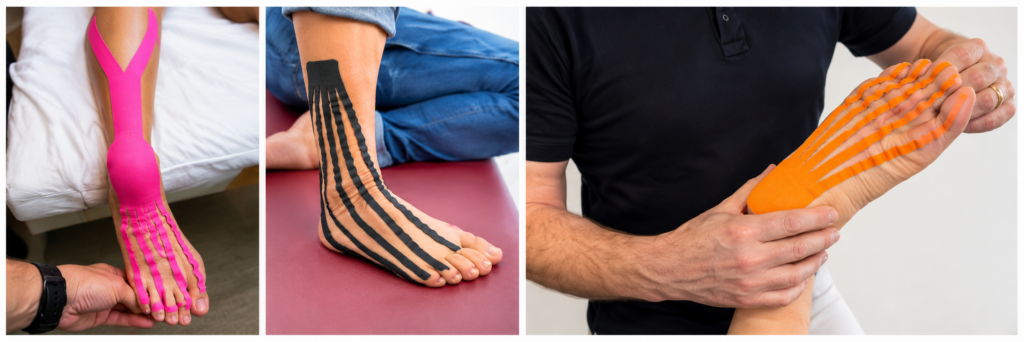
 The NeuroMuscular Taping (NMT) Professional Podiatry and Foot Rehabilitation Training – Stage 1 is an intensive two-day educational program designed for podiatrists, posturologists, medical doctors and eligible students of podiatry and medicine involved in the assessment, treatment and rehabilitation of foot and ankle disorders. Developed by the NeuroMuscular Taping Institute in Italy, the program introduces a structured clinical methodology based on elastic decompressive taping applied with zero tension (0%), integrating functional foot anatomy, biomechanics, peripheral nerve function, proprioception, lymphatic and vascular physiology, and musculoskeletal rehabilitation.
The foot is a complex anatomical and functional structure responsible for weight distribution, balance, sensory feedback, shock absorption and propulsion during walking. Muscular dysfunction, tendon and ligament injuries, altered plantar loading, neuropathy, postoperative changes and vascular or lymphatic disorders may significantly influence foot function and mobility. The NMT methodology involves applying elastic adhesive tape without tension while the skin and underlying body region are positioned in functional elongation. When the body returns to its neutral position, characteristic skin convolutions develop beneath the tape. These applications provide cutaneous and mechanical stimuli that may complement established rehabilitation strategies addressing superficial tissue mobility, sensory awareness, regional oedema and movement-related discomfort.
The course examines the integration of NMT into acute, post-acute and functional rehabilitation phases, allowing participants to select appropriate applications according to tissue condition, clinical diagnosis, foot biomechanics and individual rehabilitation objectives. Particular attention is given to plantar fasciitis, metatarsalgia, heel pain, Morton’s neuroma, tendon disorders, toe deformities, diabetic neuropathy, neurological foot dysfunction, postoperative rehabilitation and regional lymphatic drainage. The program also introduces selected applications for patients with diabetic foot complications, lower-extremity amputation, stroke, Parkinson’s disease, multiple sclerosis and paediatric foot disorders. The educational format combines 10% theoretical instruction and 90% supervised practical training, providing participants with intensive hands-on experience, clinical case discussions and individual instructor guidance. NMT is presented as a complementary rehabilitation methodology and does not replace established podiatric care, wound management, vascular treatment, therapeutic exercise, orthotic intervention or appropriate medical treatment.
Who Should Attend?
The course is intended for podiatrists, posturologists, medical doctors and eligible students enrolled in podiatry or medical degree programs. It is particularly relevant to professionals working in podiatry clinics, diabetic foot services, orthopaedic rehabilitation, neurological rehabilitation, sports medicine, postural assessment and multidisciplinary foot and ankle care. No previous NMT certification is required. Clinical applications must remain within each participant’s professional scope of practice.
Educational Objectives
The principal objective is to develop the theoretical understanding, clinical reasoning and practical skills necessary to integrate NeuroMuscular Taping into individualised podiatry and foot rehabilitation programs. Participants will learn to:
- Understand NMT decompressive methodology, zero-tension applications and maximum lines of skin elasticity (MEL).
- Review the functional anatomy, biomechanics and neurophysiology of the foot, ankle and lower extremity.
- Differentiate acute, post-acute and functional rehabilitation objectives.
- Develop NMT applications for plantar fasciitis, metatarsalgia, heel pain, tendon dysfunction and selected toe deformities.
- Examine cutaneous sensory stimulation, proprioception and postural relationships involving the foot.
- Integrate regional lymphatic drainage applications into the management of selected foot and ankle oedema presentations.
- Assess diabetic neuropathy, neurological foot dysfunction and postoperative rehabilitation requirements.
- Recognise contraindications and precautions associated with diabetic ulcers, impaired circulation, fragile skin, sensory loss and inflammatory conditions.
The program emphasises anatomical precision, biomechanical assessment, patient safety and individualised rehabilitation planning.
Course Structure and Practical Training
Day 1 – Musculoskeletal Podiatry, Foot Biomechanics and Proprioceptive Rehabilitation
8 Hours – Functional Foot Anatomy, Plantar Pain, Tendon Disorders, Toe Deformities and Practical Training
Session 1 – NMT Foundations and Functional Foot Anatomy
The opening session introduces the history and development of NeuroMuscular Taping, its distinguishing decompressive methodology and the anatomical and physiological principles involved in podiatric rehabilitation. Participants review the differences between compressive and decompressive taping, eccentric application principles, maximum lines of skin elasticity and the relationships between cutaneous stimulation, muscular function and joint biomechanics. The course examines foot anatomy, plantar fascia, intrinsic and extrinsic musculature, tendon and ligament structures, peripheral nerve pathways and the role of the foot in postural control and gait. Clinical assessment includes plantar loading, foot mobility, tissue sensitivity, muscular coordination, joint function and the identification of contraindications.
Session 2 – Plantar Fasciitis, Heel Pain and Metatarsalgia
This session introduces selected NMT applications for common plantar and heel pain presentations. Participants examine the anatomical relationships between the plantar fascia, calcaneus, metatarsal structures, Achilles tendon and surrounding muscular tissues. Clinical discussion includes plantar fasciitis, plantar heel pain, calcaneal spurs, metatarsalgia and selected tendon-related disorders.
Practical laboratory: NMT plantar fascia decompression, heel applications, metatarsal region decompression and selected posterior ankle and Achilles tendon configurations. Applications are adapted according to pain distribution, tissue sensitivity, biomechanical assessment and rehabilitation stage.
Session 3 – Forefoot Disorders, Morton’s Neuroma and Toe Rehabilitation
The third session examines NMT applications for forefoot dysfunction, interdigital nerve irritation and selected toe deformities. Participants review Morton’s neuroma, hammer toes, metatarsophalangeal joint dysfunction, synovial cysts and related superficial tissue restrictions.
Practical laboratory: NMT forefoot decompression, metatarsal applications, toe mobility configurations and selected applications for interdigital discomfort. Clinical reasoning focuses on anatomical positioning, pressure distribution, footwear considerations and the integration of NMT with established podiatric and orthotic management.
Session 4 – Tendon Rehabilitation, Foot Stability and Proprioception
The final session of Day 1 examines the relationships between foot and ankle muscular function, joint mobility, proprioception and postural control. Participants review selected tendon disorders, muscular fatigue, functional ankle instability and the influence of foot mechanics on lower-extremity alignment.
Practical laboratory: NMT foot and ankle muscular applications, tendon-related decompression, selected functional stability configurations and proprioceptive rehabilitation techniques. Applications are integrated with progressive movement, balance exercises, gait assessment and functional rehabilitation. The day concludes with clinical case discussions, supervised practical review and instructor feedback.
Day 2 – Diabetic Foot, Neurological Rehabilitation and Lymphatic Drainage
8 Hours – Diabetic Neuropathy, Foot Ulcer Precautions, Neurological Disorders, Paediatric Foot Rehabilitation and Final Assessment
Session 5 – Diabetic Foot Rehabilitation and Peripheral Neuropathy
The second day introduces the clinical principles of NMT in diabetic foot care and peripheral neuropathy. Participants review the anatomical and physiological relationships between peripheral nerve dysfunction, altered plantar sensation, vascular impairment, skin integrity and foot biomechanics. Clinical discussion includes diabetic neuropathy, diabetic foot ulcers involving the ankle, heel and metatarsal regions, and the rehabilitation requirements of patients following lower-extremity amputation. Particular attention is given to the assessment of protective sensation, tissue perfusion, skin fragility and the risks associated with adhesive applications in patients with diabetes.
Practical laboratory: Selected NMT regional decompressive applications involving intact skin of the foot, ankle and lower extremity, adapted to the patient’s neurological and vascular condition. NMT must not be applied directly over open ulcers, infected wounds, macerated tissue or compromised skin.Diabetic foot ulcers require established wound care, pressure offloading, vascular assessment and appropriate medical management.
Session 6 – Neurological Foot Rehabilitation and Gait Dysfunction
This session examines neurological conditions affecting foot mobility, muscular coordination, proprioception and gait. Participants review foot drop, peripheral nerve dysfunction, sciatic nerve-related symptoms and selected neurological presentations following stroke. The course also introduces rehabilitation considerations for patients with Parkinson’s disease, multiple sclerosis and other neurological disorders affecting lower-extremity function.
Practical laboratory: NMT ankle dorsiflexion-related applications, selected foot mobility configurations, lower-extremity sensory applications and regional decompression techniques. Clinical reasoning addresses the integration of NMT with neurological rehabilitation, gait training, balance exercises and appropriate orthotic support.
Session 7 – Paediatric Foot Disorders and Selected Inflammatory Conditions
The third session introduces NMT applications for selected paediatric foot conditions, developmental movement differences and functional foot rehabilitation. Participants examine age-related anatomical considerations, skin sensitivity, joint mobility and the importance of adapting applications to the child’s developmental stage. Clinical discussion also includes gout, metatarsophalangeal bursitis, nail disorders, callosities and selected inflammatory or degenerative foot conditions.
Practical laboratory: Selected paediatric foot applications, forefoot decompression and regional configurations for functional mobility and sensory rehabilitation. The session emphasises appropriate medical diagnosis, careful patient selection and the avoidance of applications over acutely inflamed, infected or damaged skin.
Session 8 – Foot and Ankle Lymphatic Drainage and Post-Traumatic Oedema
The final practical session focuses on lymphatic and vascular considerations involving the lower extremity, ankle and foot. Participants review superficial lymphatic pathways, regional oedema, postoperative swelling, post-traumatic tissue changes and the effects of immobility on lower-extremity circulation.
Practical laboratory: NMT inguinal and popliteal drainage, lower-leg lymphatic decompression, ankle applications and selected dorsal foot configurations. Applications are adapted according to clinical assessment, skin integrity, vascular status and rehabilitation objectives. The course concludes with clinical case studies involving diabetic neuropathy, plantar pain, neurological foot dysfunction, postoperative rehabilitation and lower-extremity oedema. Participants review the available scientific evidence, clinical outcome assessment and the appropriate integration of NMT into multidisciplinary podiatric care. The final session includes the written examination, practical assessment and instructor feedback.
Teaching Methodology and Practical Skill Development
The NMT Institute provides an interactive educational environment combining 10% theoretical instruction and 90% supervised practical laboratory training. Participants work in pairs, alternating between practitioner and model roles. Each application is demonstrated by a certified NMT instructor and repeated under direct supervision, allowing individual correction and progressive development of manual competence. The educational process integrates functional anatomy, foot biomechanics, neurophysiology, clinical assessment, lymphatic drainage, proprioceptive rehabilitation and evidence-informed treatment planning. Particular attention is given to anatomical positioning, skin elongation, application direction, zero-tension methodology and the selection of applications according to individual clinical objectives. Full attendance and active participation in all practical sessions are required.
Final Examination and International Certification
The program includes a theoretical and practical examination designed to evaluate clinical knowledge, anatomical precision and technical competence.
- Theoretical examination: A 75-question multiple-choice test covering NMT methodology, foot and ankle anatomy, biomechanics, neurological rehabilitation, diabetic foot precautions, lymphatic drainage, clinical indications, contraindications and application techniques.
- Practical examination: Supervised demonstration of selected NMT applications, evaluated according to anatomical accuracy, tape preparation, patient positioning, skin elongation, zero-tension methodology, clinical reasoning and patient safety.
The final assessment combines the written examination, practical examination and instructor evaluation. A minimum overall score of 85% is required for successful completion. Results are classified as Pass, Excellent or Distinction. Successful participants receive the NMT International Certification – Professional Podiatry and Foot Rehabilitation, Stage 1, together with an NMT qualification diploma and certification membership card. Certification confirms successful completion of the educational program and does not extend the participant’s legal scope of professional practice.
Educational Materials
Participants receive a complete NMT practical training kit containing a backpack, skin-marking dermo-pencil, scissors, multicoloured elastic adhesive tape, course workbook, qualification certificate and certification membership card. The original educational kit has an indicated value of approximately €75. Recommended Reading
- NeuroMuscular Taping: From Theory to Practice – Edi Ermes, Milan, 2012.
- NeuroMuscular Taping: Treatment of Oedema, Haematoma and Scarring – Edi Ermes, Milan.
- Functional foot anatomy, podiatric biomechanics, diabetic foot management, neurological rehabilitation, lymphatic physiology and foot and ankle rehabilitation literature.
Additional scientific publications and educational resources may be provided through the NMT Institute.
Course Information
- Course Title: NeuroMuscular Taping Professional Podiatry and Foot Rehabilitation – Stage 1
- Course Code: NMTC-POD/I°
- Duration: 2 days – 16 hours.
- Day 1: Musculoskeletal Podiatry, Foot Biomechanics and Proprioceptive Rehabilitation – 8 hours.
- Day 2: Diabetic Foot, Neurological Rehabilitation and Lymphatic Drainage – 8 hours.
- Target Participants: Podiatrists, posturologists, medical doctors and eligible students of podiatry and medicine.
- Maximum Participants: 24.
- Training Format: Classroom education, clinical demonstrations, case discussions and supervised practical laboratories.
- Teaching Approach: 10% theory and 90% practical training.
- Prerequisites: No previous NMT certification required.
- Assessment: 75 multiple-choice questions and a supervised practical examination.
- Passing Requirement: Minimum 85%.
- Certification: NMT International Certification – Professional Podiatry and Foot Rehabilitation, Stage 1.
- Continuing Education Credits: ECM/CME credits where accreditation has been approved by the relevant national authority.
- Educational Materials: NMT workbook, practical training kit, certificate and certification membership card.
Advance Your Clinical Skills in Podiatry and Foot Rehabilitation
The NMT Professional Podiatry and Foot Rehabilitation – Stage 1 Program provides healthcare professionals with a structured educational pathway for integrating elastic decompressive taping into podiatric assessment and rehabilitation. Through foot biomechanics, neurophysiology, lymphatic drainage, proprioceptive rehabilitation and intensive supervised practice, participants develop specialised skills for evaluating and integrating NMT into individualised foot and ankle rehabilitation programs. The combination of musculoskeletal rehabilitation, diabetic foot precautions, neurological applications and regional lymphatic management provides a comprehensive educational framework for multidisciplinary podiatric care.
Develop specialised decompressive taping skills for foot biomechanics, plantar pain, diabetic neuropathy, neurological foot rehabilitation and lymphatic drainage through internationally structured NMT education and intensive hands-on training.