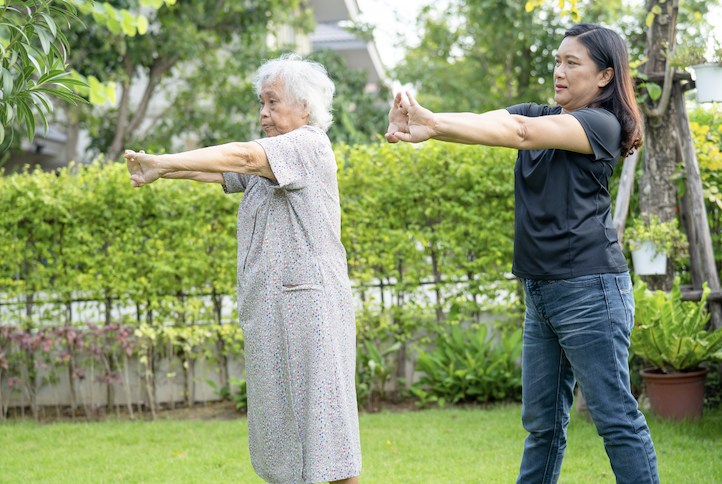
Balance rehabilitation in older adults has become one of the most important priorities in modern rehabilitation medicine as ageing populations face increasing risks of falls, mobility limitations and loss of independence. Successful rehabilitation requires more than muscle strengthening alone; it depends on restoring proprioception, postural control, neuromuscular coordination and multisensory integration. NeuroMuscular Taping (NMT) complements evidence-informed rehabilitation by enhancing sensory feedback, improving microcirculation and supporting functional balance through its decompression-based methodology.
Proprioception and Postural Control
Population ageing is transforming healthcare systems worldwide, making the preservation of mobility and independence a major public health priority. Balance rehabilitation in older adults plays a fundamental role in reducing falls, maintaining functional capacity and improving quality of life. Age-related changes in proprioception, vestibular function, muscle strength, joint mobility and sensory integration progressively impair postural stability, increasing the likelihood of injury, hospitalization and long-term disability.
Furthermore, modern rehabilitation increasingly recognizes that balance depends on the coordinated interaction of the musculoskeletal, sensory and nervous systems. NeuroMuscular Taping (NMT) introduces a decompression-based rehabilitation strategy that complements conventional physiotherapy by stimulating cutaneous mechanoreceptors, enhancing proprioceptive feedback, improving lymphatic and microvascular circulation and facilitating neuromuscular control. By integrating peripheral sensory stimulation with functional movement training, NMT offers clinicians an evidence-informed approach to improving balance, reducing fall risk and supporting healthy ageing.The global population of older adults—those aged over 65—is rapidly increasing and is projected to reach 1.5 billion by 2050 (World Health Organization, 2023). In Europe, Italy currently holds the highest proportion of older adultswithin its total population (Eurostat, 2019). This demographic transformation represents one of the greatest public health challenges of the 21st century: the progressive decline of balance and equilibrium, leading to loss of mobility, independence, and quality of life.
Why Balance Declines with Age
Aging is inevitably accompanied by a decline in proprioception—the body’s ability to sense position, movement, and joint orientation. This sensory system, essential for postural control and coordinated motion, depends on the integration of information from muscles, tendons, joints, skin, and the vestibular system.
When proprioceptive acuity diminishes, motor planning, balance, and reaction time deteriorate, resulting in instability and a greater risk of falls. Falls are the leading cause of functional impairment in older adults and a major predictor of long-term disability, particularly among individuals over 75 years of age.
The Impact of Sarcopenia and Osteoporosis
In addition to sensory decline, age-related musculoskeletal disorders such as osteoporosis, sarcopenia, and degenerative joint disease amplify the risk of imbalance. Osteoporosis alone affects more than 21% of the global elderly population, predominantly women. The reduction in bone mass, muscle tone, and joint stability compromises equilibrium, making even minor mechanical perturbations potentially catastrophic.
Despite the known risks, preventive measures remain reactive rather than proactive. Current rehabilitation strategies—such as balance retraining, muscle strengthening, and physiotherapy—are typically initiated after one or more falls occur. This reactive approach fails to mitigate the cascade of consequences: injury, reduced mobility, hospitalization, and loss of independence.
NeuroMuscular Taping and Sensorimotor Integration
Modern geriatric, or better phrased, elderly rehabilitation emphasizes multi-sensory integration to enhance postural stability. Effective therapeutic strategies include:
- Vestibular rehabilitation to recalibrate balance responses and visual-vestibular coordination.
- Proprioceptive and kinesthetic retraining using unstable surfaces, dynamic platforms, and sensory feedback exercises.
- Functional strength training, focusing on lower limb and core stability to improve postural endurance.
- Assistive devices and wearable technologies that provide real-time balance feedback.
- NeuroMuscular Taping (NMT) —a novel decompression-based approach designed to restore proprioceptive function and neuromuscular control.
Enhancing Proprioception Through Tissue Decompression
NeuroMuscular Taping (NMT) is a non-invasive technique that applies elastic, air-permeable, and skin-conforming adhesive tapes over specific muscle groups and joint structures. Unlike traditional compressive taping systems, NMT uses eccentric decompression to gently lift the skin and subcutaneous fascia, increasing interstitial space and stimulating cutaneous mechanoreceptors. This decompressive stimulus has several physiological effects:
- Enhanced microcirculation and lymphatic flow, reducing edema and improving tissue oxygenation.
- Decreased nociceptive input, lowering pain sensitivity through pressure normalization on superficial nerve endings.
- Facilitated proprioceptive feedback, achieved by continuous stimulation of Merkel cells, Ruffini endings, and muscle spindles.
- Improved motor recruitment and postural awareness, enhancing neuromuscular coordination during static and dynamic balance tasks.
Through these mechanisms, NMT acts not merely as a passive support but as a dynamic neuro-sensory interface, promoting sensorimotor integration between skin, fascia, and central motor control pathways.
Clinical Applications of NeuroMuscular Taping in Older Adults
A growing body of preliminary research has demonstrated that NMT application can improve postural stability and functional performance in adults and older populations. Using standardized assessment tools such as the Berg Balance Scale (BBS) and Timed Up and Go (TUG) test, participants showed measurable improvements in reaction time, gait speed, and dynamic balance after taping sessions.
When integrated with physiotherapy, vestibular stimulation, or functional re-education programs, NMT provides a continuous proprioceptive cue—extending therapeutic input beyond clinical sessions and enhancing neuroplastic adaptation. This integration is particularly beneficial in:
- Fall prevention programs for the elderly
- Neurological rehabilitation (e.g., stroke, Parkinson’s, SLA, Multiple Sclerosis)
- Post-surgical recovery to restore sensorimotor control
- Orthopedic and geriatric/elderly physiotherapy to maintain musculoskeletal function
Future Directions in Healthy Ageing and Rehabilitation
As the global population ages, NeuroMuscular Taping offers a paradigm shift in preventive and functional healthcare. By bridging mechanical, vascular, and sensory domains, NMT aligns with the principles of non-pharmacological, personalized, and continuous therapy.
Future healthcare systems—driven by preventive medicine, home-based monitoring, and integrative rehabilitation—may increasingly adopt NMT as a mainstream tool for proprioceptive and postural regulation. Its simplicity, safety, and compatibility with other therapies make it an ideal adjunct for long-term management of mobility and balance disorders in older adults.
In an era where maintaining independence and mobility defines the quality of aging, NeuroMuscular Taping stands at the intersection of innovation and care—a small strip of elastic tape offering profound implications for balance, stability, and human dignity.
Article: EEG Markers of Improved Proprioception and Posture in Older Women With Osteoporosis
M. Paramento, E. Passarotto, M. Agostini, E. Formaggio, P. Contessa, C. Berlingieri, C. Ceolin, G. Sergi, S. Masiero, M. Rubega. IEEE Transactions on Neural Systems and Rehabilitation Engineering, vol. 33, pp. 3837–3844, 2025. DOI: 10.1109/TNSRE.2025.3609562
The study by Paramento et al. (2025) provides one of the first neurophysiological investigations into the cortical effects of NeuroMuscular Taping (NMT) on proprioception and postural control in older adults with osteoporosis. The research is highly relevant in light of the global rise in geriatric populations and the increasing burden of fall-related injuries among elderly women with bone density loss. The authors employed high-density EEG recordings to explore brain activity associated with balance control before and after a three-week proprioceptive enhancement program integrating NMT with daily low-intensity exercises.
Ten women over 65 years with clinically diagnosed osteoporosis underwent Mini Balance Evaluation System (Mini-BESTest) assessments and EEG monitoring during controlled sensory orientation tasks—standing with eyes open and closed on both solid and foam surfaces. The intervention included NMT application to lumbar, rhomboid, and gastrocnemius regions (key proprioceptive and postural control areas) combined with 15 minutes of daily proprioceptive exercise. The three-week duration mirrors the typical NMT rehabilitation cycle used in balance and fall-prevention programs.
EEG data were analyzed using linear mixed-effects regression models, allowing for precise evaluation of temporal and condition-specific changes in cortical oscillations associated with proprioceptive processing and postural control.

Key Findings
The study reported several significant EEG and functional outcomes:
- Increased absolute theta power (p < 0.001) and decreased absolute beta power (p < 0.001) at T1 compared to T0, indicating improved sensorimotor integration and attentional modulation.
- When participants stood on foam surfaces (challenging proprioception), theta (p < 0.001) and alpha (p < 0.01)absolute power values initially decreased, reflecting sensory conflict; however, the attenuation of theta decrease at T1 (p < 0.001) suggests enhanced neural adaptation and postural strategy reorganization following NMT intervention.
- Corresponding improvements in Mini-BESTest scores confirmed a functional correlation between EEG modulation and postural performance.
These findings indicate that NMT application may enhance attentional control and cortical efficiency in proprioceptive processing—allowing participants to better allocate cognitive resources for balance maintenance.
The observed EEG spectral shifts align with established theories of sensorimotor plasticity and top-down modulation in postural control.
- The increase in theta power post-intervention is consistent with enhanced synchronization in fronto-central cortical networks, which support error monitoring and sensory integration during balance tasks.
- The reduction in beta activity may reflect a more efficient motor planning process, as beta desynchronization has been associated with motor readiness and adaptive learning.
- Importantly, the attenuation of theta suppression during unstable stance (foam surface) suggests that NMT facilitates the recalibration of sensory weighting, improving the brain’s ability to integrate somatosensory and vestibular cues.
The mechanical decompression generated by NMT likely stimulates cutaneous mechanoreceptors and muscle spindle afferents, producing continuous afferent feedback to the somatosensory cortex (S1) and posterior parietal areas. This enhanced sensory inflow contributes to improved body schema accuracy and postural awareness, as also proposed by Blow (2012) and Radicati et al. (2025).
Clinical and Therapeutic Implications
From a clinical perspective, this study demonstrates that NeuroMuscular Taping—when integrated with low-intensity proprioceptive training—can induce measurable cortical adaptations within a short intervention period. These neurophysiological changes translate into functional improvements in balance, offering an evidence-based preventive strategy for populations at high risk of falls, particularly women with osteoporosis.

The work by Paramento et al. supports the conceptual framework of NMT as a neuro-sensory therapeutic interface, capable of influencing both peripheral and central components of balance regulation. Integrating NMT into mainstream geriatric rehabilitation may thus enhance postural resilience, neural efficiency, and long-term fall prevention outcomes.
The findings of Paramento et al. (2025) bridge a critical gap between biomechanical decompression techniques (NMT) and neurophysiological evidence of sensory-motor plasticity. The observed EEG markers—enhanced theta synchronization and reduced beta activity—represent objective neurobiological correlates of improved proprioceptive control. These results strengthen the scientific foundation for incorporating NeuroMuscular Taping as a core adjunct in proprioceptive rehabilitation programs aimed at preserving independence and stability in aging populations.
Whitney SL, Sparto PJ. Principles of vestibular physical therapy rehabilitation. NeuroRehabilitation. 2011;29(2):157-66. doi: 10.3233/NRE-2011-0690. PMID: 22027077; PMCID: PMC4894843.
World Health Organization. World Report on Ageing and Health. Geneva: WHO; 2023.
Eurostat. Population structure by age and sex. European Commission, 2019.
Ambrose AF, Cruz L, Paul G. Falls and Fractures: A systematic approach to screening and prevention. Maturitas. 2015;82(1):85–93. DOI: 10.1016/j.maturitas.2015.06.035
Blow D, Claudia Celletti, Carmine Berlingieri, Filippo Camerota Neuromuscular taping reduces blood pressure in systemic arterial hypertension. Medical Hypotheses 123 (2019) 89. https://doi.org/10.1016/j.mehy.2019.01.001
Blow D. NeuroMuscular Taping, from principals to practice, Editor. Edi Ermes Milan, Italy. ISBN: 978/88/7051/342/4. May 2012, Italiano, English, Indonesian, Spanish, Polish, Russian
Camerota, F., Galli, M., Cimolin, V., Celletti, C., Ancillao, A., Blow, D., & Albertini, G. Neuromuscular taping for the upper limb in Cerebral Palsy: A case study in a patient with hemiplegia., ISSN: 1751-8423 (print), 1751-8431 (electronic), Developmental Neurorehabilitation, UK. 2014; 17(6): 384–387 https://doi.org/10.3109/17518423.2013.830152
Cadore EL, Rodríguez-Mañas L, Sinclair A, Izquierdo M. Effects of different exercise interventions on risk of falls, gait ability, and balance in physically frail older adults: a systematic review. Rejuvenation Res. 2013 Apr;16(2):105-14. doi: 10.1089/rej.2012.1397. PMID: 23327448; PMCID: PMC3634155.
Costantino C, Pedrini MF, Licari O. Neuromuscular taping versus sham therapy on muscular strength and motor performance in multiple sclerosis patients. Disability and rehabilitation. 2016;38(3):277-81. https://doi.org/10.3109/09638288.2015.1038365
Costantino C, Licari O, Granella F, Sghedoni S. Neuromuscular taping in multiple sclerosis. A pilot study. Acta Biomed. 2012 Aug;83(2):103-7. PMID: 23393917. https://pubmed.ncbi.nlm.nih.gov/23393917/.
Goble DJ, Coxon JP, Wenderoth N, Van Impe A, Swinnen SP. Proprioceptive sensibility in the elderly: degeneration, functional consequences and plastic-adaptive processes. Neurosci Biobehav Rev. 2009;33(3):271–278. DOI: 10.1016/j.neubiorev.2008.08.012
Hernlund E, Svedbom A, Ivergård M, et al. Osteoporosis in the European Union: medical management, epidemiology and economic burden. Arch Osteoporos. 2013;8:136.
Henry M, Baudry S. Age-related changes in leg proprioception: implications for postural control. (PMC article) 2019.
Maggi Loredana, Claudia Celletti, Maurizio Mazzarini, David Blow, Filippo Camerota. Neuromuscular taping for chronic non‑specific low back pain: a randomized single‑blind controlled trial. Aging Clinical and Experimental Research 2021. https://doi.org/10.1007/s40520-021-02029-0
Radicati FG, Tremigliozzi I, Galli M, Cimolin V, Grassini P, Casali M, Galafate D, Vacca L. Randomized observer-blind study on the effects of neuromuscular taping in Parkinson’s disease patients. Mov Disord Clin Pract. 2025 May 22. doi:10.1002/mdc3.70140. https://pubmed.ncbi.nlm.nih.gov/40401435/
Ribeiro F, Oliveira J. Aging effects on joint proprioception: the role of physical activity in proprioception preservation.Eur Rev Aging Phys Act. 2007;4:71–76. DOI: 10.1007/s11556-007-0026-x
Rubenstein LZ. Falls in older people: epidemiology, risk factors and strategies for prevention. Age Ageing. 2006 Sep;35 Suppl 2:ii37-ii41. doi: 10.1093/ageing/afl084. PMID: 16926202.
Shaffer SW, Harrison AL. Aging of the somatosensory system: a translational perspective. Phys Ther. 2007 Feb;87(2):193-207. doi: 10.2522/ptj.20060083. Epub 2007 Jan 23. PMID: 17244695.
Sözen T, Özışık L, Başaran NÇ. An overview and management of osteoporosis. Eur J Rheumatol. 2017 Mar;4(1):46-56. doi: 10.5152/eurjrheum.2016.048. Epub 2016 Dec 30. PMID: 28293453; PMCID: PMC5335887.
Van de Winckel A, et al. Age-Related Decline of Wrist Position Sense and its Precision in Older Adults. Front Hum Neurosci. 2017;11:570. DOI: 10.3389/fnhum.2017.00570
See the LINKEDIN NMT Newsletter

Are you interested in enrolling in an NMT Course?
The NeuroMuscular Taping Institute provides certification courses in physical rehabilitation, neurology, oncology, post surgical rehab, occupational therapy, speech therapy, remedial therapy, nursing as well vascular and lymphedema treatment and management. All trainings are classroom settings to enhance skill development and clinical reasoning creating optimum therapeutic results. ONLINE courses are not available. Please contact your local course provider or visit the NMT WEB SITE for course programs and dates.
For more details, course listings, and registration for an upcoming course CLICK HERE
Do you require validation of your NMT methodology for research purposes?
A detailed Neuromuscular Taping methodology is crucial in any research project for several reasons. Repeatability, Transparency, Validity and Reliability of your treatment choices will not only have an impact on your research but also an impact on future therapeutic choices. For more detailed information about the NMT, please contact us at: info.taping@mail.com
Know someone who might be interested in this newsletter? Share it with them.