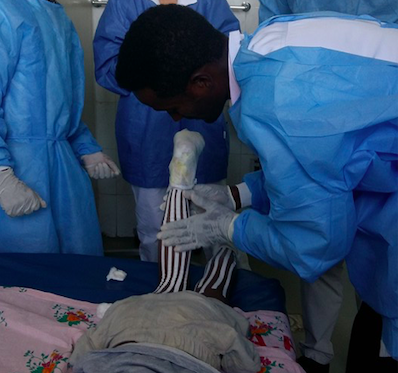
Burn rehabilitation with NeuroMuscular Taping provides an evidence-informed approach to supporting recovery after burn injuries. By promoting tissue decompression, improving lymphatic drainage, enhancing scar mobility and reducing pain, NeuroMuscular Taping (NMT) complements multidisciplinary burn care while helping restore movement, functional independence and quality of life throughout the rehabilitation process.
Why Burn Rehabilitation Is Essential
Burn injuries remain a major global public health challenge, causing significant physical, psychological and socioeconomic consequences for individuals of all ages. Beyond the initial trauma, patients often experience prolonged pain, edema, scar formation, joint stiffness and functional limitations that require comprehensive rehabilitation. Therefore, successful burn rehabilitation extends far beyond wound closure, emphasizing scar management, mobility restoration, pain control and long-term functional recovery.
Burn rehabilitation with NeuroMuscular Taping introduces a decompression-based rehabilitation strategy that complements conventional burn care and physiotherapy. Unlike compression-focused taping methods, NeuroMuscular Taping (NMT) gently lifts the skin and superficial tissues, reducing interstitial pressure while facilitating lymphatic drainage, improving microcirculation and enhancing proprioceptive input. Furthermore, when integrated into multidisciplinary rehabilitation programs, NMT may assist in scar remodeling, pain reduction, edema management and restoration of functional movement. By combining evidence-informed rehabilitation principles with individualized clinical reasoning, NeuroMuscular Taping offers healthcare professionals an innovative adjunctive approach to optimizing recovery following burn injuries.
This article explores the incidence and impact of burns, the key risk factors and complications associated with these injuries, and the integral role of NMT in their treatment. Treatments must not only focus on wound healing but also on minimising complications, restoring function, and improving the patient’s quality of life. Innovative therapeutic techniques, such as NeuroMuscular Taping (NMT), are increasingly recognised for their role in enhancing outcomes for burn survivors. By supporting lymphatic drainage, reducing pain, and improving scar mobility, NMT complements traditional burn care methods and offers a non-invasive, patient-friendly solution to some of the most challenging aspects of burn rehabilitation. By integrating evidence-based strategies and effective therapies, we can advance care for burn patients and help them achieve better functional and psychological outcomes.
Understanding Burn Injuries
Burn injuries result from damage to the skin or other tissues caused by thermal, electrical, chemical, or radiative exposure. These injuries represent a critical global health issue, with the World Health Organisation (WHO) estimating approximately 180,000 burn-related deaths annually, predominantly in low- and middle-income countries. Among adults, burns frequently result from domestic incidents, occupational hazards, or, less commonly, violence and negligence. While fatalities remain common in severe cases, non-fatal burns contribute significantly to global morbidity, often necessitating extensive hospitalisation, surgical interventions, and prolonged rehabilitation.
Key Risk Factors and Burn Types
Several factors influence the severity and outcome of burn injuries in adults. These include the depth and size of the burn, the individual’s age, and the presence of complicating factors such as inhalation injuries or coexisting medical conditions like diabetes or cardiovascular disease.
- Thermal Burns: These are the most common type of burns in adults and result from exposure to hot liquids (scalds), direct contact with hot surfaces (contact burns), open flames or cold freeze burns. Scald injuries are particularly common in domestic environments, especially during cooking or handling hot substances. Workplace injuries are often related to exposure to industrial equipment or flames.
- Electrical Burns: While less common, electrical burns account for 3–9% of hospital admissions for burns. High-voltage injuries are particularly severe and often lead to amputations or death due to cardiac complications, including arrhythmias or cardiac arrest.
- Chemical Burns: These constitute a smaller proportion of adult burn cases but are more frequent in industrial or laboratory settings. Exposure to strong acids, alkalis, or other chemicals can cause deep and severe tissue damage.
The Global Burden of Burns
Adults are often exposed to higher risks in occupational settings, where burns can result from inadequate safety measures, lack of proper training, or failure to use personal protective equipment (PPE). Many workplace burns, especially in low- and middle-income countries, are preventable through better enforcement of safety standards, education, and access to appropriate resources. Additionally, domestic burns in adults frequently occur due to careless handling of hot liquids, open flames, or electrical appliances.
Complications and Long-term Outcomes
Burn injuries in adults can lead to a range of complications:
- Respiratory Complications: Inhalation injuries are particularly severe and are a leading cause of mortality in burn victims. Smoke inhalation often results in respiratory distress syndrome and severe lung damage.
- Sepsis: Infection remains a critical concern, as the damaged skin loses its protective barrier function, exposing the body to pathogens. Sepsis is one of the primary causes of death in severe burn cases.
- Hypertrophic Scarring and Contractures: These common complications significantly impair mobility and aesthetics, particularly if burns involve joints or visible body areas.
- Psychological Impact: Adults recovering from burns often face anxiety, depression, and post-traumatic stress disorder (PTSD). Social stigma associated with visible scars may lead to isolation and reduced quality of life.
Treatment and Rehabilitation and the role of NeuroMuscular Taping (NMT)
Burn injury management is a complex process involving multiple stages and an interdisciplinary approach to ensure optimal recovery. Below is an outline of the treatment possibilities, highlighting the integration of NeuroMuscular Taping (NMT) into burn care offering specific benefits across all phases of treatment.
1. Acute Phase Management
This phase focuses on stabilising the patient and preventing complications. Covering; First Aid, Pain Management, Fluid Resuscitation, Wound Care, Infection Control, Regular wound monitoring for signs of infection.
The role of NeuroMuscular Taping (NMT) may be integrated at this stage to assist with:
- Edema Reduction: Due to increased permeability, fluid and proteins leak into surrounding tissues, causing localised swelling and edema. Lymphatic specific decompression NMT techniques applied over the lymph anatomy proximal to the effected area improves lymphatic drainage.
- Pain Management: Reducing edema will also reduce pressure over effected mechanoreceptors, reducing pain perception and encouraging wound healing.
- Support Immune System: The burn and related inflammatory response attracts immune cells to the site increasing Cytokine and Prostaglandin release, initiating wound healing but also causing edema and pain. Reduced edema and swelling encourages more efficient fluid exchange in the treatment area.
- Functional Support: Supports surrounding muscles and joints, preventing secondary complications like muscle and tendon contraction or postural issues.
2. Post-acute Phase Management
This phase emphasises wound healing, scar prevention, and functional recovery.
Advanced Wound Care: Debridement (Mechanical, enzymatic, or surgical removal of necrotic tissue) and possible Skin Grafting (Split-thickness or full-thickness grafts for extensive burns).
Physical Therapy: Early mobilisation to prevent joint stiffness and muscle atrophy. and range of motion (ROM) exercises to maintain flexibility and prevent contractures.
Scar Management: Use pressure garments to minimise hypertrophic scarring and possible silicone gel sheets or ointments for scar reduction.
We advise to integrate NMT at this stage to assist with:
- Edema Reduction: Decompression taping techniques improve lymphatic drainage, reducing swelling in and around the burn area.
- Pain Management: NMT reduces pressure on mechanoreceptors, reducing pain perception without interfering with wound healing.
- Blood Circulation: Decompressive techniques at a superbia skin level encourages arterial and venous blood flow improving skin regeneration.
- Scar Mobility and Elasticity: Proper taping application around scars can enhance tissue flexibility, reducing restrictions.
- Functional Support: Supports surrounding muscles and joints, preventing secondary complications like muscle contraction or postural issues.
3. Functional and Long-Term Rehabilitation Phase
Long-term care focuses on restoring functionality and addressing psychological and aesthetic concerns. Contrary to general opinion there is no time limit to gain important results even after decades.
- Functional Rehabilitation Physiotherapy: Strength training and continued ROM exercises. Occupational Therapy: Assists patients in regaining independence in daily activities.
- Psychological Support Counseling for post-traumatic stress, anxiety, or depression. Peer support groups for emotional encouragement.
- Cosmetic and Reconstructive Surgery Address aesthetic concerns or functional impairments caused by extensive scarring.
- Long-term Monitoring Regular follow-ups for scar evaluation, functional status, and mental health.
NeuroMuscular Taping and Tissue Decompression
- Scar Adhesion Modulation: Apply tape with specific widths to encourage tissue elasticity at deeper levels for scar remodelling.
- Postural Support: Correct postural imbalances caused by burn-related deformities.
- ROM: NeuroMuscular taping eccentrico applications reduce deeper adhesions and facilitate muscle fascia, muscle and sometimes effected tendon mobility
- Improvement in Circulation: The decompressive nature of the NMT encourages blood flow and oxygenation to the affected area, aiding tissue regeneration.
- Improvement in lymphatic drainage: The continuous pressure modulation effects of NMT decompression methodology facilitates lymphatic drainage flow from the affected area, aiding tissue regeneration and cellular integrity. Correct functioning of the damaged superficial lymphatic capillaries and nodes are fundamental in maintaining longer term electrolyte balance and immune system.
- Sensitivity issues: scar tissue creates non organised skin regeneration processes that lead to compressive adhesive tensions. This compresses nerve mechanoreceptors leading to pain as well altered hyper or hypo sensitivity. The dilation nature of the NMT applications specific for sensitivity objectives using variable widths to normalise underlying pressure, improves sensitivity even after the first treatment and even after years of persistent symptoms.
Overview and Benefits of Integrating NeuroMuscular Taping
- Applicable in Acute Phase: Provides important lymphatic drainage enhancement and blood capillary flow giving the effected area more resources for skin regeneration.
- Fundamental in the Post Acute Phase: Encourages blood capillary flow, oxygenation, movement of structural proteins such as collagen, elastin to the effected area enhancing skin regeneration.
- Non-Invasive and Cost-Effective: Provides an affordable and accessible therapy option.
- Adjunct to Other Therapies: Complements physical therapy and wound management.
- Patient-Friendly: Can be self-applied with professional therapist guidance, enhancing patient involvement in recovery.
- Longer term continual therapy: important functional and sensitivity improvements can be obtained through a 24/7 treatment modality.
Integrating NeuroMuscular Taping into Multidisciplinary Burn Care
Effective burn treatment requires a holistic approach, from immediate care to long-term rehabilitation. Integrating NeuroMuscular Taping into the treatment plan can enhance outcomes by addressing swelling, pain, and mobility issues while supporting scar management and functional recovery.
Ready to Advance Your Clinical Skills?
Are you interested in enrolling in a NeuroMuscular Taping (NMT) course? The NMT Institute offers internationally accredited certification programs across a wide range of clinical fields, including:
- Physical rehabilitation
- Neurology
- Oncology and post-surgical rehabilitation
- Sports therapy and athletic training
- Occupational and speech therapy
- Remedial education and nursing
- Vascular and lymphedema treatment and management
All NMT courses are delivered in-person in classroom settings, ensuring hands-on skill development, enhanced clinical reasoning, and optimal therapeutic outcomes. Online courses are not available, as practical application is central to the NMT therapeutic system.
To view upcoming course dates, detailed programs, and registration options, please contact your local course provider or visit the NMT Institute Website.

Are you interested in enrolling in an NMT Course?
The NeuroMuscular Taping Institute provides certification courses in physical rehabilitation, neurology, oncology, post surgical rehab, occupational therapy, speech therapy, remedial therapy, nursing as well vascular and lymphedema treatment and management. All trainings are classroom settings to enhance skill development and clinical reasoning creating optimum therapeutic results. ONLINE courses are not available. Please contact your local course provider or visit the NMT WEB SITE for course programs and dates.
For more details, course listings, and registration for an upcoming course CLICK HERE
Do you require validation of your NMT methodology for research purposes?
A detailed Neuromuscular Taping methodology is crucial in any research project for several reasons. Repeatability, Transparency, Validity and Reliability of your treatment choices will not only have an impact on your research but also an impact on future therapeutic choices. For more detailed information about the NMT, please contact us at: info.taping@mail.com
Know someone who might be interested in this newsletter? Share it with them.