Early lymphatic treatment after ACL surgery is becoming an increasingly important component of modern postoperative rehabilitation. Although rehabilitation traditionally focuses on restoring joint mobility, muscle strength, and functional stability, the management of postoperative edema and lymphatic congestion during the first days after surgery plays a fundamental role in determining the quality and speed of tissue healing.
NeuroMuscular Taping (NMT) provides a unique decompressive approach that can be applied immediately after surgery to stimulate lymphatic drainage, improve tissue oxygenation, reduce interstitial pressure, and create an optimal physiological environment for tissue regeneration. By addressing the biological mechanisms that influence inflammation, microcirculation, and cellular repair, early lymphatic intervention has the potential to accelerate functional recovery while supporting safer and more efficient rehabilitation following anterior cruciate ligament (ACL) reconstruction.
Why Early Lymphatic Treatment Matters After ACL Reconstruction
Anterior cruciate ligament (ACL) reconstruction represents a significant physiological challenge to the body, initiating a cascade of inflammatory, vascular, lymphatic, and neuromuscular responses. While contemporary rehabilitation protocols emphasize early mobilization, muscle activation, and progressive loading, the importance of immediate lymphatic management is often underestimated. NeuroMuscular Taping (NMT) offers a unique decompressive approach that can be implemented from the first postoperative day to support lymphatic drainage, optimize tissue oxygenation, reduce edema, and create favorable conditions for tissue regeneration.
The rationale for early intervention extends beyond the simple removal of excess fluid. Surgical trauma results in disruption of local blood vessels, lymphatic capillaries, connective tissues, and extracellular matrix structures. The accumulation of inflammatory exudate increases interstitial pressure, mechanically compressing microvascular networks and reducing oxygen diffusion to healing tissues. This local hypoxic environment may slow cellular repair processes, impair fibroblast activity, reduce collagen organization, and delay overall recovery.
By applying NeuroMuscular Taping according to its decompressive principles, skin and superficial fascial tissues are gently elevated, increasing the available interstitial space and reducing tissue pressure. This decompression promotes lymphatic drainage while simultaneously improving microcirculatory exchange and oxygen delivery to the surgical region. Enhanced oxygenation supports cellular metabolism, angiogenesis, collagen synthesis, and tissue regeneration, creating an environment more conducive to efficient healing.
Early Edema Management for Faster Functional Recovery
Acute Phase (Day 1–3)
Primary Objectives
- Control postoperative edema and inflammation
- Reduce tissue pressure
- Improve lymphatic and venous drainage
- Enhance oxygen delivery to healing tissues
- Reduce pain and protective muscle inhibition
- Facilitate early joint mobility
During the acute postoperative phase, edema formation is rapid and often extends beyond the surgical site into the thigh, popliteal region, calf, and ankle. Excessive swelling increases intra-articular pressure and contributes to arthrogenic muscle inhibition, particularly affecting quadriceps activation.
NMT Protocol: NMT treatment begins as early as medically appropriate, often within the first postoperative day. Initial applications focus on proximal lymphatic preparation, targeting the inguinal, femoral, popliteal fossa and abdominal drainage regions before addressing the knee itself. This approach creates a functional drainage pathway capable of accommodating increased lymphatic load from the surgical area.
The decompressive action of NMT reduces localized tissue compression, allowing capillary perfusion and oxygen exchange to occur more efficiently. Improved oxygen availability supports the metabolic demands of inflammatory and reparative cells while facilitating the removal of metabolic waste products, excess oxidative by-products, inflammatory mediators, and cellular debris.
Clinical benefits during this phase may include:
- Reduction in edema and joint effusion
- Decreased postoperative pain
- Improved knee extension
- Earlier quadriceps recruitment
- Improved patient comfort and confidence during mobilization
Post-Acute Phase (day 4 to 3 weeks)
Primary Objectives
- Continue edema resolution
- Promote tissue regeneration
- Improve scar mobility
- Restore range of motion
- Support neuromuscular control
- Optimize vascular and lymphatic function
Continuing drainage of local targeted edema within peri-articular tissues and enhanced oxygenation of surgical inflammation facilitates tissue repair, overall symptoms subside. Residual edema frequently persists within the knee and may continue to impair proprioception, muscle activation, and joint mobility. Once pain, edema, hematoma, and inflammation are felt with the rehabilitation focus shifts toward restoration of movement and tissue remodeling.
At this stage, NMT applications are directed not only toward lymphatic drainage but also toward improving tissue elasticity and promoting organized collagen remodeling around surgical scars and graft donor sites. Improved circulation supports ongoing fibroblast activity and extracellular matrix regeneration while helping prevent excessive fibrosis and tissue adhesions.
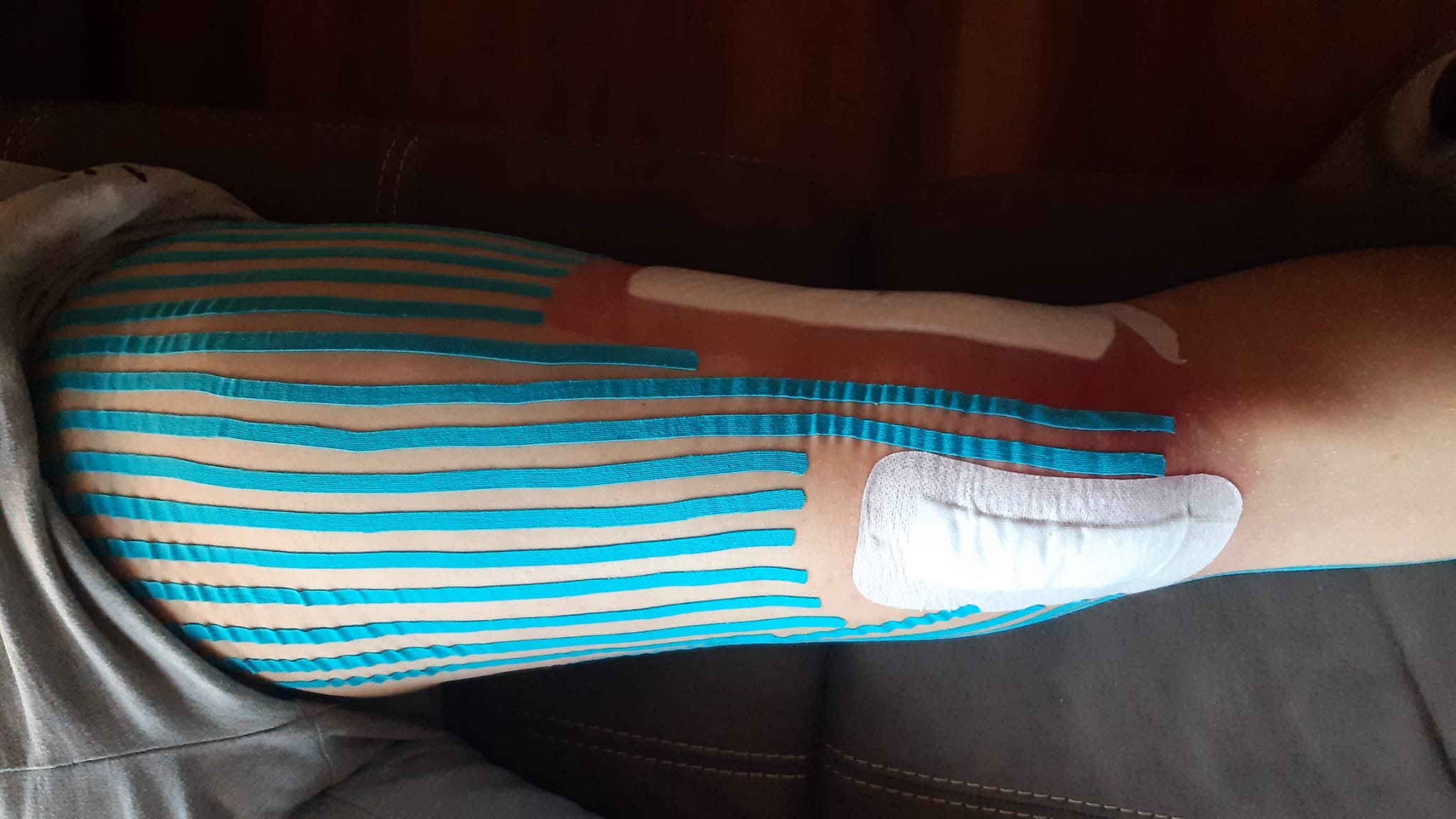
NMT Protocol: Double fan anterior to the knee, single fan popliteal fossa, inguinal single strips. This approach enhances the functional drainage directly from the surgical area and encourages a lymphatic pathway capable of accommodating increased lymphatic load.
Enhanced oxygenation remains critically important during this phase. Oxygen-dependent cellular processes play a central role in collagen maturation, angiogenesis, and connective tissue remodeling. By maintaining optimal fluid dynamics and microvascular exchange, NMT contributes to a biological environment favorable for tissue recovery. Clinical benefits during the post-acute phase may include:
- Improved flexion and extension range
- Reduced residual swelling
- Improved scar quality and mobility
- Enhanced proprioceptive feedback
- Improved gait mechanics
- More effective participation in rehabilitation exercises
Functional Phase (Weeks 3 onwards)
The primary objectives and clinical benefits of the functional phase include:
- Enhancing proprioception and joint awareness
- Improving neuromuscular coordination and dynamic stability
- Facilitating progressive load tolerance and exercise capacity
- Maintaining optimal lymphatic drainage and tissue fluid balance
- Reducing post-exercise swelling and promoting recovery
- Improving balance, postural control, and lower-limb kinetic chain integration
- Optimizing functional movement patterns during gait, running, jumping, and sport-specific activities
- Supporting ongoing tissue remodeling and adaptation to mechanical loading
- Increasing confidence in movement and functional performance
- Preparing for a safe and effective return to sport, work, and recreational activities
Although visible edema may have resolved, subtle disturbances in lymphatic and microvascular function can persist for months following ACL reconstruction. The functional phase focuses on restoring dynamic stability, movement efficiency, and sport-specific performance.
Clinical Integration of NeuroMuscular Taping Following ACL Surgery
During the functional phase of rehabilitation, NeuroMuscular Taping (NMT) applications are strategically utilized to enhance proprioceptive feedback, improve tissue glide, reduce residual fascial restrictions, and support recovery following progressively higher training loads. As patients advance toward functional activities, strength development, and sport-specific exercises, efficient sensory input becomes increasingly important for movement quality, joint protection, and neuromuscular control.
Both athletes and non-athletic individuals commonly experience transient increases in tissue fluid accumulation following rehabilitation exercises, resistance training, prolonged walking, running progression programs, or return-to-sport activities. Although often less visible than in earlier phases, these subtle fluid shifts can contribute to tissue congestion, stiffness, delayed recovery, and altered proprioceptive function. Maintaining efficient lymphatic and microcirculatory dynamics helps prevent secondary fluid accumulation while supporting the ongoing physiological adaptations required for tissue remodeling and functional performance.
NMT Functional Knee Protocol is designed to provide continuous sensory stimulation during movement while supporting deeper tissue drainage and optimal biomechanical coordination throughout the lower kinetic chain. The application aims to:
- Enhance proprioceptive awareness of knee position and movement
- Improve balance and postural control during functional activities
- Support ongoing lymphatic and vascular drainage of deeper tissues
- Facilitate coordinated interaction between the foot, knee, hip, and pelvis
- Promote efficient movement patterns during gait, running, and sport-specific tasks
- Reduce compensatory movement strategies and excessive joint loading
- Support recovery following exercise and rehabilitation sessions
Through its decompressive and neurosensory effects, the Functional Knee Application assists the transition from tissue healing toward optimal movement performance, helping patients regain confidence, stability, and functional independence while preparing for higher levels of physical activity. Improved tissue oxygenation continues to influence performance and recovery by facilitating cellular repair processes following training loads. Optimal fluid exchange contributes to better muscle function, reduced fatigue, and improved movement quality.
Surgical Trauma and the Lymphatic Response
One of the most important concepts in modern postoperative rehabilitation is that edema is not merely a symptom—it is a physiological barrier to healing. Excessive interstitial fluid increases tissue pressure, impairs oxygen delivery, alters mechanoreceptor function, inhibits muscle activation, and slows tissue regeneration.
Early NeuroMuscular Taping intervention addresses these factors simultaneously through decompression. By facilitating lymphatic drainage and improving microcirculatory dynamics from the first postoperative days, NMT creates conditions that support efficient healing, improved oxygenation, faster restoration of movement, and more effective rehabilitation progression.
Rather than waiting for swelling to resolve spontaneously, rapid lymphatic treatment aims to actively guide the healing environment toward optimal physiological function. This integrated approach supports not only fluid management but also the biological processes of tissue repair, regeneration, and functional recovery that ultimately determine the success of ACL rehabilitation.
See the LINKEDIN NMT Newsletter

Are you interested in enrolling in an NMT Course?
The NeuroMuscular Taping Institute provides certification courses in physical rehabilitation, neurology, oncology, post surgical rehab, occupational therapy, speech therapy, remedial therapy, nursing as well vascular and lymphedema treatment and management. All trainings are classroom settings to enhance skill development and clinical reasoning creating optimum therapeutic results. ONLINE courses are not available. Please contact your local course provider or visit the NMT WEB SITE for course programs and dates.
For more details, course listings, and registration for an upcoming course CLICK HERE
Do you require validation of your NMT methodology for research purposes?
A detailed Neuromuscular Taping methodology is crucial in any research project for several reasons. Repeatability, Transparency, Validity and Reliability of your treatment choices will not only have an impact on your research but also an impact on future therapeutic choices. For more detailed information about the NMT, please contact us at: david.blow@nmtinstitute.org
Know someone who might be interested in this newsletter? Share it with them.