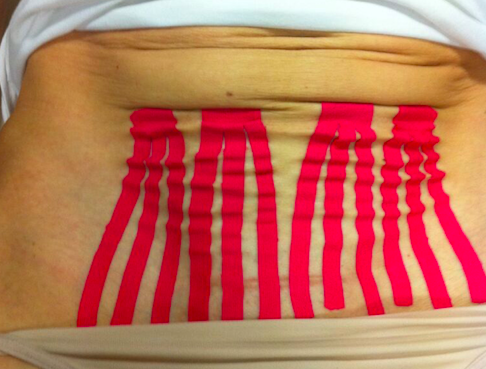
Cesarean scar rehabilitation extends beyond the visible appearance of the surgical scar and should consider the multiple tissue layers affected by cesarean delivery. Skin, subcutaneous connective tissue, fascia and the deeper abdominal–pelvic structures participate in healing and may develop altered mobility, adhesions, pain or sensory changes. Manual therapy and NeuroMuscular Taping (NMT) can be incorporated into individualized rehabilitation programs to support tissue mobility, sensory recovery and restoration of functional movement following appropriate postoperative healing and clinical assessment.
Postoperative edema
NeuroMuscular Taping After Breast Cancer Surgery: Lymphatic and Functional Rehabilitation
NeuroMuscular Taping after breast cancer surgery provides a decompression-based adjunct to multidisciplinary rehabilitation following lumpectomy, mastectomy, breast reconstruction and lymph node procedures. By applying elastic tape at 0% therapeutic tension to appropriately elongated tissues, NMT creates a dynamic skin–tape interface intended to support superficial tissue mobility, fluid exchange, continuous sensory input and functional movement without restricting physiological motion.
Importance of Early Lymphatic Treatment After ACL Surgery: A NeuroMuscular Taping Perspective
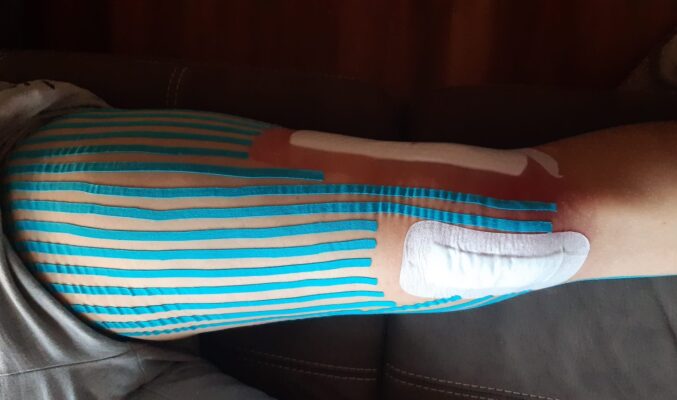
Discover why early lymphatic treatment after ACL surgery with NeuroMuscular Taping helps reduce edema, improve healing, oxygenation and recovery.