NeuroMuscular Taping for thyroid surgery rehabilitation provides an evidence-informed approach to supporting swallowing, speech and neck function following thyroidectomy. By promoting tissue decompression, improving scar mobility, enhancing lymphatic drainage and reducing postoperative pain, NeuroMuscular Taping (NMT) complements multidisciplinary rehabilitation while facilitating functional recovery and improving quality of life.
Swallowing and Speech After Thyroid Surgery
Thyroid surgery is generally a safe and effective treatment for benign and malignant thyroid disorders; however, postoperative recovery may be accompanied by swallowing difficulties, voice changes, neck stiffness, scar adhesions and reduced cervical mobility. These complications can interfere with essential daily functions, medication adherence and overall quality of life. Therefore, rehabilitation following thyroidectomy extends beyond wound healing and should address the complex interaction between swallowing, speech, cervical movement and tissue recovery.
NeuroMuscular Taping for thyroid surgery rehabilitation introduces a decompression-based rehabilitation strategy that complements speech-language therapy, physiotherapy and postoperative medical care. Unlike taping techniques that rely on compression, NeuroMuscular Taping (NMT) gently lifts the skin and superficial fascia, reducing interstitial pressure while improving lymphatic drainage, microcirculation and scar mobility. Furthermore, continuous cutaneous stimulation enhances proprioceptive input and supports functional movement of the cervical region. By integratingevidence-informed rehabilitation with individualized clinical reasoning, NeuroMuscular Taping may assist clinicians in improving swallowing function, voice recovery, neck mobility and postoperative comfort following thyroid surgery.
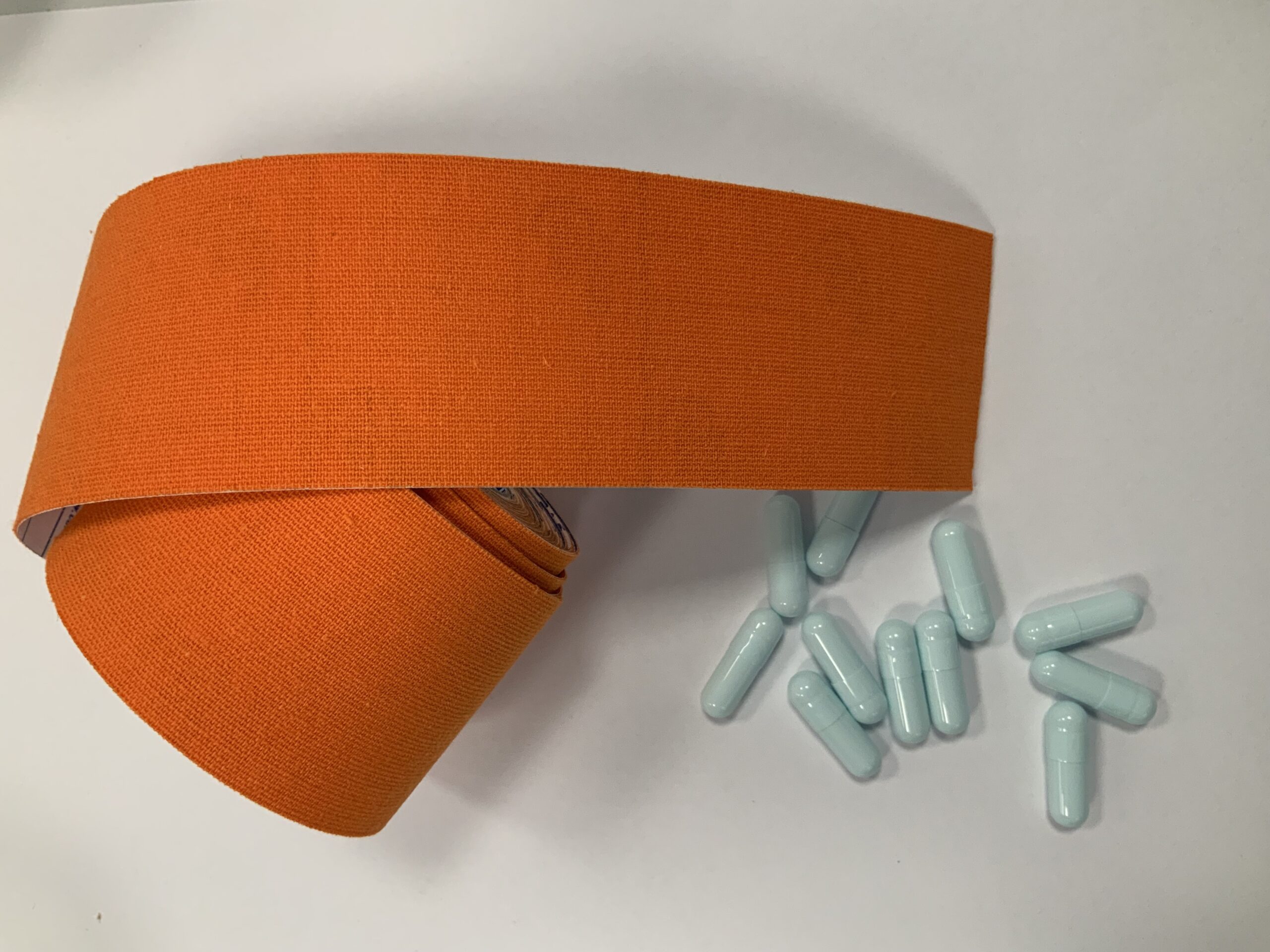
Swallowing rehabilitation following Thyroid surgery requires an approach that addresses both the physical, oncology and emotional challenges patients face. After a thyroidectomy (thyroid removal surgery), swallowing difficulties are not uncommon due to the invasive surgery, scar adhesions, localised pain as well head and neck mobility issues. Patients may face an urgent need to take essential medications or treatments, such as ìradioiodine therapy pills or caps, which can feel impossible to manage. NeuroMuscularTaping (NMT), when combined with traditional speech therapy techniques, offers a non-invasive, pain-free, and effective solution to aid surgical recovery.
Common Complications Following Thyroidectomy
Swallowing is an everyday action we often take for granted – until it becomes a challenge. Imagine being handed a pill, just a simple one, and following these steps:
- Place the pill on your tongue.
- Close your lips tightly around the opening of a bottle.
- Take a drink, using a sucking motion to swallow the water and the pill.
It sounds simple, but for many, this process isn’t just inconvenient—it’s a real struggle.
Swallowing Pills: More Difficult Than It Seems
The phrase “a hard pill to swallow” isn’t just a metaphor. Research shows that up to one in three people experience gagging, vomiting, or even choking when attempting to swallow pills. This difficulty can have serious consequences, as it discourages adherence to medication routines, potentially worsening health conditions.
For some, swallowing difficulties arise only with pills, not food or liquids. The reasons for this range from psychological aversions to physical impairments. These challenges can become even more pronounced in specific clinical contexts, such as post-surgery rehabilitation.
Swallowing Challenges Post-Thyroid Surgery
Just immagine that pill is the post surgery radiotherapy treatment that needs to be taken in precise moments, with particular care not to touch the pill and to be distant from others! After a thyroidectomy (thyroid removal surgery), swallowing difficulties are not uncommon due to the surgery, scar adhesions, localised pain and head and neck mobility issues. Patients may face an urgent need to take essential medications or treatments, such as radioiodine therapy pills, which can feel impossible to manage. Complications following thyroid surgery can include:
- Damage or trauma to the recurrent laryngeal nerve, affecting swallowing and speech.
- Post-operative swelling and tightness in the neck fascia, restricting normal movement.
- Pain and discomfort, further complicating the act of swallowing.
Addressing these challenges effectively is vital for recovery.
NeuroMuscular Taping (NMT): A DECOMPRESSION Approach
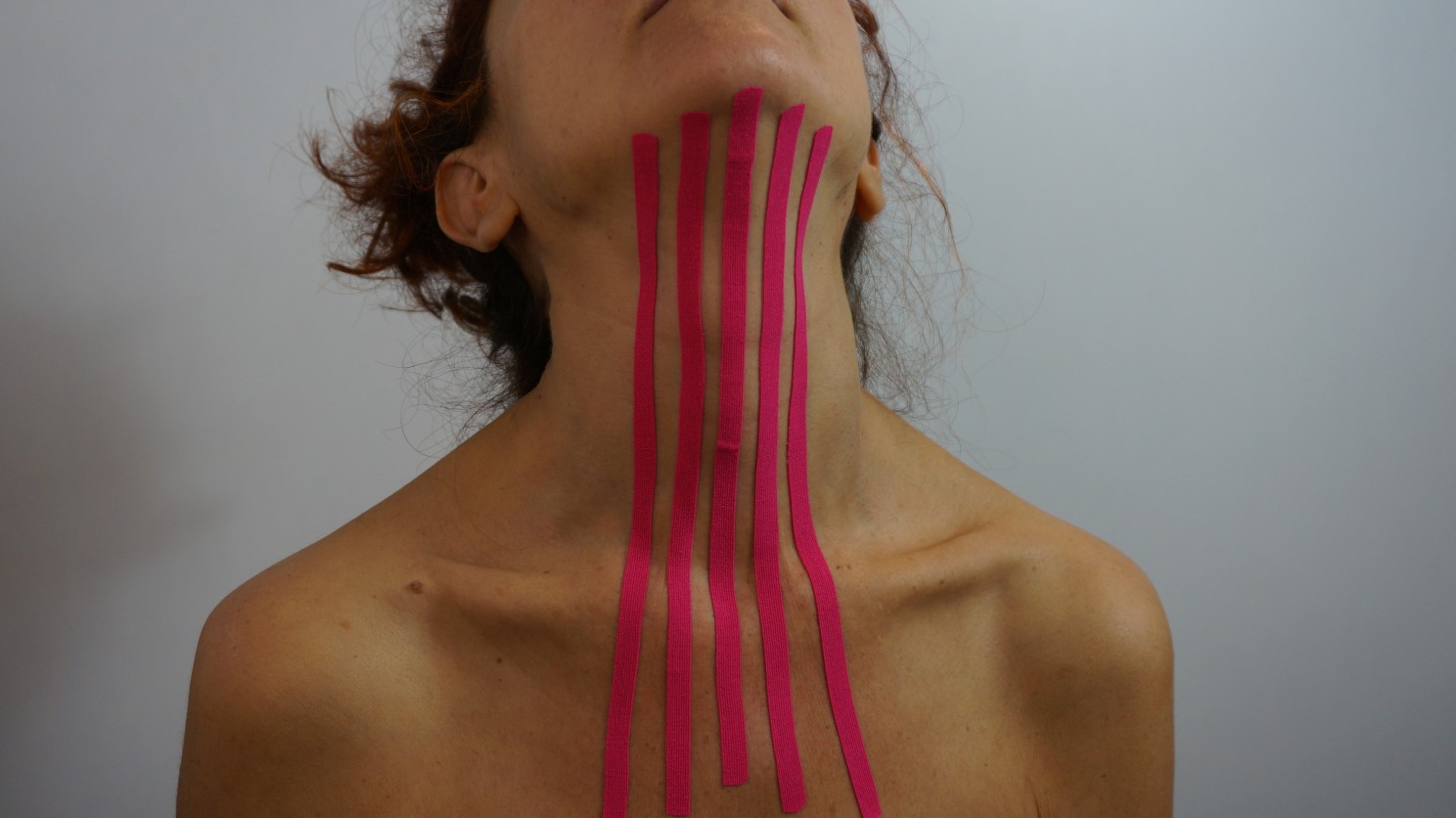
One emerging and innovative solution in post-surgery rehabilitation is NeuroMuscular Taping (NMT). This technique uses elastic, adhesive tape applied strategically to the skin to providing gentle decompression and dilation to underlying tissues. In the context of speech therapy and swallowing rehabilitation, NMT applied to the anterior neck fascia offers several benefits:
- Facilitating Swallowing. The decompressive effect of NMT reduces tension in the neck fascia, enabling smoother movement of the muscles involved in swallowing. By supporting the skin’s natural elasticity, NMT helps alleviate the discomfort and tightness that commonly occur after thyroid surgery or other neck procedures.
- Reducing Pain. Post-operative pain can hinder a patient’s ability to swallow or speak. NMT stimulates the skin’s mechanoreceptors, increasing blood flow and decreasing inflammation. This pain-relieving effect reduces reliance on additional medications and encourages a more comfortable recovery process.
- Improving Circulation and Lymphatic Drainage. By gently lifting the skin and underlying tissues, NMT improves circulation and enhances lymphatic drainage. This reduces post-surgical swelling in the neck region, accelerates healing, and restores neck mobility.
- Enhancing Neuromuscular Coordination. Swallowing and speech therapy often involve retraining muscles. NMT supports this by providing proprioceptive feedback that promotes proper muscle activation patterns, improving overall coordination and aiding in rehabilitation.
- Alleviating the Sensation of a “Plum stone” in the Throat. Many patients report a persistent “lump or plum seed in the throat” sensation after surgery or trauma, even when no physical obstruction is present. NMT’s gentle dilation effect offers positive proprioceptive feedback, encouraging natural muscle relaxation and correcting abnormal activation patterns that can cause this discomfort.
By addressing multiple aspects of swallowing and speech rehabilitation, NeuroMuscular Taping provides a non-invasive, drug-free approach to enhance recovery and improve quality of life for patients undergoing post-surgical rehabilitation.
Clinical Applications of NMT in Swallowing Rehabilitation
Application Methodology:
- The tape is cut into fan or single-strip shapes, depending on the specific needs.
- It is applied with 0% tension to the anterior neck fascia, following the lines of elasticity in the skin.
- The patient’s neck is gently extended during application to promote optimal decompression.
Treatment Objectives:
- Restore swallowing function.
- Reduce postoperative swelling and inflammation.
- Improve patient comfort and compliance with essential medication regimens.
A Comprehensive Approach to Post-Surgery Recovery
Swallowing rehabilitation following surgery or trauma requires an approach that addresses both the physical and emotional challenges patients face. NeuroMuscular Taping (NMT), when combined with traditional speech therapy techniques, offers a non-invasive, pain-free, and effective solution to aid recovery.
For patients experiencing swallowing difficulties, whether due to thyroid surgery or other medical conditions, NMT provides an innovative and accessible tool to restore this vital function. By promoting tissue healing, reducing pain, and enhancing neuromuscular coordination, NMT empowers patients to take confident steps toward recovery.
As advancements in rehabilitation continue, techniques like NMT showcase the potential for recovery processes that are smoother, faster, and more holistic.
Integrating NeuroMuscular Taping into Multidisciplinary Care
Recovering from thyroid cancer surgery demands a multidisciplinary approach that addresses both physical symptoms and emotional well-being. Decompression NeuroMuscular Taping offers significant benefits by:
- Reducing post-surgical edema
- Alleviating scar adhesion
- Improve swallowing and medication compliance
- Managing pain effectively
- Normalizing neural receptor sensitivity
- Restoring mobility
Integrating NMT into post-surgical rehabilitation programs provides patients with a valuable tool to rebuild confidence, regain functionality, and improve their overall quality of life. As part of a comprehensive recovery plan, NMT is redefining what is possible in post-surgical and oncology care.
Article developed by Speech Therapists, Maria Caterina Ferrari, Debora Codognotto. S Angelo Hospital, Mestre, Italy. David Blow, NMT Institute.
Ready to Advance Your Clinical Skills?
Are you interested in enrolling in a NeuroMuscular Taping (NMT) course? The NMT Institute offers internationally accredited certification programs across a wide range of clinical fields, including:
- Physical rehabilitation
- Neurology
- Oncology and post-surgical rehabilitation
- Sports therapy and athletic training
- Occupational and speech therapy
- Remedial education and nursing
- Vascular and lymphedema treatment and management
All NMT courses are delivered in-person in classroom settings, ensuring hands-on skill development, enhanced clinical reasoning, and optimal therapeutic outcomes. Online courses are not available, as practical application is central to the NMT therapeutic system.
To view upcoming course dates, detailed programs, and registration options, please contact your local course provider or visit the NMT Institute Website.

Are you interested in enrolling in an NMT Course?
The NeuroMuscular Taping Institute provides certification courses in physical rehabilitation, neurology, oncology, post surgical rehab, occupational therapy, speech therapy, remedial therapy, nursing as well vascular and lymphedema treatment and management. All trainings are classroom settings to enhance skill development and clinical reasoning creating optimum therapeutic results. ONLINE courses are not available. Please contact your local course provider or visit the NMT WEB SITE for course programs and dates.
For more details, course listings, and registration for an upcoming course CLICK HERE
Do you require validation of your NMT methodology for research purposes?
A detailed Neuromuscular Taping methodology is crucial in any research project for several reasons. Repeatability, Transparency, Validity and Reliability of your treatment choices will not only have an impact on your research but also an impact on future therapeutic choices. For more detailed information about the NMT, please contact us at: info.taping@mail.com
Know someone who might be interested in this newsletter? Share it with them.