NeuroMuscular Taping for rheumatoid arthritis provides an evidence-informed rehabilitation approach that complements medical management by reducing pain, improving mobility and enhancing joint function. Through its decompression methodology, NeuroMuscular Taping (NMT) promotes lymphatic drainage, improves microcirculation, reduces interstitial pressure and enhances proprioceptive input, supporting more efficient movement and better quality of life for individuals living with rheumatoid arthritis.
Why Rehabilitation Matters in Rheumatoid Arthritis
Rheumatoid arthritis (RA) is a chronic, systemic autoimmune disease characterized by persistent synovial inflammation, joint destruction and progressive functional decline. Pain, stiffness, edema and reduced mobility frequently compromise independence and quality of life despite advances in pharmacological treatment. Therefore, rehabilitation has become an essential component of comprehensive rheumatoid arthritis care, integrating physiotherapy, exercise therapy, patient education and multidisciplinary management to preserve movement and function.
NeuroMuscular Taping for rheumatoid arthritis introduces a decompression-based rehabilitation strategy that complements conventional medical and physiotherapy interventions. Unlike compression-based taping systems, NeuroMuscular Taping (NMT) gently lifts the skin and superficial fascia, reducing interstitial pressure while facilitating lymphatic drainage, improving microcirculation and enhancing proprioceptive feedback. Furthermore, these physiological effects may contribute to pain reduction, improved joint mobility, better neuromuscular coordination and greater functional independence. By integrating evidence-informed rehabilitation principles with individualized clinical reasoning, NeuroMuscular Taping offers clinicians a practical, non-invasive adjunctive approach for optimizing rehabilitation outcomes in people living with rheumatoid arthritis.
Rethinking #RheumatoidArthritis Care with #NeuroMuscularTaping (ha#NMT)
Chronic inflammation, joint pain, and loss of mobility are everyday challenges for patients with rheumatoid arthritis. NeuroMuscular Taping (NMT) offers a gentle, non-invasive approach that supports lymphatic drainage, reduces synovial swelling, and enhances proprioception—improving outcomes across all stages of the disease. Discover how this decompression-based method is being integrated into modern rheumatologic rehabilitation for lasting functional recovery.
The NeuroMuscular Taping Decompression Concept
NeuroMuscular Taping (NMT) is a decompression-based taping method that differentiates itself from conventional compression techniques such as Kinesio, kinesiological, elastic or rigid taping. Rather than applying stretch to the tape, NMT relies on the eccentric application of unstretched elastic tape to pre-stretched skin and tissues, creating a lifting effect that reduces mechanical pressure on the underlying structures.
This decompressive action results in several key physiological benefits:
- Enhancement of interstitial fluid exchange, aiding the clearance of inflammatory mediators
- Reduction of mechanical stress on capillaries, nerve endings, and superficial fascia
- Improved lymphatic drainage, which assists in controlling joint and soft tissue edema
- Stimulation of proprioceptive afferents, supporting sensorimotor control and neuromuscular coordination
These effects are particularly relevant in RA, where synovitis, joint effusion, capsular fibrosis, and postural adaptations converge to impair movement and exacerbate pain. NMT offers a gentle, non-invasive intervention that complements pharmacological and physiotherapeutic strategies across all stages of disease.
Pain Modulation and Proprioceptive Stimulation of NMT in Rheumatoid Arthritis
Targeted NMT protocols can be adapted to the patient’s stage of disease (acute, post-acute, or functional) and tailored to anatomical regions most affected by RA. The following applications have shown clinical efficacy:
🖐 Hands and Fingers
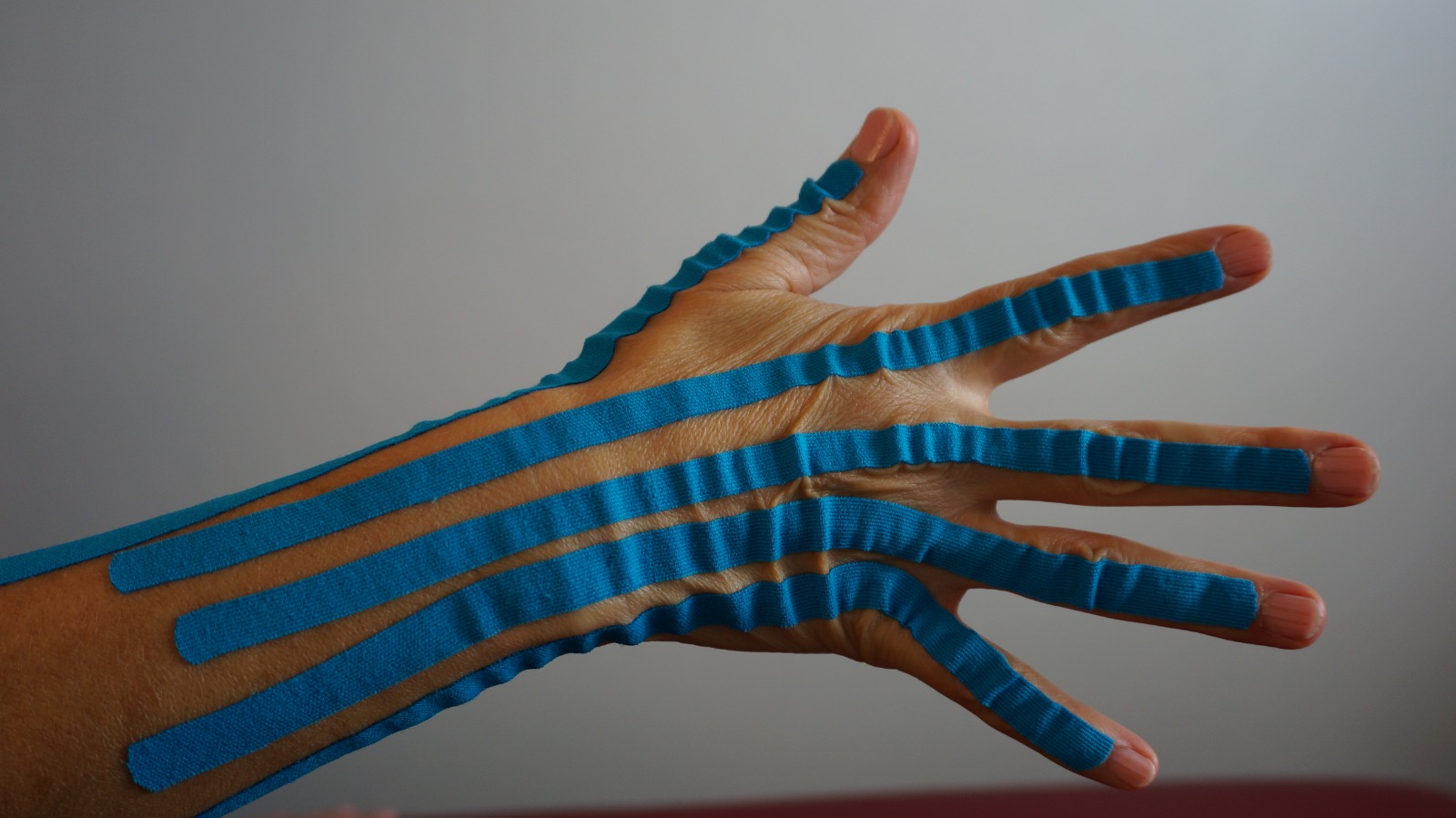
RA commonly affects the small joints of the hands, particularly the metacarpophalangeal (MCP) and proximal interphalangeal (PIP) joints, often accompanied by pain, swelling, and deformity.
- Lymphatic fan applications: Narrow (6 – 8 mm) single strips are applied over the dorsum of the hand to reduce joint effusion and synovial congestion.
- Longitudinal extensor support: Single decompression strips placed over extensor and flexor tendons help modulate proprioception, support tendon glide, and relieve soft tissue tension.
🧠 Cervical-Thoracic Region
Patients with RA or coexisting ankylosing spondylitis often present with postural dysfunction, upper thoracic stiffness, and trapezius hypertonicity.
- Y-strips or double-fan taping: These techniques are applied across the upper trapezius and paraspinal muscles to address muscle tension, cervical alignment, and lymphatic flow at the cervicothoracic junction.
- Particularly beneficial for managing forward head posture, fatigue, and cervicogenic pain associated with systemic inflammation.
🦵 Knees and Ankles
Weight-bearing joints such as the knee and ankle are frequently involved in RA, with swelling, capsular thickening, and restricted motion commonly reported.
- Anterior and posterior knee decompression fans: Used to alleviate pain and reduce synovial fluid accumulation in cases of acute synovitis or post-operative edema (e.g., after total knee arthroplasty).
- Perimalleolar fan strips: Applied medially or laterally to support fluid drainage, reduce post-inflammatory edema, and restore ankle proprioception.
Why Integrate NMT into Rheumatologic Care?
- Non-pharmacological, skin-friendly
- Adaptable to all disease stages: acute, post-acute, functional
- Enhances outcomes of physical therapy and manual treatment
- Supports long-term patient self-management and mobility
Integrating NeuroMuscular Taping into Multidisciplinary Care
NeuroMuscular Taping should be viewed not as a standalone intervention but as a synergistic component of comprehensive rheumatologic rehabilitation. When integrated into therapeutic programs involving manual therapy, therapeutic exercise, pharmacological management, and patient education, NMT offers an opportunity to enhance clinical outcomes—particularly in pain control, joint mobility, and lymphatic function.

Are you interested in enrolling in an NMT Course?
The NeuroMuscular Taping Institute provides certification courses in physical rehabilitation, neurology, oncology, post surgical rehab, occupational therapy, speech therapy, remedial therapy, nursing as well vascular and lymphedema treatment and management. All trainings are classroom settings to enhance skill development and clinical reasoning creating optimum therapeutic results. ONLINE courses are not available. Please contact your local course provider or visit the NMT WEB SITE for course programs and dates.
For more details, course listings, and registration for an upcoming course CLICK HERE
Do you require validation of your NMT methodology for research purposes?
A detailed Neuromuscular Taping methodology is crucial in any research project for several reasons. Repeatability, Transparency, Validity and Reliability of your treatment choices will not only have an impact on your research but also an impact on future therapeutic choices. For more detailed information about the NMT, please contact us at: info.taping@mail.com
Know someone who might be interested in this newsletter? Share it with them.