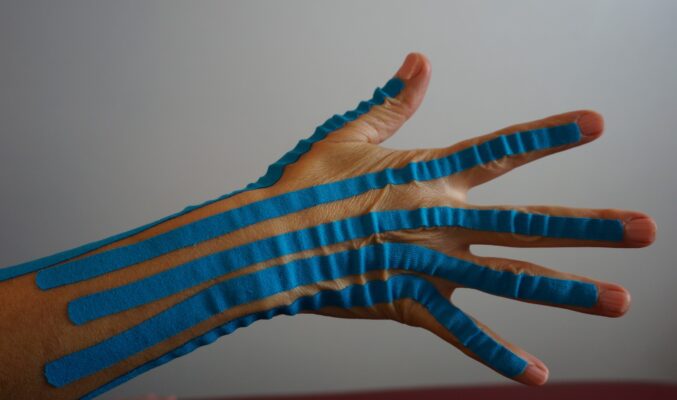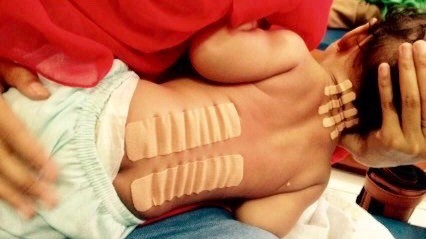
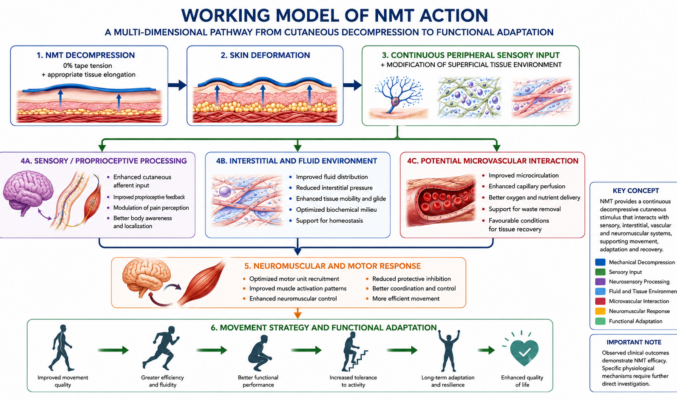
NeuroMuscular Taping Decompression Therapy provides a systems-based approach to myofascial treatment by addressing the continuous interaction between skin, subcutaneous connective tissue, fascia, interstitial fluid, vascular and lymphatic structures, peripheral sensory input and skeletal muscle. Applied with 0% therapeutic tape tension while the anatomical region is appropriately elongated, NMT creates characteristic skin convolutions when the body returns toward a neutral position. This continuously changing skin–tape interface may modify superficial tissue geometry and sensory input without mechanically forcing or restricting physiological movement.
neuromuscular coordination
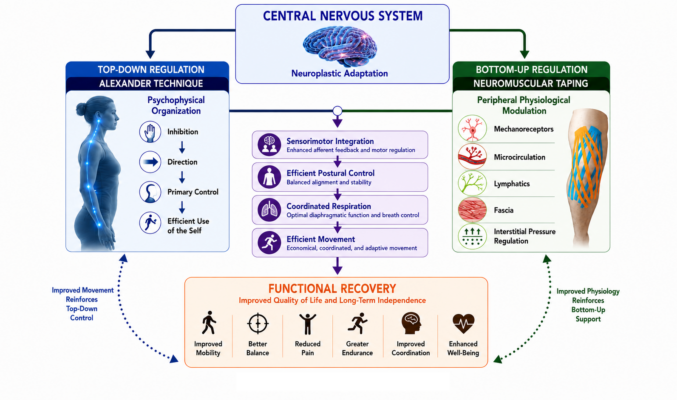
NeuroMuscular Taping and Alexander Technique: Integrating Bottom-Up and Top-Down Rehabilitation
NeuroMuscular Taping and Alexander Technique offer complementary perspectives on rehabilitation by connecting bottom-up physiological and sensory modulation with top-down psychophysical organization. NeuroMuscular Taping (NMT) acts through decompression, continuous cutaneous stimulation and modification of the superficial tissue environment, while the Alexander Technique develops conscious awareness of posture, movement, breathing and habitual motor responses. Their integration provides a systems-based framework for exploring how peripheral sensory conditions and conscious movement organization may interact to support functional recovery.
NeuroMuscular Taping for Rheumatoid Arthritis: An Evidence-Informed Rehabilitation Approach
NeuroMuscular Taping for rheumatoid arthritis supports pain relief, lymphatic drainage, joint mobility and evidence-informed rehabilitation to improve function and quality of life
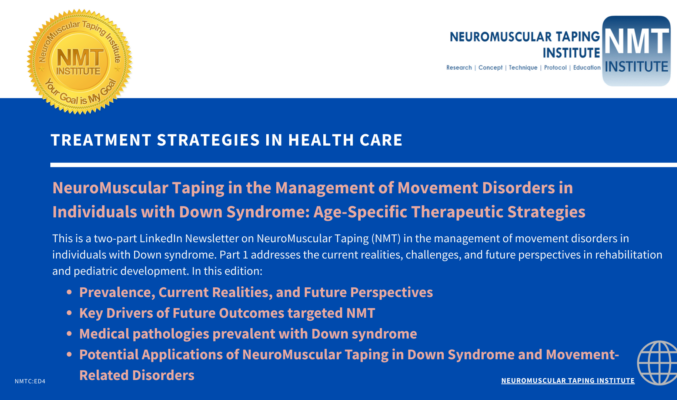
NeuroMuscular Taping for Movement Disorders in Down Syndrome: Age-Specific Therapeutic Strategies – Part 2
NeuroMuscular Taping for movement disorders in Down syndrome enhances motor development, balance, posture and functional independence through evidence-informed rehabilitation.
NeuroMuscular Taping for Down Syndrome: Age-Specific Strategies for Movement Disorders
NMT for Down syndrome enhances motor development, postural control, movement disorders and functional independence through evidence-informed rehabilitation.