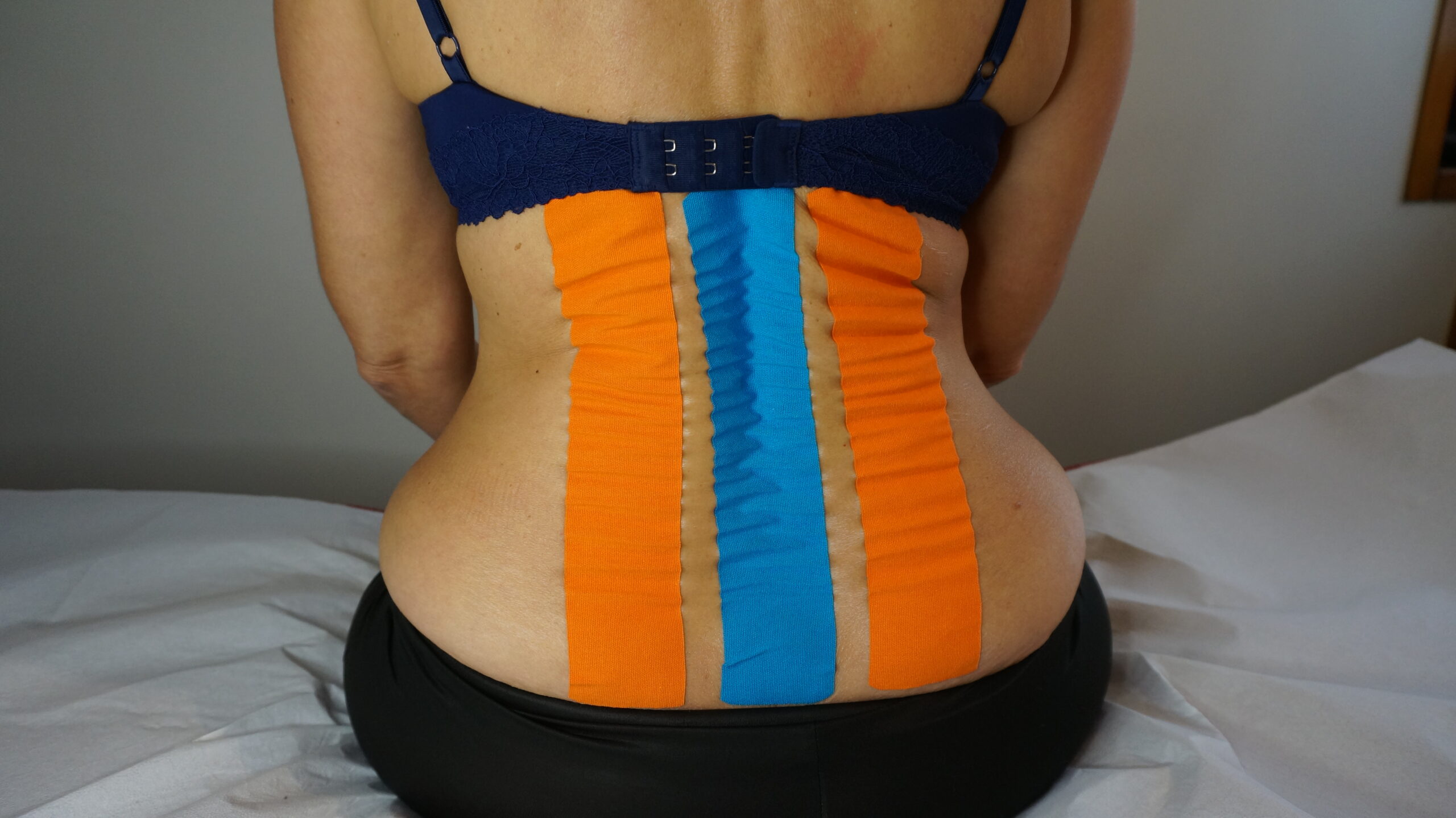
NeuroMuscular Taping for low back pain provides a decompression-based adjunct to the rehabilitation of acute and chronic non-specific low back pain (NLBP). Applied with 0% therapeutic tape tension while the lumbar tissues are appropriately elongated, NMT creates a dynamic skin–tape interface that provides continuous cutaneous sensory input during posture and movement. Integrated with therapeutic exercise and individualized clinical management, NMT may support pain reduction, mobility, proprioceptive processing and functional recovery without restricting physiological movement.
Introduction
Non-specific low back pain (NLBP) is one of the most important musculoskeletal health problems worldwide and a major contributor to disability, reduced physical activity and healthcare utilization. Chronic NLBP is particularly challenging because persistent pain rarely reflects a single isolated tissue abnormality. Instead, symptoms may involve interactions between nociceptive processing, muscular function, mobility, proprioception, motor control, psychosocial factors and individual movement strategies. Consequently, contemporary rehabilitation requires a multidimensional approach rather than reliance on a single passive treatment.
NeuroMuscular Taping for low back pain can be incorporated into this broader rehabilitation framework as a non-invasive, decompression-based intervention. Unlike elastic taping approaches that apply predetermined tape tension, NeuroMuscular Taping (NMT) uses 0% therapeutic tension while the skin and underlying tissues are placed in appropriate elongation. When the patient returns toward a neutral position, characteristic skin convolutions develop, producing a dynamic interface that changes continuously during movement.
Furthermore, NMT should not be viewed simply as external mechanical support for the lumbar spine. Continuous deformation of the skin and superficial tissues provides ongoing peripheral sensory information that may interact with proprioceptive processing, neuromuscular regulation and movement organization. At the same time, modification of superficial tissue geometry may influence the local interstitial environment. Therefore, the potential clinical effects of NMT are better considered within an integrated sensory, neuromuscular and functional model rather than as a method that simply “relaxes contracted muscles.”
Importantly, NMT-specific clinical evidence is available for chronic non-specific low back pain. A randomized single-blind controlled trial published in Aging Clinical and Experimental Research evaluated NeuroMuscular Taping within the management of chronic NLBP. This provides an important clinical foundation for investigating NMT as an adjunct to comprehensive rehabilitation, while further research remains necessary to clarify mechanisms, identify the patients most likely to benefit and determine optimal treatment protocols.
Non-specific low back pain (NLBP) is a prevalent pain syndrome globally, affecting up to 84% of the population and leading to activity limitations in 10–14% of cases. It has become a primary cause of disability worldwide, imposing a significant economic burden on society. Chronic NLBP, which persists for more than 12 weeks, is characterized by stiffness, soreness, and pain in the lumbosacral region. Studies indicate that chronic low back pain prevalence among individuals over 60 years old ranges from 21.7 to 68.3%, with higher prevalence among females. NLBP accompanied by activity limitation tends to increase with age.
Guidelines typically recommend non-steroidal anti-inflammatory drugs (NSAIDs), antidepressants when necessary, exercise therapy, and psychosocial interventions for chronic NLBP management. The National Institute of Health HEAL Initiative and the World Health Organisation (WHO) highlights NLBP as a focus area for studies aiming to better understand pain mechanisms, develop improved diagnostic and treatment tools, and identify and test therapies to reduce opioid use.
In recent years, NeuroMuscular Taping (NMT) has emerged as a complementary therapy for managing acute and chronic Lower Back Pain (NLBP) symptoms. NMT involves applying specific tape applications over the lower back muscles to reduce muscular contraction and inflammation. This therapy is based on the premise that reducing muscle contraction and improving circulation can reduce inflammation, pain, and enhance muscular and postural control.
The Role of NMT in Managing NLBP
Reducing Inflammation: NMT helps reduce inflammation by facilitating the removal of inflammatory mediators and toxins from the lower back muscular area.
Enhancing Postural Control: NMT eccentric stimulation directly applied over contracted muscles assists in maintaining the contraction/elongation synergy fundamental for postural control.
Pain Reduction: NMT can directly reduce muscle contraction, reducing the over-reliance on pain medication. Clinically, it has been shown that simple and expert applications can reduce pain in a short period.
Stress Reduction: NMT is a relaxing and soothing muscular therapy that can help reduce stress levels, potentially mitigating stress-induced back pain and fatigue symptoms.
The Evidence
Research on NMT’s effectiveness in treating NLBP is ongoing. While more controlled studies are needed to conclusively determine its efficacy, preliminary publications indicate that NMT, as part of a comprehensive Lower Back exercise management plan, offers significant symptomatic relief for patients. Patients have reported improvements in symptoms such as pain and improved mobility following just a few NMT therapy sessions.
NeuroMuscular Taping for chronic non‐specific low back pain: a randomised single‐blind controlled trial. Aging Clinical and Experimental Research https://doi.org/10.1007/s40520-021-02029-0
Conclusion
The connection between NLBP and NMT underscores the importance of exploring various therapeutic approaches in managing both acute and chronic conditions. While further research is required to understand the full benefits of decompressive NMT for Lower Back Pain patients, its potential for immediate symptom relief makes it a promising complementary therapy. Patients interested in trying NMT should consult their healthcare provider certified in NeuroMuscular Taping to ensure it is suitable for their situation.
Ready to Advance Your Clinical Skills?
Are you interested in enrolling in a NeuroMuscular Taping (NMT) course? The NMT Institute offers internationally accredited certification programs across a wide range of clinical fields, including:
- Physical rehabilitation
- Neurology
- Oncology e post-surgical rehabilitation
- Sports therapy e athletic training
- Occupational e speech therapy
- Remedial education e nursing
- Vascular e lymphedema treatment e management
All NMT courses are delivered in-person in classroom settings, ensuring hands-on skill development, enhanced clinical reasoning, e optimal therapeutic outcomes. Online courses are not available, as practical application is central to the NMT therapeutic system.
To view upcoming course dates, detailed programs, e registration options, please contact your local course provider or visit the NMT Institute Website.

Are you interested in enrolling in an NMT Course?
The NeuroMuscular Taping Institute provides certification courses in physical rehabilitation, neurology, oncology, post surgical rehab, occupational therapy, speech therapy, remedial therapy, nursing as well vascular e lymphedema treatment e management. All trainings are classroom settings to enhance skill development e clinical reasoning creating optimum therapeutic results. ONLINE courses are not available. Please contact your local course provider or visit the NMT WEB SITE for course programs e dates.
For more details, course listings, e registration for an upcoming course CLICK HERE
Do you require validation of your NMT methodology for research purposes?
A detailed Neuromuscular Taping methodology is crucial in any research project for several reasons. Repeatability, Transparency, Validity and Reliability of your treatment choices will not only have an impact on your research but also an impact on future therapeutic choices. For more detailed information about the NMT, please contact us at: info.taping@mail.com
Know someone who might be interested in this newsletter? Share it with them.