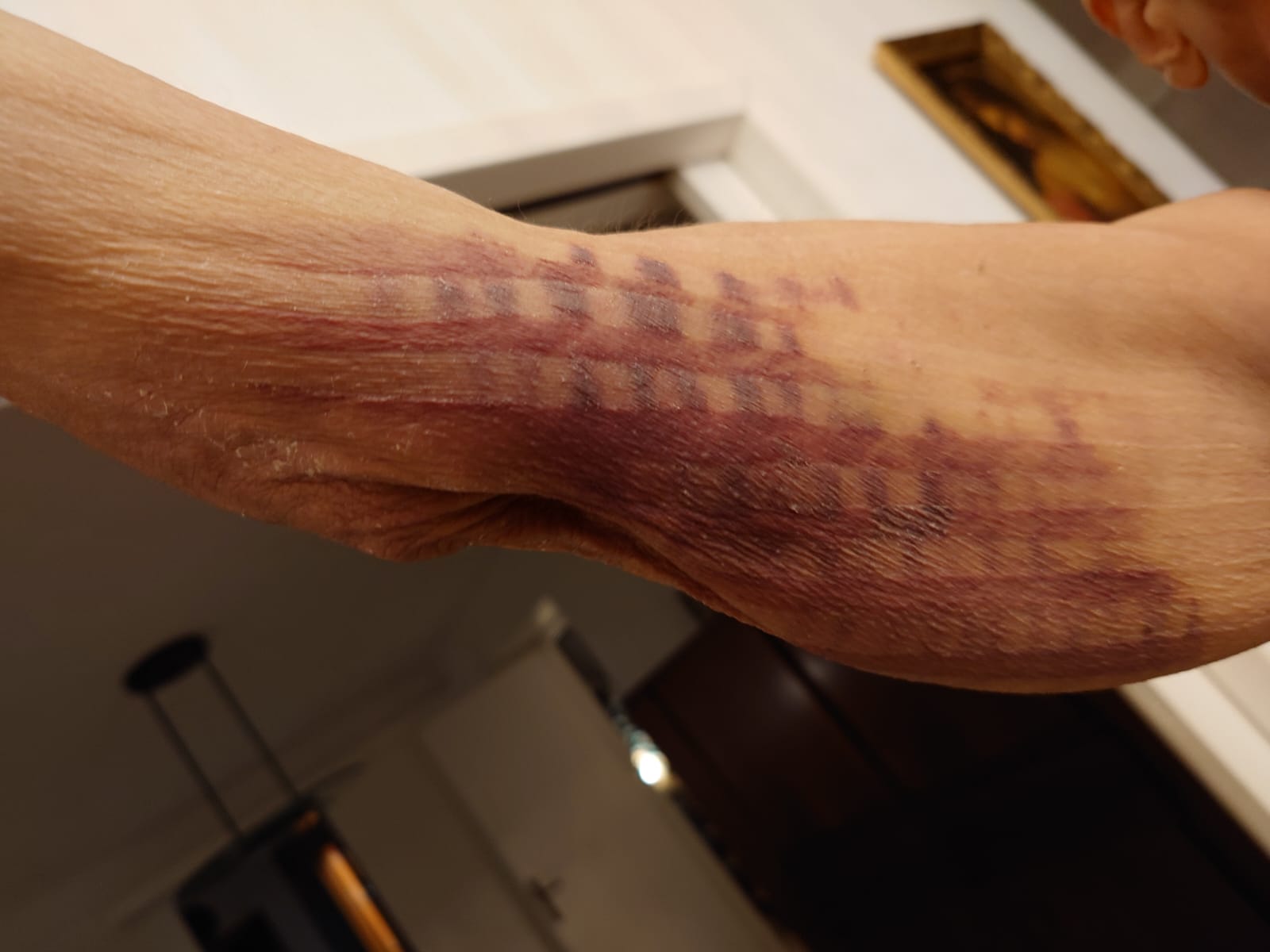
NeuroMuscular Taping for PICC hematoma can be considered as an adjunctive rehabilitation strategy for selected patients who develop localized bruising and edema following peripherally inserted central catheter placement. Using a decompression methodology with 0% therapeutic tape tension, NMT is applied around—but not over or in a manner that interferes with—the catheter insertion site, sterile dressing or fixation system. Its objective is to support the superficial tissue environment and fluid exchange while preserving catheter safety and appropriate medical monitoring.
Understanding the PICC Insertion Procedure
Peripherally inserted central catheters (PICCs) provide reliable medium- to long-term venous access for patients requiring medications, chemotherapy, intravenous fluids, parenteral nutrition or repeated blood sampling. However, catheter insertion and subsequent management can be associated with local and systemic complications requiring careful clinical surveillance. These include bruising and hematoma, edema, bleeding, infection, thrombosis, catheter occlusion, displacement and other vascular complications.
Among the local consequences of insertion, hematoma and localized edema may occur following vascular puncture or tissue trauma. Blood and fluid accumulating within the surrounding tissues can produce discoloration, swelling, tenderness and discomfort. Consequently, appropriate assessment is essential before introducing any adjunctive intervention, particularly in patients receiving anticoagulant therapy or those with coagulation disorders, vascular fragility or other risk factors.
NeuroMuscular Taping for PICC Hematoma
NeuroMuscular Taping for PICC hematoma provides a decompression-based approach that may be incorporated into care when clinically appropriate and when the catheter site has been assessed by the responsible healthcare professional. NeuroMuscular Taping (NMT) uses elastic tape at 0% therapeutic tension on appropriately positioned tissues, producing a dynamic skin–tape interface intended to modify superficial tissue geometry and provide continuous cutaneous stimulation during movement.
Importantly, NMT should not interfere with the catheter, sterile dressing, stabilization device or clinical inspection of the insertion site. Nor should it be considered a treatment for catheter-related infection, thrombosis, occlusion or malposition. Rather, its potential role is specifically adjunctive, focusing on selected superficial tissue consequences such as localized edema and bruising after appropriate clinical assessment.
Indications, Procedure, and Complications of PICC insertion
The peripherally inserted central catheter (PICC) is a medical device used for administering medications, fluids, and parenteral nutrition, as well as for frequent blood draws. It is a flexible plastic tube that, under local anesthesia, is inserted through a vein, typically at the elbow crease, and advanced to the superior vena cava near the heart. This approach provides secure and long-lasting venous access, particularly suitable for patients who require prolonged therapy or have difficulty maintaining conventional peripheral access.
PICC Insertion Procedure
The PICC insertion is a delicate procedure that involves several key steps to ensure safety and effectiveness:
- Preparation and Local Anesthesia: The insertion site, usually the elbow crease, is disinfected and anesthetized to minimize pain and discomfort.
- Catheter Insertion: The physician inserts a needle into the chosen vein and then advances the catheter through this access point along the venous system to the desired position, verified by imaging to ensure proper placement.
- Skin Fixation: Once properly positioned, the PICC is secured to the skin on the arm with adhesive bandages or specific anchoring devices to prevent movement.
Complications and Hematoma Management
One of the most common complications with a PICC is hematoma formation at the insertion site. This blood buildup in surrounding tissues can cause swelling, pain, bruising and, in some cases, interfere with catheter functionality. Hematomas often result from vein manipulation and can be exacerbated by factors such as:
- Patient’s vascular fragility
- Coagulopathy or anticoagulant medication use
- Excessive arm movement or traction
- Trauma near the insertion site
Hematoma Management and Prevention
To reduce the risk of hematoma following PICC insertion, several precautions should be implemented both before and after the procedure:
- Apply moderate compression immediately after insertion to support coagulation at the insertion site.
- Temporarily immobilize the arm for the first few hours post-insertion to minimize excessive traction.
- In some cases, the PICC may need to be repositioned to the opposite limb if vein infiltration proves difficult.
- Conduct frequent monitoring of the insertion area, particularly in the initial days, to identify early signs of hematoma or infection.
In case of hematoma, treatments include cool compresses for the first 24 hours to limit swelling. In severe cases, the PICC may need to be removed and repositioned.
NeuroMuscular Taping (NMT) treatment for hematoma
NeuroMuscular Taping (NMT) offers a valuable, non-invasive approach for managing hematomas after PICC insertion in patients undergoing intensive chemotherapy. Such patients often experience vascular fragility, impaired lymphatic drainage, and reduced mobility due to treatment effects. The gentle, decompressive properties of NMT facilitate blood and lymphatic drainage around the hematoma area without exerting direct pressure on the PICC itself. For patients facing critical, ongoing treatments, large hematomas can be distressing, making NMT a comforting and supportive therapeutic option.
Mechanism of Action
The NeuroMuscular Taping decompression methodology is designed to lift the skin through body movement, creating a micro-space and increasing the drainage surface area between the dermis and fascia. This decompression facilitates improved lymphatic drainage and blood circulation, making it particularly effective for addressing localized hematomas. This technique is especially beneficial for chemotherapy patients, who require gentle and quick treatment for any bruised or swollen areas due to their increased sensitivity and susceptibility to tissue damage.
Application Process for Hematoma Management
For patients with a PICC line, the NMT application is strategically placed over the hematoma following the lines of greater skin elasticity. Compression taping techniques are considered useful only in the acute phase directly over the lesioned area while non useful in the drainage of hematoma. Using the NMT decompressive single strip tape technique, doctors, nurses and practitioners apply the tape over the hematoma site to facilitate fluid movement and exchange mechanisms. This configuration creating local dilation promotes lymphatic drainage, reduces swelling, and assists in quicker hematoma resolution and tissue regeneration where necessary.

Benefits of NMT in Chemotherapy Patients
- Improved Fluid Dynamics: The NMT method helps reduce hematoma-related swelling by encouraging lymphatic and venous flow, thereby improving tissue fluid dynamics without adding pressure that might cause additional pain or bruising.
- Pain Relief: NMT’s decompressive effect reduces localized pain around the hematoma site. Since chemotherapy patients often experience heightened discomfort, this gentle method offers an effective pain management option.
- Reduced Risk of Infection: Given the immunocompromised state of many chemotherapy patients, infection risk around the PICC line site is a significant concern. By reducing swelling and promoting lymphatic circulation, NMT helps maintain tissue health and decreases the chance of complications like infections.
- Supporting Mobility and Comfort: The hematoma management approach with NMT allows patients to retain comfort and mobility in the affected arm, which can be crucial for quality of life and overall well-being during intensive treatment cycles.

Considerations and Safety Precautions
It’s essential to ensure that the taping does not interfere with the PICC line’s function or cause any pressure that could disturb its positioning. The tape used should be hypoallergenic to prevent skin irritation, especially since chemotherapy patients frequently have heightened skin sensitivity. Regular monitoring of the hematoma area is essential to quickly address any signs of irritation or worsening. It is strongly recommended to use only tape that is registered with the Health Ministry as a Non-Medicated Medical Device Class 1 for treating health conditions.
In summary, NeuroMuscular Taping is a highly beneficial adjunct therapy for managing hematomas around PICC lines in patients receiving chemotherapy. By promoting fluid movement, reducing discomfort, and supporting tissue healing, NMT provides a gentle yet effective option for enhancing comfort and recovery in this vulnerable population.
Benefits of PICC
PICC provides an extremely effective solution for long-term treatment, especially in patients who need continuous infusion therapy. However, the procedure carries risks that must be carefully managed to prevent complications and ensure patient comfort. Educating the patient on proper PICC care and providing frequent monitoring are crucial steps in ensuring a successful outcome and preventing side effects such as hematoma.
Final Considerations
The application of NeuroMuscular Taping (NMT) should be performed exclusively by trained and certified medical professionals who are well-versed in the specific methodologies and techniques associated with this therapeutic approach. Proper training ensures that practitioners understand the intricacies of this NMT taping process, including how to assess the patient’s condition, determine the appropriate taping techniques, and apply the tape in a way that maximises its therapeutic benefits.
Applying NMT requires a deep understanding of human anatomy, physiology, and the specific indications for using tape in various clinical situations. Certified practitioners in NMT are equipped to evaluate the patient’s needs accurately, considering factors such as the type of injury, the location of pain or dysfunction, and the overall treatment goals. They are also trained to recognize potential contraindications and complications that could arise from improper application.
Attempting to apply NMT tape independently or by untrained personnel can lead to ineffective treatment, increased discomfort, or even injury. Incorrect taping techniques, for example compression taping, can exacerbate existing issues, limit mobility, or fail to provide the desired therapeutic effects. Therefore, it is essential for patients to seek out qualified professionals for NMT application to ensure safety, efficacy, and optimal treatment outcomes. This professional oversight not only guarantees the correct application of the technique but also fosters a comprehensive treatment plan tailored to the individual patient’s needs.
Ready to Advance Your Clinical Skills?
Are you interested in enrolling in a NeuroMuscular Taping (NMT) course? The NMT Institute offers internationally accredited certification programs across a wide range of clinical fields, including:
- Physical rehabilitation
- Neurology
- Oncology e post-surgical rehabilitation
- Sports therapy e athletic training
- Occupational e speech therapy
- Remedial education e nursing
- Vascular e lymphedema treatment e management
All NMT courses are delivered in-person in classroom settings, ensuring hands-on skill development, enhanced clinical reasoning, e optimal therapeutic outcomes. Online courses are not available, as practical application is central to the NMT therapeutic system.
To view upcoming course dates, detailed programs, e registration options, please contact your local course provider or visit the NMT Institute Website.

Are you interested in enrolling in an NMT Course?
The NeuroMuscular Taping Institute provides certification courses in physical rehabilitation, neurology, oncology, post surgical rehab, occupational therapy, speech therapy, remedial therapy, nursing as well vascular e lymphedema treatment e management. All trainings are classroom settings to enhance skill development e clinical reasoning creating optimum therapeutic results. ONLINE courses are not available. Please contact your local course provider or visit the NMT WEB SITE for course programs e dates.
For more details, course listings, e registration for an upcoming course CLICK HERE
Do you require validation of your NMT methodology for research purposes?
A detailed Neuromuscular Taping methodology is crucial in any research project for several reasons. Repeatability, Transparency, Validity and Reliability of your treatment choices will not only have an impact on your research but also an impact on future therapeutic choices. For more detailed information about the NMT, please contact us at: info.taping@mail.com
Know someone who might be interested in this newsletter? Share it with them.