NeuroMuscular Taping for Stroke Rehabilitation: Sensorimotor and Functional Recovery

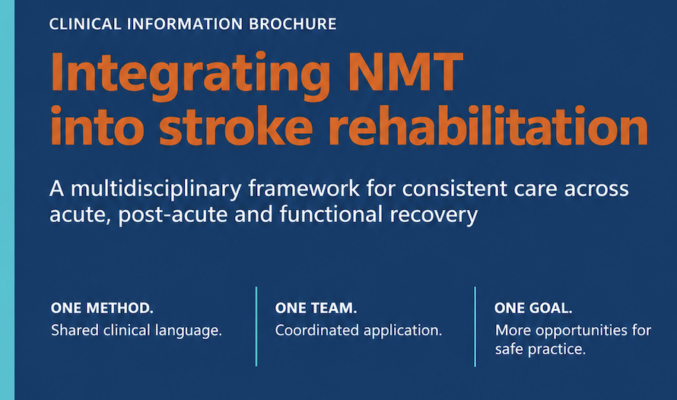
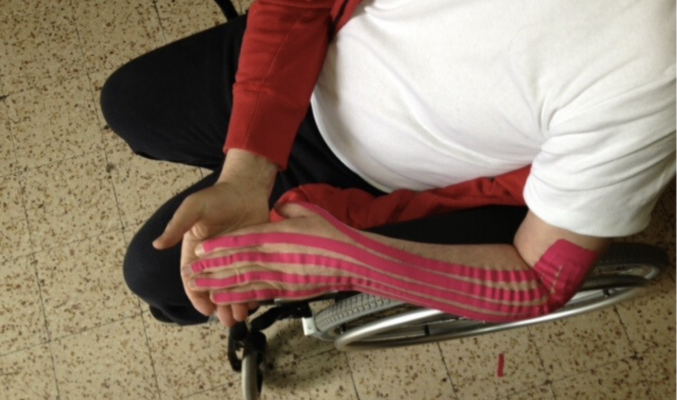
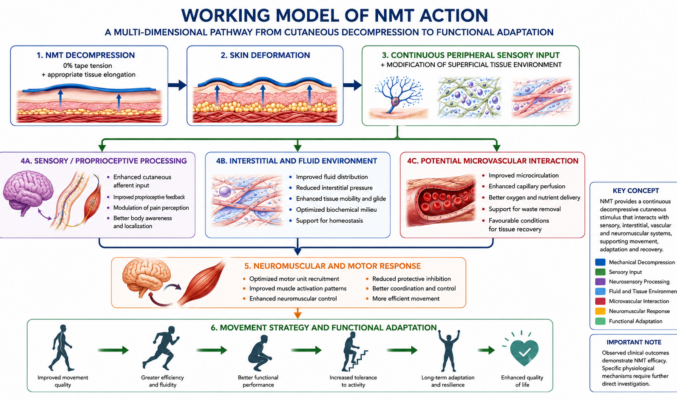
NeuroMuscular Taping for stroke rehabilitation provides a decompression-based adjunct to neurological rehabilitation designed to interact continuously with the patient’s sensory and motor systems during posture and movement. Applied with 0% therapeutic tape tension while the target tissues are appropriately elongated, NMT creates a dynamic skin–tape interface that provides prolonged cutaneous sensory input. Integrated with physiotherapy, occupational therapy, gait training and task-specific rehabilitation, this approach may support proprioception, neuromuscular control, movement organization and functional recovery following stroke.

NeuroMuscular Taping for Low Back Pain: Decompression Therapy and Functional Rehabilitation

NeuroMuscular Taping for low back pain provides a decompression-based adjunct to the rehabilitation of acute and chronic non-specific low back pain (NLBP). Applied with 0% therapeutic tape tension while the lumbar tissues are appropriately elongated, NMT creates a dynamic skin–tape interface that provides continuous cutaneous sensory input during posture and movement. Integrated with therapeutic exercise and individualized clinical management, NMT may support pain reduction, mobility, proprioceptive processing and functional recovery without restricting physiological movement.

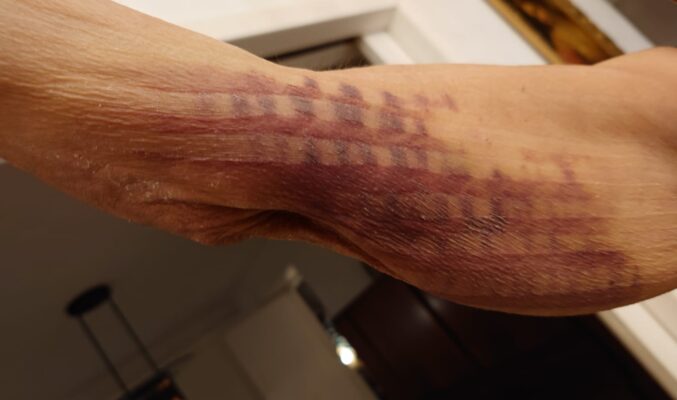
NMT treatment of PICC hematoma

NeuroMuscular Taping for PICC Hematoma: Supporting Edema and Bruising Recovery

NeuroMuscular Taping for PICC hematoma can be considered as an adjunctive rehabilitation strategy for selected patients who develop localized bruising and edema following peripherally inserted central catheter placement. Using a decompression methodology with 0% therapeutic tape tension, NMT is applied around—but not over or in a manner that interferes with—the catheter insertion site, sterile dressing or fixation system. Its objective is to support the superficial tissue environment and fluid exchange while preserving catheter safety and appropriate medical monitoring.

NeuroMuscular Taping Decompression Therapy in Myofascial Treatment

NeuroMuscular Taping Decompression Therapy provides a systems-based approach to myofascial treatment by addressing the continuous interaction between skin, subcutaneous connective tissue, fascia, interstitial fluid, vascular and lymphatic structures, peripheral sensory input and skeletal muscle. Applied with 0% therapeutic tape tension while the anatomical region is appropriately elongated, NMT creates characteristic skin convolutions when the body returns toward a neutral position. This continuously changing skin–tape interface may modify superficial tissue geometry and sensory input without mechanically forcing or restricting physiological movement.