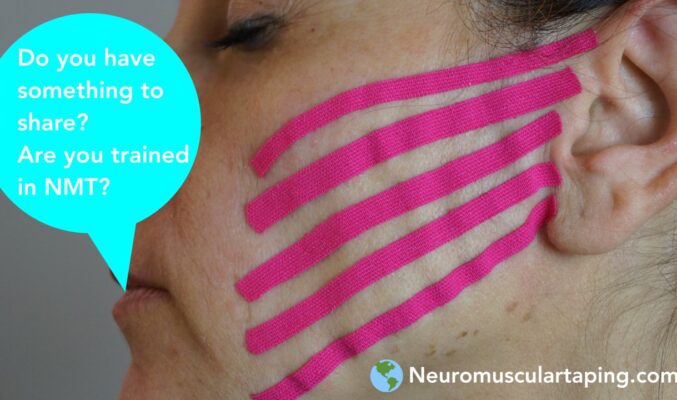
NeuroMuscular Taping Decompression Therapy provides a systems-based approach to myofascial treatment by addressing the continuous interaction between skin, subcutaneous connective tissue, fascia, interstitial fluid, vascular and lymphatic structures, peripheral sensory input and skeletal muscle. Applied with 0% therapeutic tape tension while the anatomical region is appropriately elongated, NMT creates characteristic skin convolutions when the body returns toward a neutral position. This continuously changing skin–tape interface may modify superficial tissue geometry and sensory input without mechanically forcing or restricting physiological movement.
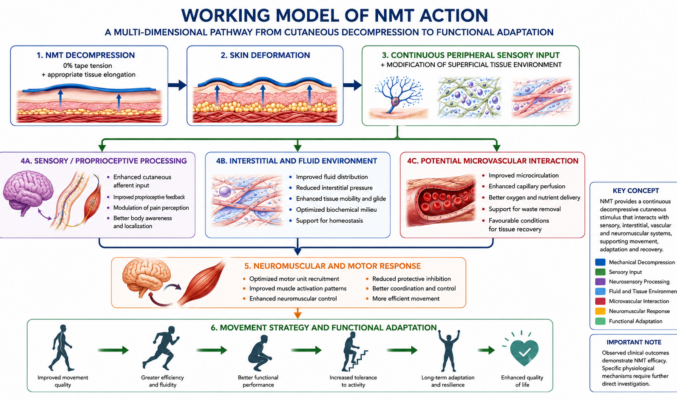
fascia
Decompression-Based Taping: The NeuroMuscular Taping Approach to Rehabilitation
Decompression-based taping uses the NeuroMuscular Taping zero-tension method to improve lymphatic drainage, microcirculation, proprioception and evidence-informed rehabilitation.
Rethinking Rehabilitation: The Science and Impact of NeuroMuscular Taping
NeuroMuscular Taping rehabilitation uses decompression-based techniques to improve pain, lymphatic drainage, proprioception and functional recovery through evidence-informed care.
Principles of Correct NeuroMuscular Taping: MEL Lines of Skin Elasticity
NeuroMuscular Taping MEL Lines explain skin elasticity mapping, correct tape application, decompression principles and clinical reasoning for evidence-informed rehabilitation.